





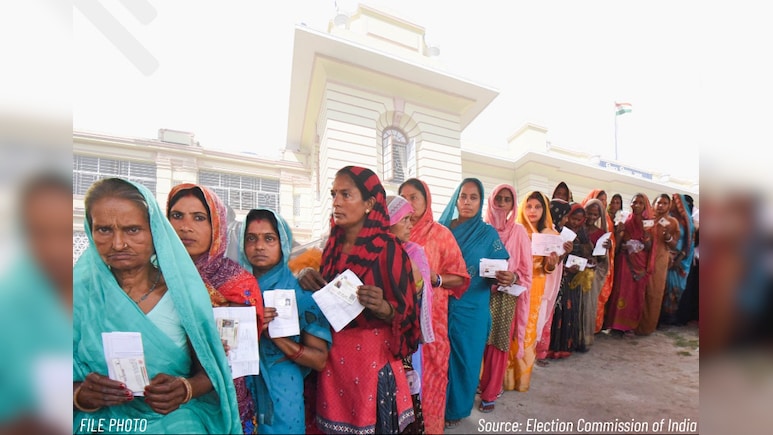
The Supreme Court will today deliver its verdict on the legality of Special Intensive Revision (SIR) of electoral rolls done by the Election Commission of India (ECI).
A batch of petitions have challenged the legality of the SIR, that was first undertaken by the ECI in Bihar in June last year.
This will be the most significant judicial review of the election commission exercise which has been an issue of fierce political showdown between the panel and opposition parties.
A bench comprising Chief Justice Surya Kant and Justice Joymalya Bagchi will pronounce the judgment. The Court is examining whether the ECI has the powers under Article 326 of the Constitution, the Representation of the People Act, 1950 and the related rules to carry out the SIR in the present form.
Who Challenged SIR?
A batch of petitions were filed last year by NGOs The Association of Democratic Reforms (ADR), People's Union for Civil Liberties (PUCL), political activist Yogendra Yadav, MPs Mahua Moitra, Manoj Jha, K C Venugopal and, Supriya Sule and Mujahid Alam, National Federation of Indian Women and others.
According to the petitioners, the SIR exercise shifted the burden onto existing voters to prove citizenship, thereby creating what they described as a "suspended citizenship" regime.
Importance Of The SIR Verdict
The verdict is important as elections in several states, including West Bengal and Bihar, have already been concluded as per the new voter lists drawn after the revision exercise.
The SIR was first introduced in Bihar in June 2025. After the exercise, over 60 lakh voters, including the dead ones, were removed from the voter list. In West Bengal, 90 lakh voters were deleted from the list on the eve of elections.
The SIR requires voters, who were not part of the 2002 or 2003 electoral rolls to furnish documentary proof linking them to persons present in those legacy rolls. Initially, the ECI prescribed 11 acceptable documents, excluding the Aadhaar. The Supreme Court, during the course of the hearing, expanded the list to include Aadhaar in its interim directions to the poll panel.
During the hearings, the court also made several important observations underscoring the broader constitutional stakes. The court noted that while the ECI may possess powers to conduct electoral roll revisions, those powers could not be "untrammelled" and must conform to principles of transparency and natural justice.
Election Commission Defends SIR
The Election Commission has all along defended the exercise as a constitutionally mandated verification process. It says the exercise is necessary to ensure purity of electoral rolls and prevent non-citizens from participating in elections.
The poll panel has also announced the third and final phase of SIR to be carried out in 16 states and three Union Territories from May 30.
Track Latest News Live on NDTV.com and get news updates from India and around the world

