





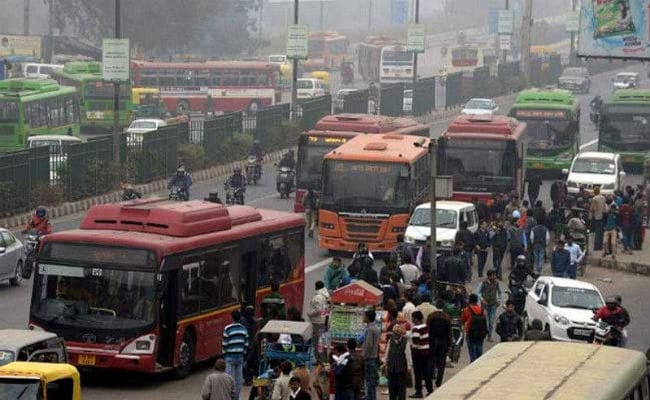
The Delhi Transport Corporation (DTC) drivers' strike, which has disrupted bus services across the capital since September 16, has eased after the Delhi government barred strikes and agitations linked to DTC and Cluster bus services for six months.
The move has brought some relief to commuters who had been facing difficulties because of reduced bus services for nearly two weeks.
The drivers, however, say their key demands, including higher wages and medical and social security benefits, remain unaddressed.
The Delhi government has invoked the Essential Services Maintenance Act (ESMA), which allows strikes in essential services to be prohibited.
Manoj Sharma, general secretary of the DTC Karamchari Ekta Union, said the strike had lost momentum following the notification, but none of the drivers' demands had been accepted.
The union is now chalking out its future strategy, he said.
The strike began on September 16 after drivers employed through private agencies for DTC stopped work, demanding better wages and social security benefits.
Union representatives said contractual drivers are paid considerably less than permanent DTC employees. The drivers currently receive Rs 747 per day, while the union has demanded a daily wage of at least Rs 2,000.
The disruption also affected private concessionaires operating DTC buses, with union members saying they faced a shortage of drivers during the strike.
DTC then deployed around 300 of its drivers with the private operators to keep buses running, according to the union.
Several of these DTC drivers had earlier been assigned non-driving duties at different locations. Some were assisting the Transport Department with pollution checks, while others were carrying out official work at DTC depots.
With private concessionaires facing a shortage, these drivers were relieved of such duties and deployed to operate buses, union members said.
The Delhi government, meanwhile, declared DTC and Cluster bus services essential transport services through an official notification and prohibited employees associated with the services from resorting to strikes or agitations.
The restriction covers regular employees as well as contractual and outsourced workers and staff employed by private concessionaires.
A senior government official said the order will remain in force for six months.
The notification cited repeated disruption of bus services and the resulting inconvenience and hardship to the public as the reason for invoking the provision in public interest.
Delhi's public transport system currently has a fleet of around 6,600 buses, including nearly 4,900 electric buses and around 1,750 CNG buses operated under DTC.
Track Latest News Live on NDTV.com and get news updates from India and around the world

