






The protests by young people in Bihar show how strongly government jobs are seen as a route to a stable career. Students have been protesting over BPSC recruitment and other government examinations, raising concerns about exams, vacancies and the recruitment process.
The competition for BPSC jobs is high. In the 67th BPSC CCE, around 4.8 lakh candidates appeared for 802 posts. In the 68th, 2.6 lakh appeared for 324 posts, while the 69th saw around 1.9 lakh candidates for 475 posts. The 70th had 3.3 lakh candidates for 2,035 posts. In the latest 71st CCE, 3.2 lakh candidates appeared for 1,298 posts.
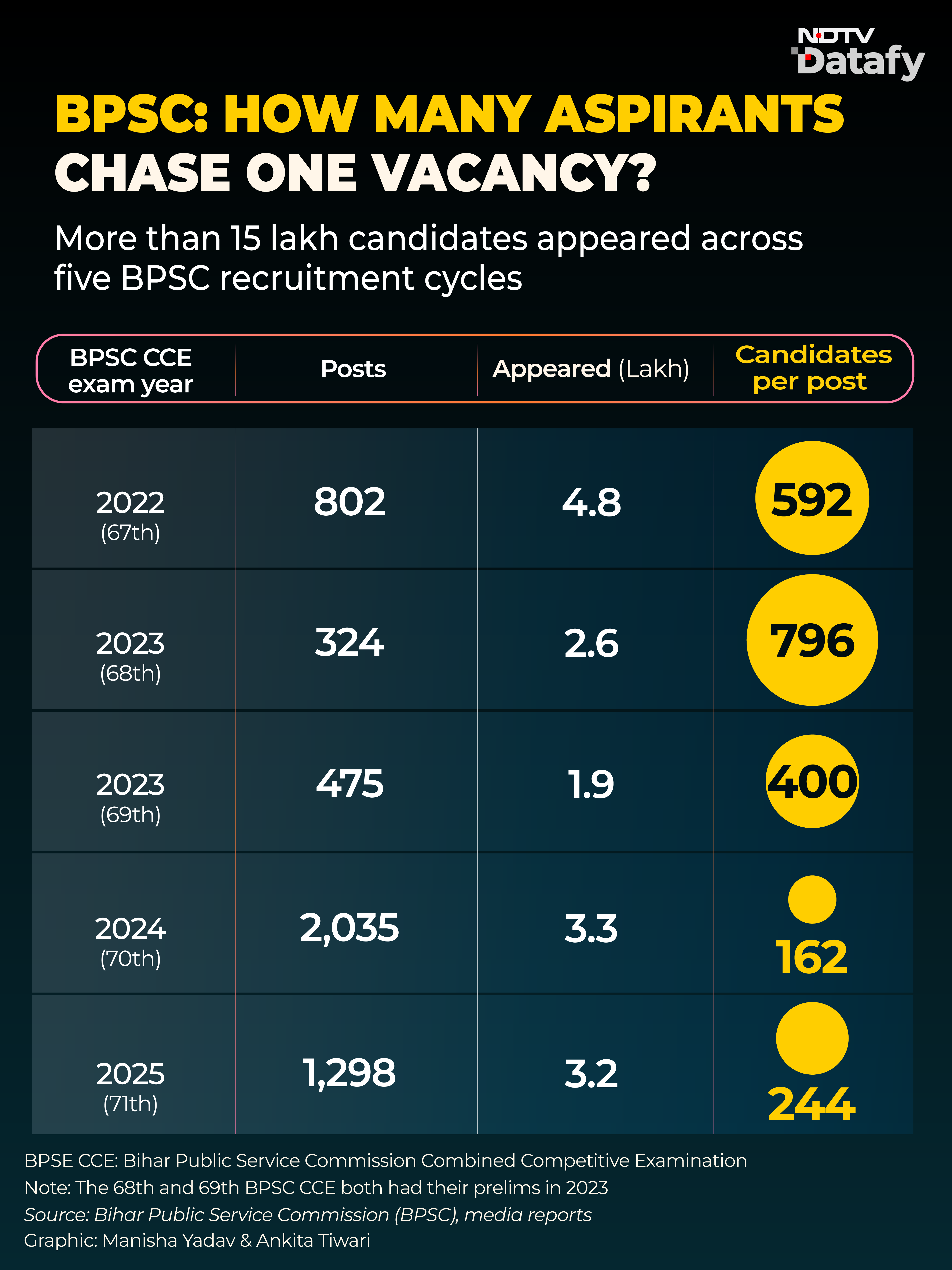
This means that even when the number of government vacancies rises, the number of people looking for these jobs remains large.
But Bihar's jobs problem is not only about unemployment.
The latest Periodic Labour Force Survey (PLFS) data show that Bihar's youth unemployment rate was 12.1% in 2025. But there is another number that needs attention: labour-force participation.
In 2025, only 34.3% of Bihar's 15-29 year olds were in the labour force, compared with 46% across India. This means Bihar had 11.7 percentage-point gap with the national level.
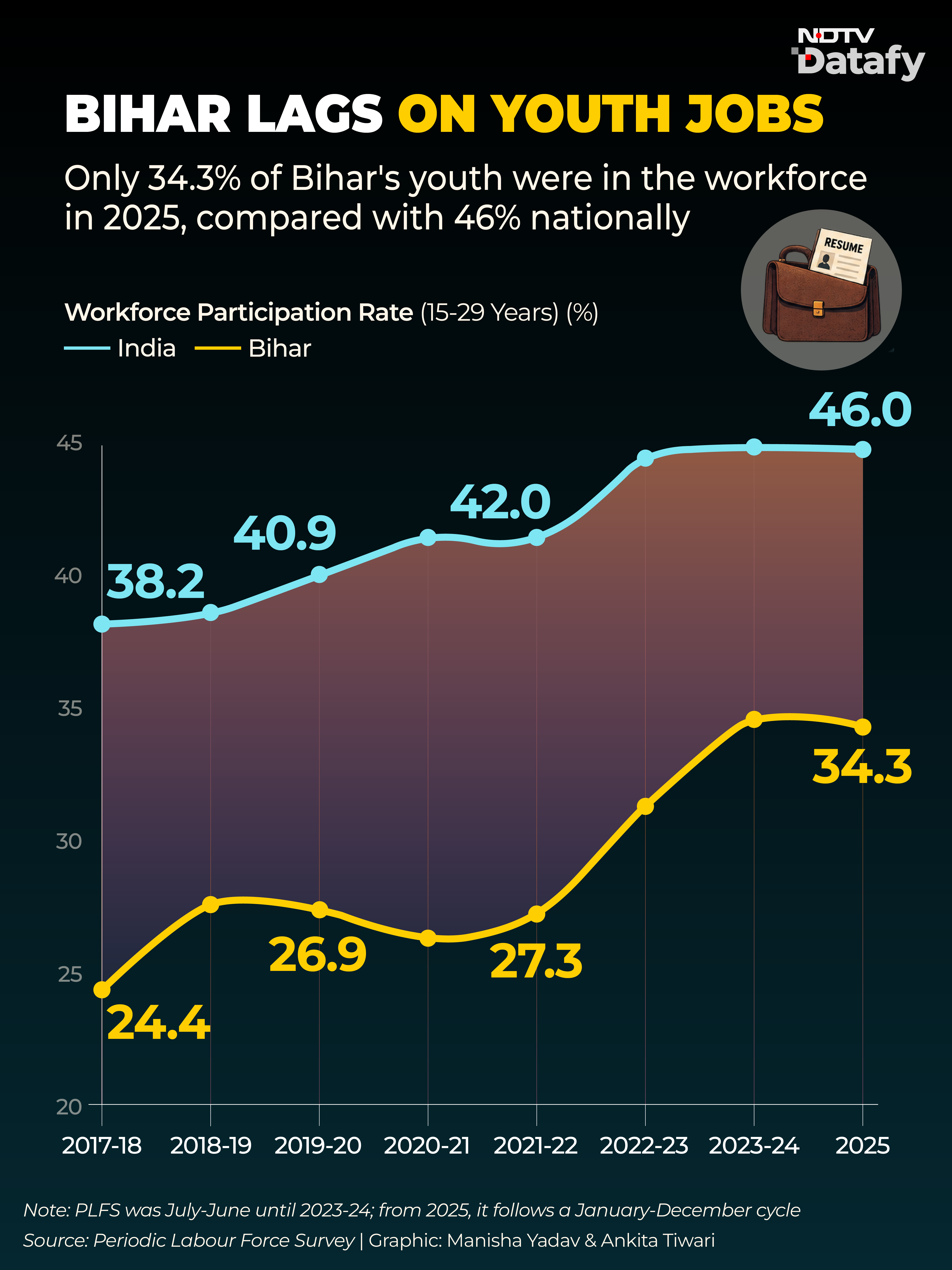
The change over time is also important. Bihar's youth Labour Force Participation Rate (LFPR) was 24.4% in 2017-18. It rose to 27.6% in 2018-19, fell to 25.7% in 2020-21, and then increased to 34.6%in 2023-24. It stood at 34.3% in 2025.
So, the issue is not simply that more young people are unemployed. Many young people are not entering the labour market in the first place.
Government jobs attract lakhs of candidates because they offer a clear and stable career path. At the same time, Bihar's lower labour-force participation suggests that the wider job market is not pulling as many young people into work or job search as it does nationally.
Track Latest News Live on NDTV.com and get news updates from India and around the world

