






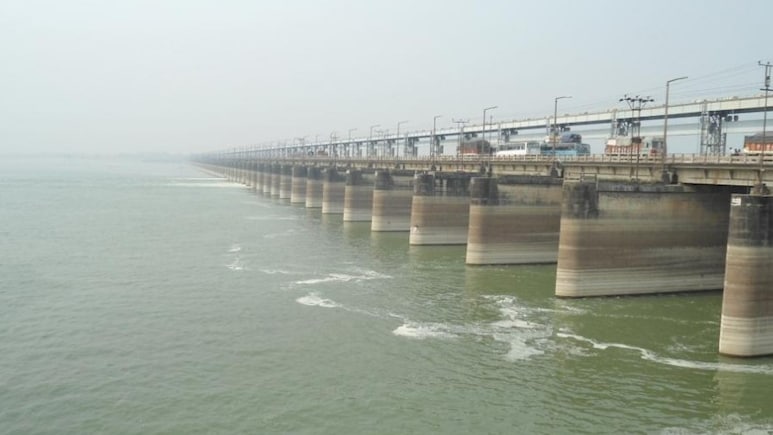
The 30-year-old Ganga water sharing treaty between India and Bangladesh -- up for renewal in December 2026 -- will be the first challenge for West Bengal's newly elected BJP government.
A sensitive issue on both sides of the border, it is expected to put to test bilateral ties between the new government in Dhaka led by Prime Minister Tarique Rahman and the NDA government led by Prime Minister Narendra Modi government in New Delhi.
With months to go for the treaty to end, India is already looking at a short-term agreement to replace the 30-year pact and Bangladesh is preparing to renegotiate the deal on terms that are more beneficial to Dhaka in the present circumstances - environmentally and politically.
The contentious Teesta water sharing deal that was on the verge of being signed by the previous Manmohan Singh-led government, was opposed by Bengal's erstwhile government led by Mamata Banerjee.
Bengal had contended that north Bengal does not have enough water and will go dry if the Teesta water is not shared judiciously with Bangladesh. At the time, the state BJP had also opposed the proposal on the same grounds.
North Bengal has been a stronghold for the BJP since it got a foothold in the state and it created an impediment for the NDA government at the Centre to push with the deal.
It would be interesting to watch whether Chief Minister Suvendu Adhikari agrees to shares Ganga water with Bangladesh - a move that could impact people in south Bengal -- and move ahead with the pending Teesta water sharing deal under the changed political circumstances in Bengal.
The Mamata Banerjee government's opposition to the water sharing deal acted like buffer to the Centre. Now, with a BJP government at the state, the NDA has to decide whether it will go ahead with the renewal of the Ganga water treaty and reinitiate the Teesta water sharing pact that Dhaka is looking forward to.
The signals from Dhaka are clear.
Immediately after the Bengal election results, the ruling Bangladesh Nationalist Party slammed the Mamata Banerjee government for stalling the Teesta water-sharing agreement, while extending congratulations to BJP on its Bengal win and describing the result as one that could help maintain and strengthen ties between the state and Bangladesh.
Speaking to the Indian media, BNP information secretary Azizul Baree Helal praised the BJP's performance under Suvendu Adhikari and said the relationship will continue in a positive way.
Linking the result to hopes of movement on the long-pending Teesta water-sharing issue, he said the previous government had stood in the way of the Teesta Barrage agreement and the BJP government in Bengal could now work in step with the Modi government on a deal long sought by Bangladesh.
With heightened security issues at the border, the relation between the two countries is already taking a contentious turn as the BJP made infiltration and illegal immigration from Bangladesh one of its core issues.
It is to be seen where BJP stands on the water sharing issues which are of greater importance to the people on the ground on both sides of the border.
If the BJP moves ahead on sharing river water with Bangladesh, it has to ensure that it does not happen at the cost of losing ground support.
The last water sharing pacts with Bangladesh between PM Modi and then Prime Minister Sheikh Hasina took place during a bilateral meeting in New Delhi on September 6, 2022.
The two countries had signed a MoU on sharing Kushiyara river water that impacts Assam and had jointly pledged to work on the 54 rivers the two nations share. Even so, the Ganga and Teesta waters sharing deals remain the most sensitive issues between the people of West Bengal and Bangladesh.
Ganga Water Treaty
- Under the treaty, the water is strictly divided during the dry seasons.
- If the water level at Farakka is less than 70,000 cusecs, the two nations share it 50:50.
- With a level of between 70,000 and 75,000 cusecs, Bangladesh receives 35,000 cusecs and India gets the rest.
- If water level falls below 50,000 cusecs in a 10-day period, both governments immediately consult to adjust allocations on an emergency basis.
Teesta Waters Draft Agreement
- In 2011, India and Bangladesh were in the process of negotiating a 15-year agreement under which 42.5 per cent of the water would have come to India and 37.5 per cent to Bangladesh. The rest was meant to help maintain ecology.
- Then Chief Minister of Bengal Mamata Banerjee, however, had refused to sign a treaty at the last minute, citing the possibility of severe water scarcity in the northern districts.
- Under the Constitution, water is a "state subject" and the Central government has been unable to bypass the state's objections and the treaty has been pending.

