





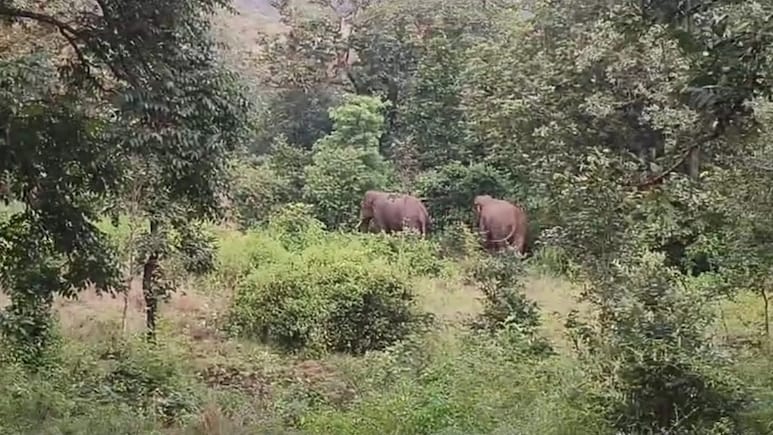
The Jharkhand government has declared an "elephant emergency" after a wild elephant went on a deadly rampage in West Singhbhum district. Forest officials said the animal, which became extremely aggressive after being separated from its herd, has killed at least 22 people so far and is covering nearly 30 kilometers a day.
The forest department has deployed over 100 personnel to track and capture the animal. They have tried tranquilising it thrice, but to no avail.
Authorities believe the elephant is in "musth," a natural phase when their testosterone levels rise, making them angrier, more dangerous, and unpredictable. Musth usually lasts two to three months, after which the animal's behaviour typically stabilises.
Divisional Forest Officer Kuldeep Meena said this was the first time a single male elephant caused so many deaths in the area. "This is an unprecedented situation. It's the first time such a pattern of fatalities has been linked to a single male elephant in the region," he said.
Elephant population in Jharkhand
Jharkhand is home to around 550 to 600 elephants, with two main groups active in Palamu and southern Chotanagpur. According to the PCCF of Wildlife, villages near forests are most affected, as elephants often move into human settlements, especially at night, in search of food and water.
Elephant attacks have also had a serious impact on other districts. Elephants have killed several people in by destroying houses and crops. In recent months, elephants have crushed people and damaged property in Ramgarh and Bokaro.
In Hazaribagh, areas such as Tatisaria, Chalkusha, Sadar, and Barkatha report high levels of fear and destruction. Homes and crops have sustained significant damage in the Santhal Pargana region, including Dumka, Jamtara, and Giridih.
The elephants have also been known to move often in areas like Palamu, Chatra, and Saraikela-Kharsawan, forcing many villagers to leave their houses
Human-elephant conflict on the rise
In Jharkhand, conflicts between humans and elephants are not new, but they have gotten worse recently. Elephant attacks resulted in almost 1,400 fatalities and over 600 serious injuries between 2000 and 2025. According to preliminary data, the numbers may increase even further in 2026.
According to forest officials, human-wildlife conflict is the main cause of the attacks. Elephants are being forced into settlements in search of food and water due to rapid deforestation, declining natural habitats, and human encroachment into elephant territory. When frightened, they can attack people, putting human lives at risk.
Track Latest News Live on NDTV.com and get news updates from India and around the world

