





- Delhi court cleared Arvind Kejriwal and Manish Sisodia in liquor policy case
- Court said it found no conspiracy or criminal intent in the excise policy
- Kejriwal had claimed policy aimed to increase revenue compared to previous model
A Delhi court has cleared former chief minister Arvind Kejriwal and his deputy Manish Sisodia in a case of alleged corruption in making a new policy to sell liquor in the national capital.
"There was no overarching conspiracy or criminal intent in the excise policy," the court said.
The CBI said it will file an appeal against the city court's judgment in the high court immediately, on grounds that several aspects of its investigation have either been ignored or not considered adequately.
In a setback for the CBI, the court said it would seek a departmental inquiry against its officials for making a public servant, Kuldeep Singh, the accused number one in the case. The CBI's method of investigation that primarily relied on pardoning suspects and making them approver came under fire from the court.
The matter which later came to be known as the Delhi liquor policy case had given a lot of trouble to the Aam Aadmi Party (AAP) chief and his aide when they were in power in Delhi.
The case dates back to a liquor policy launched by the AAP government in 2021-22, which the then Kejriwal government had claimed would bring a lot more revenue than the model that existed before that.
The Delhi government later scrapped it.
🔴#BREAKING | "I Am Kattar Imaandar, God Is With Us": Arvind Kejriwal Breaks Down After Court Clears Him In Delhi Liquor Policy Casehttps://t.co/6IbJ5O8xPY pic.twitter.com/oJDN8JRmEV
— NDTV (@ndtv) February 27, 2026
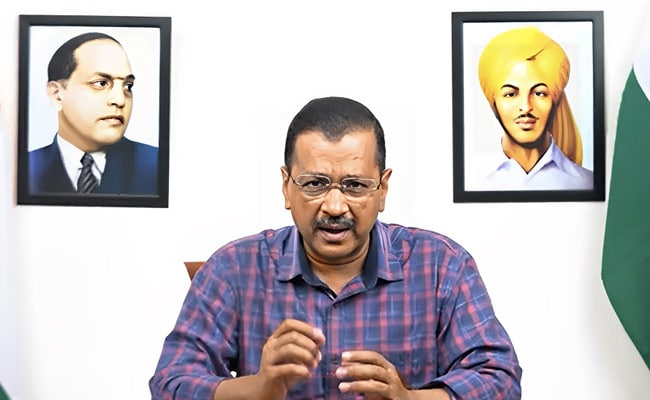
"We always said that truth ultimately wins. I always used to say that the truth is with us. A sitting chief minister was dragged out of his home and thrown into jail. Mud was flung at us," Kejriwal told reporters outside the court in central Delhi.
The former chief minister, while speaking, broke down.
"I am a hardliner of honesty (kattar imaandar)," the former chief minister, who began his political career from the massive anti-corruption campaign of Anna Hazare back in 2011, told reporters today.

The AAP's defeat in the last assembly election was to a large extent attributed to the troubles its top leaders ran into linked to the excise policy.
The conspiracy theory was such that it "cannot survive against one constitutional authority."
On South Group
The court questioned the use of the words "South Group" by the investigators to refer to whom they alleged were a coterie of politicians and liquor businessmen, instrumental in deciding the contours of the excise policy.
The court questioned what was the intention behind using the words "South Group" to refer to them, and who coined the term.
To this, the CBI replied it was used as a common term for several accused. The judge then noted a significant case in the US which was dismissed because a term was used to refer to a Dominican group.
"I believe the term South Group should not have been used," the judge said.
Court's Detailed Observations
The Central Bureau of Investigation (CBI) tried to build a conspiracy narrative, but one founded on only conjecture instead of solid proof, the court of special judge Jitender Singh of Rouse Avenue Court said in the case filed under the Prevention of Corruption Act.
The judge said not a single prima facie case can be reliably established against any of the 23 accused.
The method of investigation that mainly used approver statements came under the court's scrutiny. The court said the heavy reliance on pardoning an accused, turning the person into an approver, and using their statements to mend holes in the case or get more suspects, was an improper method.
The judge said allowing such a conduct would be a violation of constitutional principles.
The case stemmed from allegations of corruption in the now-scrapped Delhi Excise Policy 2021-22 introduced by the Aam Aadmi Party (AAP) government.
When the case began, the CBI had alleged that the policy looked to favour some private entities by reducing licence fees and fixing profit margins, leading to kickbacks and financial losses to the Delhi government.
The CBI filed a first information report (FIR) in August 2022, based on a complaint by the then Delhi Lieutenant Governor VK Saxena.
Track Latest News Live on NDTV.com and get news updates from India and around the world

