

)
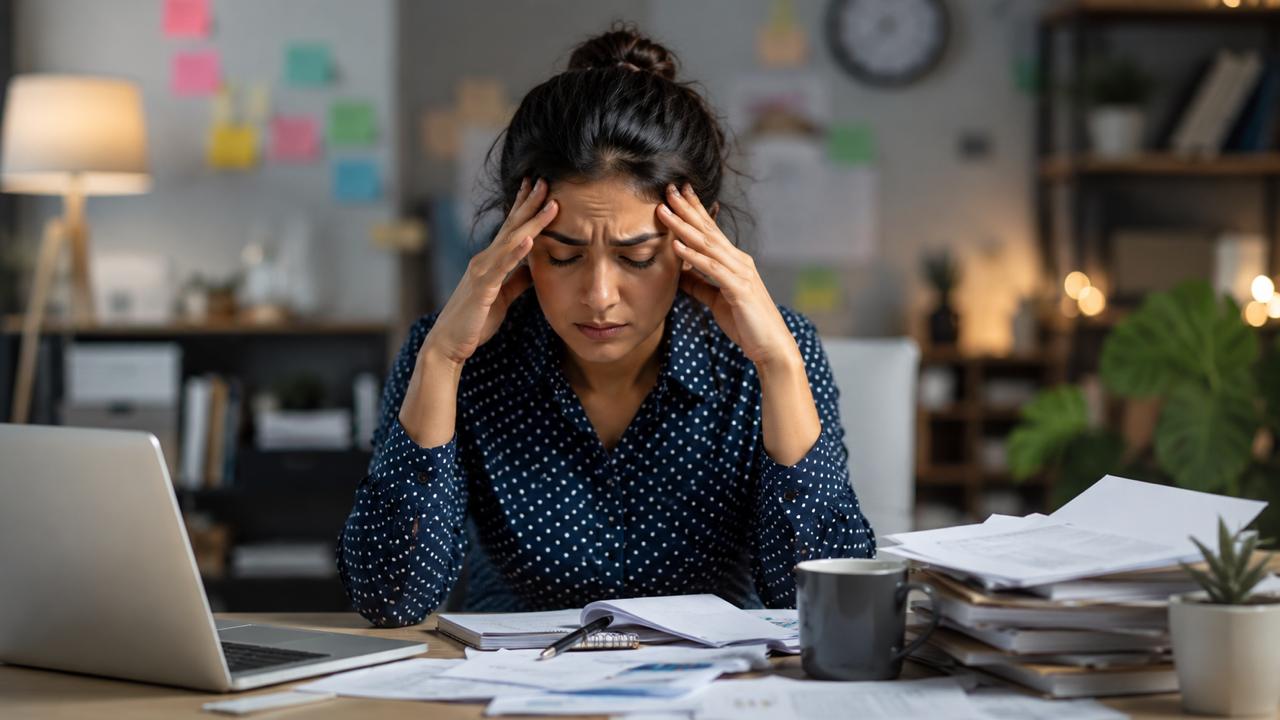
Stress is not just bad for your mind and sleep, but it can also affect your menstrual cycle. According to nutritionist Nmami Agarwal, high stress levels can disturb the hormones and signals that control your periods.
In her Instagram post, Agarwal explains that when you are stressed, your body releases more cortisol, known as the stress hormone. She states that a little cortisol is normal and helps the body deal with stress, but when stress continues for a long time, cortisol can remain high.
"During prolonged stress, the body shifts focus from 'reproduction' to 'survival'", explains Agarwal. This can affect the normal menstrual cycle.
Another thing she shared is how the brain controls ovulation. She explains that ovulation is controlled by signals between the brain and the ovaries. These signals help the body release hormones such as estrogen and progesterone at the right time.
However, high stress and cortisol can disturb these signals. This can affect hormone balance and may also interfere with ovulation. As a result, stress may lead to delayed periods, irregular ovulation, worse PMS symptoms and mood swings.
Agarwal says this is why people should not always think that a change in their period is only because of their hormones. Stress can also play a role.
"Plot twist: it's not always just your hormones affecting your menstrual cycle," she captions the post.
She even asks people to look at their stress levels when their menstrual cycle suddenly changes. "So the next time your cycle goes rogue, don't just ask, 'What's wrong with my hormones?' Also ask: 'How stressed have I been lately?'"
Agarwal explains that if you have been under a lot of stress, your body may be showing it in different ways, including changes in your menstrual cycle.
"Because sometimes, your period isn't being dramatic… your body is asking you to slow down," she concludes.
Disclaimer: This content including advice provides generic information only. It is in no way a substitute for a qualified medical opinion. Always consult a specialist or your own doctor for more information. NDTV does not claim responsibility for this information.