






- Hormones regulate all bodily functions including metabolism, mood, and reproduction
- Men maintain stable daily testosterone levels with minor fluctuations, peaking in the morning
- Women experience monthly hormonal cycles driven by estrogen and progesterone changes
Hormones control all bodily processes in humans because they affect everything from metabolism and mood through reproduction and sleep. However, one of the most important yet often misunderstood aspects of human biology is that women's hormones do not follow the same pattern as men's. Male hormone levels maintain day-to-day stability while female hormones experience continuous changes throughout both the menstrual cycle and various life stages. The observed differences exist as deliberate components of a system that operates to maintain ovulation and fertility and pregnancy.
The Hormonal Pattern in Men: Relatively Stable
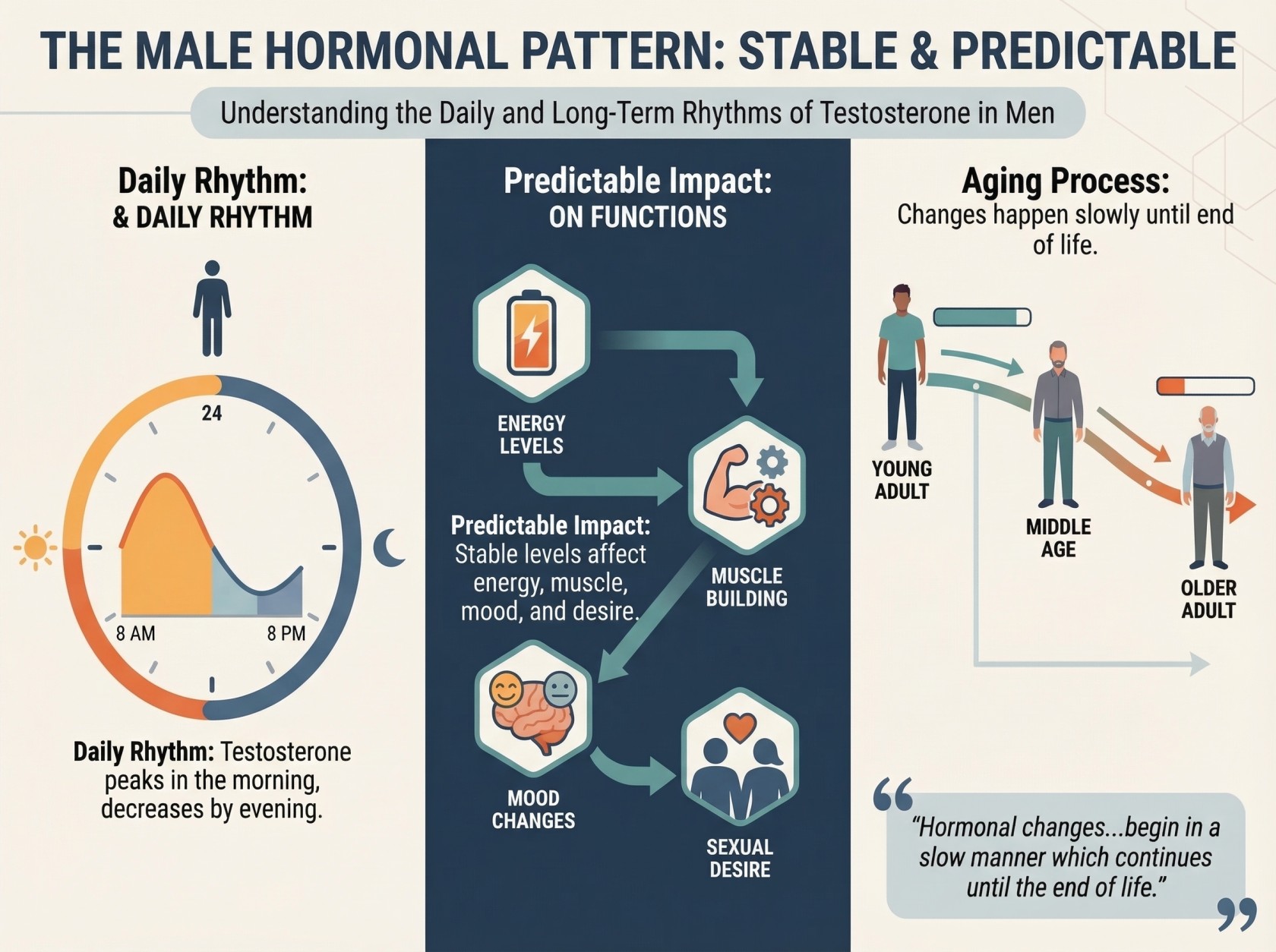
The main reproductive hormone for men in their bodies functions as testosterone. The body maintains stable hormone levels throughout the day although testosterone levels experience minor daytime fluctuations which reach their highest point in the morning and decrease until evening.
The body maintains stable hormone levels throughout the day which results in predictable energy patterns which affect all biological functions that depend on hormones including energy levels and muscle building and mood changes and sexual desire. The hormonal changes that come with aging process begin to happen in a slow manner which continues until the end of life.
The Female Hormonal Cycle: A Monthly Rhythm
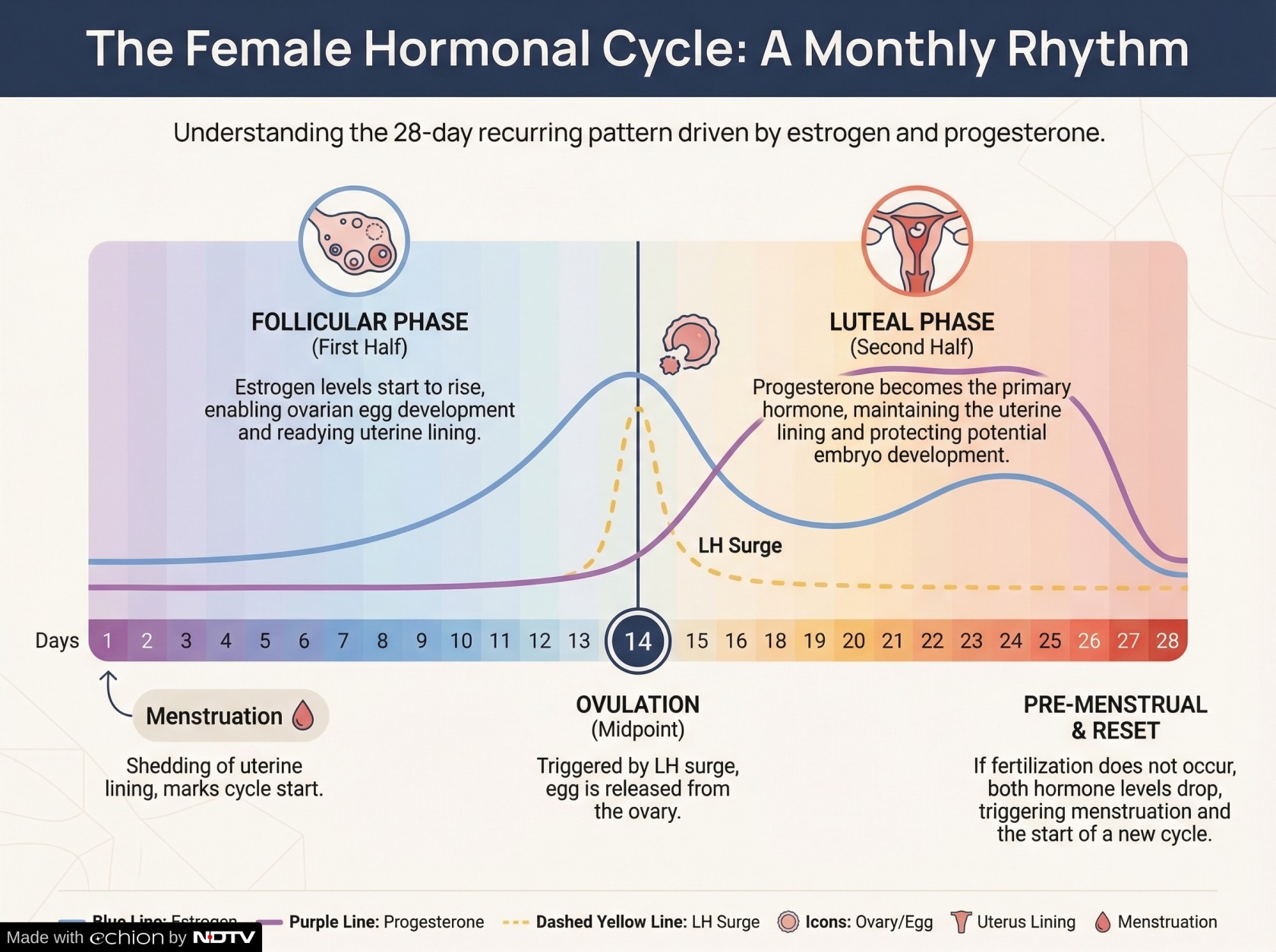
The hormonal system of women operates in a distinct manner According to their reproductive cycle women experience hormonal changes which create recurring patterns that last for 28 days During the menstrual cycle two primary hormones estrogen and progesterone exhibit specific times of their respective rise and fall activities
Estrogen levels start to rise during the follicular phase which represents the first half of the menstrual cycle. This hormone enables the ovarian egg to develop while it readies the uterine lining to receive an embryo if conception occurs. The body uses a luteinizing hormone surge to trigger ovulation which leads to the release of the egg around the cycle midpoint.
The luteal phase starts after ovulation has taken place. The period of time shows that progesterone functions as the primary hormone. The substance serves to maintain the uterine lining while protecting the embryo during its initial stage of development through the process of fertilization. When fertilization does not take place progesterone and estrogen levels decrease which triggers menstruation and marks the beginning of a fresh menstrual cycle.
Also Read: Do Colds Impact Men And Women Differently? Science Says Yes, Here's Why
Why These Fluctuations Exist
The reproductive process depends on these hormonal changes. The menstrual cycle controls ovulation while constructing the uterine environment for implantation and managing the bodily changes that occur during pregnancy. The natural conception process needs this rhythmic hormonal pattern to function properly.
Hormones beyond their role in fertility also impact various bodily systems which include metabolic processes and brain activity and sleep cycles and immune functions. The menstrual cycle causes women to experience different mood states along with changes in energy levels and appetite and ability to focus.
Hormonal Changes Across Life Stages
Women experience major hormonal changes throughout their various life stages. The start of puberty brings increasing estrogen levels which lead to the development of reproductive organs and secondary sexual traits. The reproductive phase of a woman's life continues to show regular hormonal cycles throughout her entire life.
Women in their late 30s and 40s start to experience perimenopause which serves as a transitional period that brings unpredictable hormone changes. The body reaches menopause when menstrual cycles stop and there is a substantial reduction in estrogen and progesterone production.
Also Read: Women Are Losing Bone Strength Much Earlier Than Expected, Doctor Explains Why
Why Understanding These Differences Matters
The differences between women's hormone patterns and men's hormone patterns need to be understood because they play a crucial role in improving health education. The natural hormonal patterns of women cause them to experience symptoms which include mood swings and sleep problems and tiredness and appetite variations. Healthcare professionals need to understand women's hormonal patterns because this knowledge helps create better healthcare services and workplace programs and personal health strategies. The biological pattern of men should not be used as standard to study women's health because their hormonal cycles require researchers to adopt different investigational methods.
(By Dr. Deepak Shetty, Fertility Specialist, Nova IVF Fertility, Davanagere)
Disclaimer: The opinions expressed within this article are the personal opinions of the author. NDTV is not responsible for the accuracy, completeness, suitability, or validity of any information on this article. All information is provided on an as-is basis. The information, facts or opinions appearing in the article do not reflect the views of NDTV and NDTV does not assume any responsibility or liability for the same.
Track Latest News Live on NDTV.com and get news updates from India and around the world

