





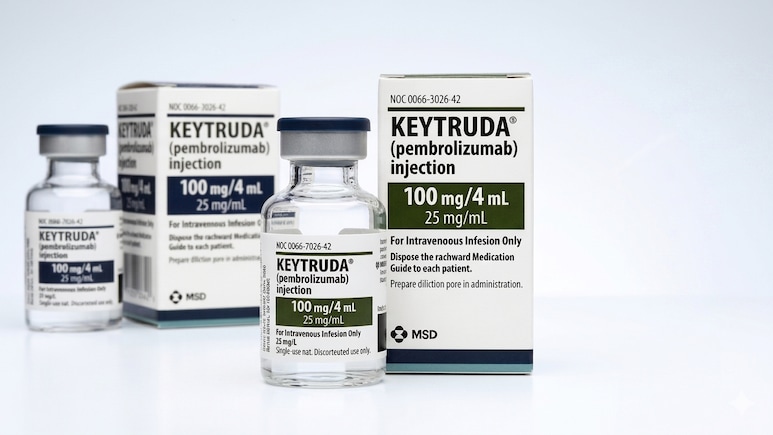
- Keytruda is an immunotherapy drug approved for multiple cancer types in India
- It blocks the PD-1 pathway to enable immune cells to attack cancer cells effectively
- Keytruda extends survival and promotes tumour shrinkage in various cancers
Keytruda, known scientifically as pembrolizumab, is an immunotherapy drug that has transformed cancer treatment for many patients worldwide. Traditional chemotherapy works by directly attacking the fast-growing cancer cells. However, with Keytruda, the body's own immune system fights the cancer cells. It's developed by Merck & Co., and was first approved by the FDA in 2014 for the the treatment of advanced or unresectable melanoma (a form of skin cancer).
Keytruda targets a specific pathway that cancer cells use to evade detection, the PD-1 pathway. By blocking proteins like PD-1 on immune cells, Keytruda allows T-cells, the immune system's key fighters, to recognise and destroy tumours more effectively. Its success has led to approvals for several cancers, including lung cancer, head and neck cancers, breast cancer, and cervical cancer. This makes it one of the most versatile cancer therapies today.
How Keytruda Works
Keytruda is a monoclonal antibody that binds to the PD-1 receptor on T-cells. Normally, cancer cells use special proteins called PD-1 and PD-L1 to hide from immune cells, like T cells, that are supposed to attack and destroy them. This helps the cancer cells to grow and spread.
Keytruda works by acting like a shield. It sticks to the PD-1 protein on the immune cells and blocks the cancer's PD-L1 protein from connecting to it. This stops the 'off switch' signal that cancer sends to the immune system, turning the T cells back 'on.' Now, the immune cells can spot the cancer cells, attack them, and help shrink tumours or slow their growth. Doctors give Keytruda through an IV drip every few weeks, and it can be used alone or with other treatments like chemotherapy.
Approved Cancer Types
In India, Keytruda is approved by the Drug Controller General of India (DCGI) for multiple cancer types. As of recent approvals, it covers 14 indications across eight tumour types. This includes; non-small cell lung cancer (NSCLC), melanoma, head and neck squamous cell carcinoma, classical Hodgkin lymphoma, urothelial carcinoma, microsatellite instability-high (MSI-H) or mismatch repair deficient (dMMR) solid tumors, triple-negative breast cancer (TNBC) in high-risk early-stage and metastatic cases, and renal cell carcinoma (RCC) as adjuvant therapy.
Additional approvals include persistent, recurrent, or metastatic cervical cancer (PD-L1 positive with CPS greater than or equal to 1), and esophageal or HER2-negative gastroesophageal junction adenocarcinoma (locally advanced or metastatic with PD-L1 CPS greater than or equal to 10).
Benefits and Effectiveness
- Improved Survival Rates: Keytruda has shown remarkable results in extending life for patients with cancers like melanoma, non-small cell lung cancer (NSCLC), and kidney cancer. Studies show higher overall survival compared to traditional treatments, allowing many patients to live longer with better quality of life by slowing disease progression.
- Tumour Shrinkage and Remission: It promotes tumour reduction, often leading to partial or complete remission. By unblocking PD-1 pathways, Keytruda helps T-cells to attack cancer cells directly, shrinking tumours and alleviating symptoms.
- Long-Term Efficacy: Unlike some therapies, Keytruda can create lasting immune memory in T-cells, providing sustained protection even after treatment ends. This results in better responses and potential long-term remission.
- Broad Cancer Applications: Approved for over a dozen cancers; including lung, skin, bladder, breast, and head/neck, Keytruda works through bloodstream delivery, targeting metastatic spread effectively across different tumour types.
Side Effects and Risks
While Keytruda is effective, it can overactivate the immune system, causing immune-related adverse events (irAEs). Some common side effects of Keytruda are:
- Mild Side Effects: Fatigue, rash, diarrhoea, nausea, joint/muscle pain, fever, cough, and loss of appetite are some of the side effects which often occur but are usually manageable and may improve over time.
- Immune-Related Reactions (irAEs): It can trigger inflammation in organs like lungs (pneumonitis), liver (hepatitis), thyroid (hypo/hyperthyroidism), or intestines (colitis). This affects 15-25% of patients and requires prompt medical attention.
- Serious Risks: Even though this is rare, the drug can cause severe issues such as life-threatening lung, heart, or kidney problems, skin reactions, or endocrine disorders.
These often resolve with steroids or treatment pauses. However, patients need close monitoring and side effects can appear even months after stopping.
Keytruda Price In India
The drug is available as a 100mg/4ml injection in India. It usually costs between Rs. 1.5 lakh to Rs. 2.16 lakh per vial. To ensure authenticity, it is strictly recommended that you purchase the drug only from reputable hospital pharmacies or hospitals.
Disclaimer: This content including advice provides generic information only. It is in no way a substitute for a qualified medical opinion. Always consult a specialist or your own doctor for more information. NDTV does not claim responsibility for this information.
Track Latest News Live on NDTV.com and get news updates from India and around the world

