





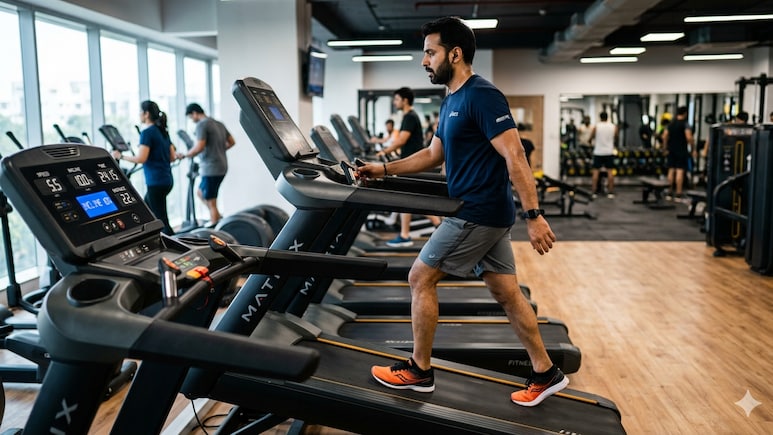
- Incline treadmill workouts at 10% increase calorie burn by engaging major lower-body muscles
- Incline walking suits beginners and those with joint issues, offering lower injury risk
- Incline running burns more calories faster but poses higher injury risks and needs recovery
Incline treadmill workouts have become increasingly popular among fitness enthusiasts, especially people looking to burn more calories without spending extra hours at the gym. A treadmill set at a 10% incline significantly increases workout intensity by forcing the body to work harder against gravity. Both walking and running on an incline can support weight loss, improve cardiovascular health, and strengthen lower-body muscles, but experts say the "better" option depends on an individual's fitness level, body weight, endurance, and long-term sustainability. While incline running may burn calories faster, incline walking offers a lower-impact alternative that can still produce impressive fat-loss results over time. Fitness trainers and sports medicine experts say consistency and recovery matter more than simply choosing the most intense workout possible.
Why Incline Workouts Burn More Calories
Walking or running uphill naturally requires more effort compared to exercising on a flat surface. A 10% incline activates larger muscle groups, particularly the glutes, hamstrings, calves, and core muscles. This increased muscular effort raises heart rate and energy expenditure, helping the body burn more calories even at slower speeds.
Running burns more calories per minute and improves cardiovascular capacity faster than walking. However, research published in journal Arteriosclerosis, Thrombosis, and Vascular Biology shows that when total energy expenditure is matched, walking and running provide similar long-term reductions in health risks like hypertension and diabetes
Experts say incline training may also improve endurance and cardiovascular fitness while reducing workout boredom. Because the body works harder on an incline, even walking can become highly challenging without needing to sprint or perform high-impact movements.
Also read: Cycling Or Treadmill? Here's What Is Better
Incline Walking: Effective Without Excessive Strain
Incline walking is often recommended for beginners, overweight individuals, older adults, or people with knee and joint concerns. At a 10% incline, walking becomes far more demanding than regular flat walking and may help people achieve significant calorie burn without the pounding stress associated with running. As per a study in the International Journal of Exercise Science, your heart rate will rise rapidly without needing to move at high speeds, which helps improve VO2 max.
Benefits Of Incline Walking
- Walking on a steep incline increases heart rate while keeping impact relatively low on the knees, ankles, and hips.
- It strongly activates the glutes and leg muscles, helping improve lower-body strength and endurance.
- Incline walking can be sustained for longer durations, which may help increase total calorie expenditure over time.
- Experts say it may support fat burning efficiently because many people can maintain moderate-intensity walking longer than high-intensity running.
- It is often easier to recover from, reducing the risk of overtraining or workout-related injuries.
Fitness experts say incline walking may also be psychologically easier for people who dislike running but still want a challenging cardio workout. Many people are able to remain consistent with incline walking because it feels manageable and sustainable over the long term.
Incline Running: Higher Intensity, Faster Calorie Burn
Running on a 10% incline dramatically increases workout intensity and cardiovascular demand. Because the body must propel itself upward with every step, calorie burn rises rapidly compared to flat-surface running. Incline running is commonly used by athletes and advanced gym-goers to improve stamina, speed, and overall conditioning. However, sports medicine specialists warn that high-intensity incline running can place considerable stress on muscles, tendons, and joints if performed excessively or without proper conditioning. Benefits And Risks Of Incline Running
- Incline running generally burns more calories per minute compared to incline walking because of its higher intensity.
- It may improve aerobic capacity, cardiovascular endurance, and athletic performance more quickly.
- Running uphill recruits multiple muscle groups simultaneously, increasing workout efficiency.
- However, experts warn that steep incline running may increase the risk of shin splints, calf strain, Achilles tendon irritation, and knee stress in some individuals.
- Recovery needs are usually higher after intense incline running sessions, especially for beginners or people carrying excess body weight.
Experts say people attempting incline running should gradually increase intensity instead of immediately sprinting at steep inclines. Proper footwear, warm-ups, and recovery are important to reduce injury risk.
Which One Burns More Fat?
Many people assume running is automatically superior for fat loss, but experts say the answer is more nuanced. Running may burn more calories in a shorter period, but incline walking can still contribute significantly to weight loss if performed consistently and for longer durations.
Studies suggest sustainable exercise habits are often more important than short bursts of extreme intensity. Someone who can walk consistently for 45 minutes daily may ultimately achieve better long-term results than someone who runs intensely but struggles with recovery or injury.
Nutrition also remains critical. Doctors stress that no treadmill workout alone can guarantee weight loss without maintaining a calorie deficit through balanced eating habits.
What Should Beginners Choose?
Fitness trainers generally recommend incline walking for beginners because it allows gradual cardiovascular improvement with lower injury risk. Once endurance improves, some individuals may add intervals of incline running to increase workout intensity. People with:
- Knee pain
- Obesity
- Joint issues
- Low fitness levels
may tolerate incline walking better initially. Meanwhile, experienced exercisers looking for faster conditioning improvements may prefer incline running as part of interval training.
Also read: Want Better Workout Results? It All Depends On What Your Brain Does After You Exercise
Both incline walking and incline running on a 10% treadmill can effectively support weight loss and cardiovascular fitness. Running usually burns calories faster, but incline walking offers a lower-impact, sustainable option that may be easier to maintain consistently.
Experts say the most effective workout is ultimately the one that matches a person's fitness level, recovery ability, and long-term consistency without causing injury or burnout.
Disclaimer: This content including advice provides generic information only. It is in no way a substitute for a qualified medical opinion. Always consult a specialist or your own doctor for more information. NDTV does not claim responsibility for this information.
Track Latest News Live on NDTV.com and get news updates from India and around the world

