)
India's dietary landscape has undergone a profound transformation. Traditional, home-cooked meals are increasingly supplemented and sometimes replaced by street foods, packaged snacks and app-based deliveries. This convenience-driven shift has brought dietary fats to the centre of India's non-communicable disease (NCD) prevention agenda. Rising obesity, diabetes and cardiovascular disease, particularly in urban populations, have intensified calls to improve the quality and balance of dietary fat consumption.
Yet, the conversation must begin with balance. Fats are not inherently harmful. They are essential nutrients that provide energy, support cell structure, enable absorption of fat-soluble vitamins (A, D, E and K), and enhance satiety. Modern nutrition science makes an important distinction: both the quantity and quality of fats consumed are important for long-term health outcomes.
Oils rich in unsaturated fatty acids, monounsaturated (MUFA) and polyunsaturated (PUFA), offer metabolic advantages. Many edible oils contain natural antioxidants such as carotenoids, tocopherols, tocotrienols and polyphenols that help limit oxidative stress and inflammation; palm oil, for instance, is a particularly rich natural source of carotenoids and tocotrienols. At the same time, saturated fatty acids are also a natural component of many traditional foods and edible oils and can be safely consumed within recommended dietary limits as part of a balanced diet. The regulatory challenge, therefore, is not merely to restrict harmful fats, but to reshape the broader food system so that better-quality fats become the norm.
Understanding Visible, Invisible and Industrial Fats
The health impact of dietary fat depends on its type. Saturated fatty acids are widely present in natural foods and edible oils and can be consumed safely when intake remains within recommended levels of around 10% of total daily energy intake, as suggested by the World Health Organization.
Industrial trans fats, formed during partial hydrogenation of vegetable oils, are far more harmful and have no known health benefits. They disrupt lipid metabolism, impair endothelial function and significantly elevate the risk of heart disease and diabetes. Certain naturally stable oils, including palm oil, do not require partial hydrogenation for many food applications and are therefore naturally free of industrial trans fats.
Indian diets contain both visible and invisible fats. Invisible fats are naturally present in cereals, pulses and staples. Visible fats such as ghee, butter, vanaspati and edible oils are added during cooking or processing. When visible fats are used liberally, particularly in fried foods, overall intake can escalate quickly. Repeated heating of oils, common in commercial frying, can also produce harmful oxidation products and small quantities of trans fats that compound health risks, which is why oils with greater natural oxidative stability, such as palm oil, are widely used in commercial frying and food processing.
Recognising this threat, India prioritised the elimination of industrial trans fats. Through phased reductions in permissible trans-fat content in edible oils and processed foods, mandatory labelling requirements and national awareness campaigns, the country aligned itself with global best practices. The removal of industrial trans fats from the food supply marks a significant public-health achievement.
Also Read: Can Blending Vegetable Oils Improve Nutritional Values? Expert Says Yes, Shares Tips
From Single Nutrients to Fat Quality
The regulatory strategy of the Food Safety and Standards Authority of India has, therefore, evolved. The first phase focused on eliminating the most harmful fats. The next phase aims to improve the overall fatty-acid profile of India's food supply while encouraging balanced consumption patterns.
This broader approach rests on several pillars: eliminating industrial trans fats from the food supply; encouraging balanced fatty-acid profiles across edible oils; supporting reformulation across industry, including MSMEs; and strengthening labelling to empower informed consumer choice.
Mandatory declaration of saturated and trans fats has already enhanced transparency. The regulatory conversation is now expanding to front-of-package labelling for foods high in sugar, salt and fat, reflecting a move towards shaping healthier food environments rather than relying solely on individual restraint.
Scientific guidance reinforces this direction. The Dietary Guidelines for Indians 2024, issued by the ICMR-National Institute of Nutrition (NIN), emphasise that no single edible oil is nutritionally ideal. Essential fatty acids, particularly omega-6 and omega-3 are best obtained through diversity, rotation or scientifically balanced blends.
Restoring Oil Diversity
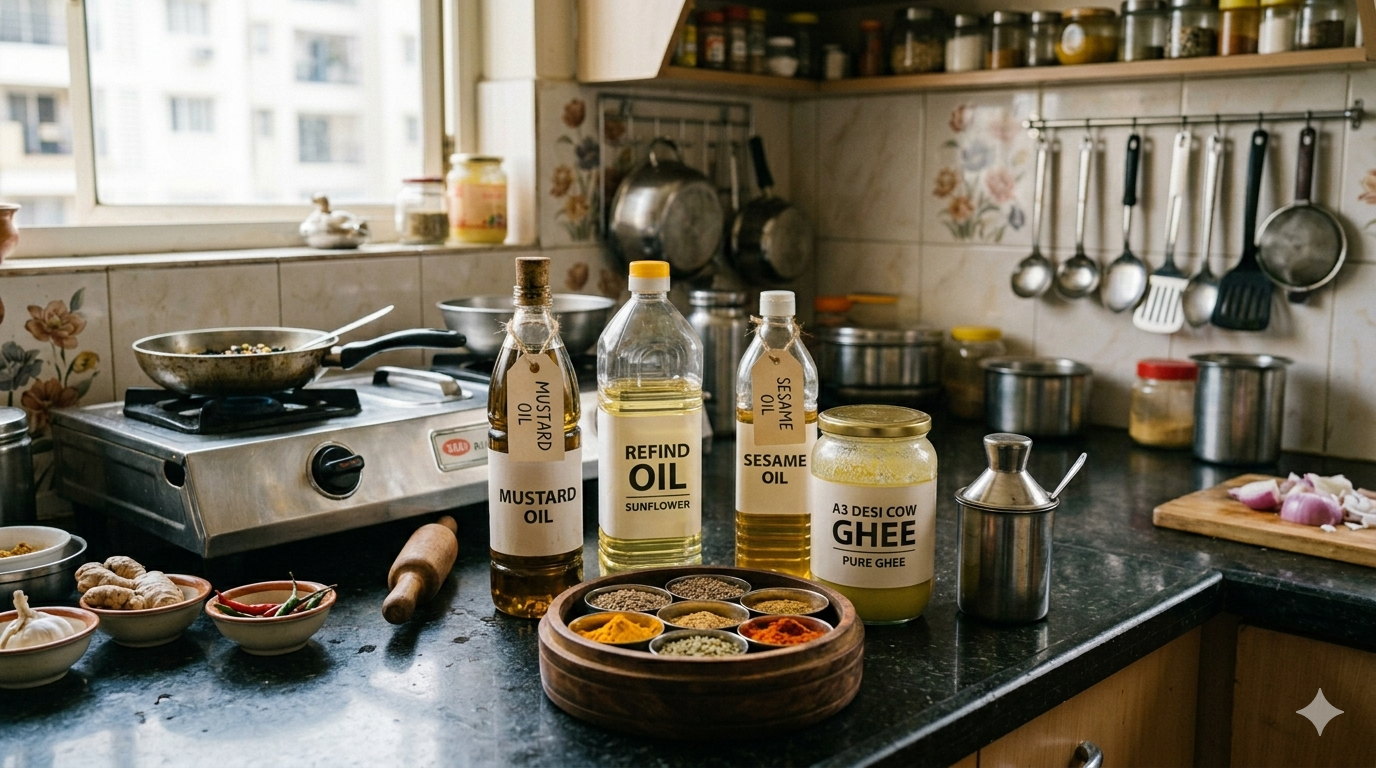
India historically benefited from edible-oil diversity. Mustard in the north and east, groundnut in the west, sesame in traditional preparations, coconut in the south, along with palm and sunflower oils, contributed distinct fatty-acid profiles and natural antioxidants to regional diets. Modern supply chains and large-scale food processing, however, have narrowed this diversity in many urban markets.
Encouraging appropriate blending and revisiting blending norms, while safeguarding against adulteration, can help restore balance between saturated, monounsaturated and polyunsaturated fats. Diversity reduces dependence on any single fatty-acid profile and aligns better with long-term metabolic health.
Importantly, healthier choices must be affordable and accessible. Street vendors, small eateries, food manufacturers and households cannot shift unless healthier oils are widely available at competitive prices. This requires coordination across agriculture, food processing, trade policy and regulation.
Also Read: Move Over Olive Oil, Nutritionist Recommends Mustard Oil For Heart Health
Protecting the Next Generation
Another emerging concern is the dietary environment of children and adolescents. Easy access to ultra-processed foods high in sugar, salt and fat shapes early taste preferences and consumption patterns. Labelling reforms, marketing oversight and school-level nutrition safeguards are, therefore, integral to protecting long-term health outcomes.
Fat quality is not merely an issue of personal discipline; it is shaped by the design of the food environment. When healthier oils are accessible, clearly labelled and economically viable, the default choice gradually improves.
India's progress shows that public health gains are achievable when regulation evolves with evidence. The next chapter lies not just in removing harmful fats, but in ensuring that safe, balanced and nutritionally appropriate fats become the foundation of the Indian diet.
(By Dr Kavitha Ramasamy, Joint Director, Food Safety and Standards Authority of India (FSSAI))
Disclaimer: The opinions expressed within this article are the personal opinions of the author. NDTV is not responsible for the accuracy, completeness, suitability, or validity of any information on this article. All information is provided on an as-is basis. The information, facts or opinions appearing in the article do not reflect the views of NDTV and NDTV does not assume any responsibility or liability for the same.