

)
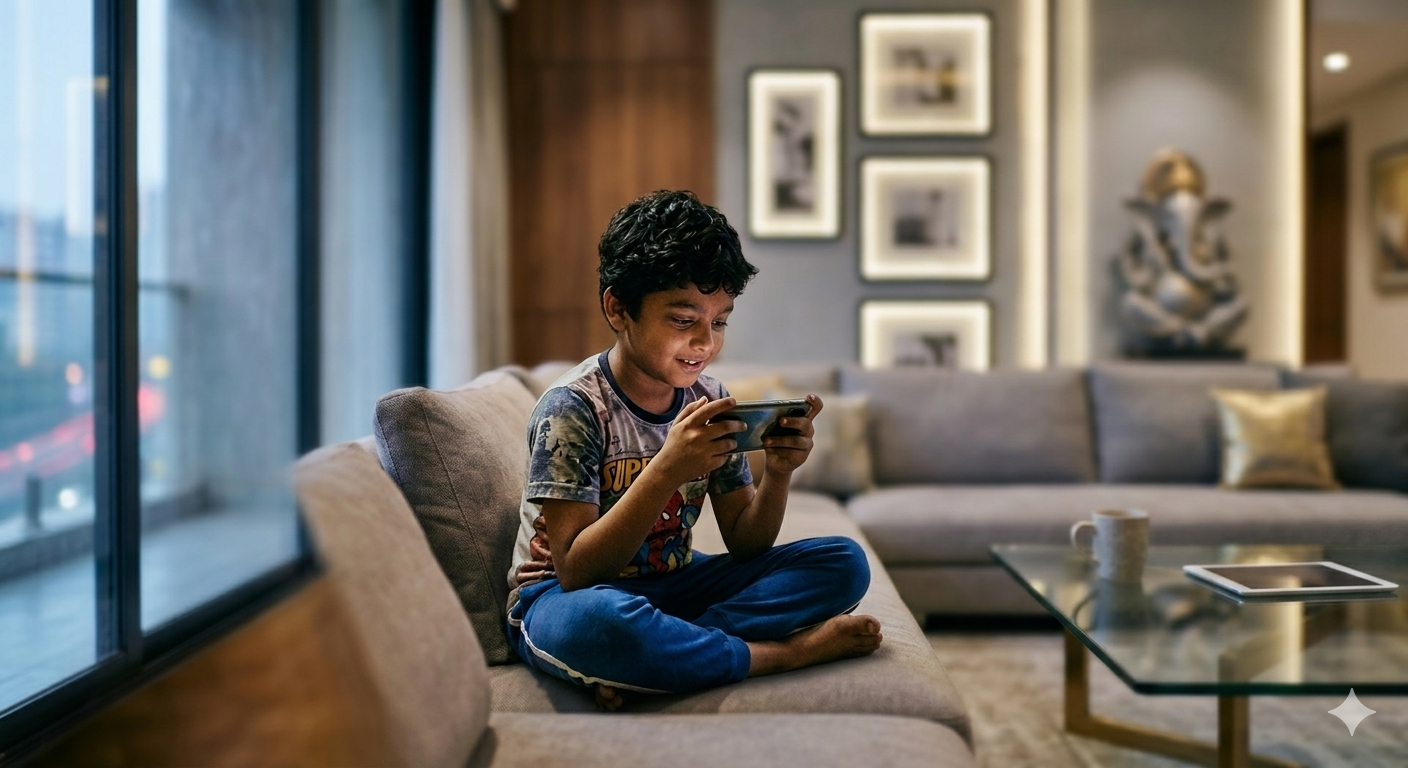
Pediatricians in India have observed a worrying trend in recent times. Young children are increasingly being brought in for delayed speech and language development. Developmental differences in children are common; however, a large body of observational evidence is now pointing towards one key factor in this trend: too much screen time. Screen time in young children is not always given enough attention in modern parenting; however, it is now being recognized as a silent epidemic in child development.
Why Early Conversations Matter More Than We Think
It is no secret that before a child says their very first word, their brains have been working hard in preparation for the art of communication. These early days, especially within the first three years of a child's life, is a time of important neurological development in children, and each and every conversation is important in laying down a strong foundation for effective communication and learning for children.
What is of importance in this section is that children do not learn how to communicate in a passive manner. In fact, children learn how to communicate by interacting and responding to another person, such as responding to a parent's smile, imitating a sound they hear, pointing at objects in the environment, and so on. Such conversations, though of little importance, are of great significance in helping children learn how to communicate and communicate effectively. However, if such conversations are minimized and replaced by watching screens, children's brains do not get enough stimulation on how to communicate.
The Role of Screen Time in Speech Delay
The use of smartphones, tablets, and televisions has become very common in today's world. These electronic media are not only affecting the lives of adults but are also affecting infants and toddlers. In most cases, parents use electronic media as a tool to calm their infants. Although screen time can be very effective in calming infants, there are several ways in which screen time can affect the speech development of infants.
One of the ways in which screen time can affect the speech development of infants is by reducing the amount of time spent interacting with infants. When parents talk to their infants, they can communicate effectively with their infants. In addition, screen time can affect the speech development of infants by overwhelming the infant's developing brain. Background screen time, such as television in the background, can affect the speech development of infants.
Signs Parents Should Watch For
It is also important for parents to be aware of the signs of delayed speech development in their children. A child at one year of age should be able to make sounds that resemble words and should also be able to recognize his or her name. A child at 18 months of age should be able to speak a few words, and a child at two years of age should be able to form simple phrases.
If a child fails to maintain eye contact, fails to recognize his or her name, and has gestures instead of speaking and low vocabulary, then it is a sign of delayed speech development. Too much screen time is a cause of a delayed speech development in many such cases.
The Indian Context
In an urban Indian household, the nuclear family setup coupled with a hectic work schedule and an increasing number of gadgets at their disposal has resulted in screen time becoming an integral part of a child's daily schedule. Also, the general belief that "educational videos" can provide a substitute for real-life learning only adds to the problem.
It is a general understanding that while learning through videos may not provide an adequate substitute for real-life learning, it is important to realize that language is not just restricted to words spoken.
Recommendations for Healthy Development
To foster the development of speech and language skills in children, it is critical to inculcate good screen usage habits in children from an early age. For children under the age of two, screen time should be completely avoided, except in rare cases of video calls. In addition, for children who are more than two years of age, it is allowed for them to use screens in the company of a parent for 1 hour or less per day.
Parents and Caregivers: Parents and caregivers of children can contribute to the improvement of children's speech and language development through various activities that they can engage in with their children. They can also contribute by ensuring that they do not allow children to have screens during mealtimes, playtime and bedtime. Most importantly, parents should try to inculcate good screen use habits in themselves, as children always follow what their parents and caregivers do.
When to Seek Help
In situations where there is a concern about the speech development of a child, it is not recommended to wait long before taking action. It is recommended that a child's pediatrician and speech therapist should intervene early, as it will make a big difference in the end result.
Excessive screen time-related speech delays for children is a rising concern, but it is one that can be avoided by creating a conducive environment for speech development and being mindful of excessive screen time.
(By Dr Krishna Prasad, Consultant - Paediatrician, Motherhood Hospitals, Electronic City, Bengaluru)
Disclaimer: The opinions expressed within this article are the personal opinions of the author. NDTV is not responsible for the accuracy, completeness, suitability, or validity of any information on this article. All information is provided on an as-is basis. The information, facts or opinions appearing in the article do not reflect the views of NDTV and NDTV does not assume any responsibility or liability for the same.