

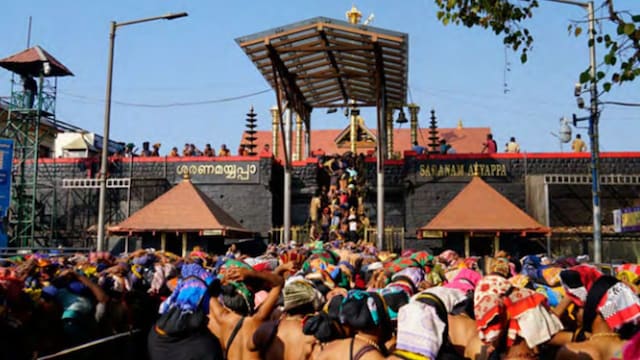
The annual Sabarimala pilgrimage in Kerala is a significant religious event that draws millions of devotees from across India. However, the physically demanding journey to the hill shrine, particularly the steep trek from Pamba to Sannidhanam, can pose serious health risks, especially for older adults and people with underlying cardiovascular conditions. Recognising these risks, the Kerala Health Department has issued fresh cardiac safety guidelines for Ayyappa devotees undertaking the pilgrimage during the 2026-27 Mandala-Makaravilakku season. The advisory urges people with a history of heart disease to undergo medical examinations and obtain fitness clearance before attempting the trek. It also cautions against excessive physical exertion, skipping meals, dehydration and ignoring warning signs of a cardiac emergency.
The guidelines come amid concerns about cardiac events during the pilgrimage, where sudden strenuous activity, steep uphill climbing, crowd pressure and inadequate physical preparation can place considerable stress on the heart.
Importantly, the advisory is not just for people with diagnosed heart disease. It highlights why pilgrims of different ages and fitness levels need to understand their physical limitations, recognise cardiac warning signs and seek timely medical assistance rather than pushing themselves to complete the journey.
What Are Kerala's New Cardiac Safety Guidelines For Sabarimala Pilgrims?
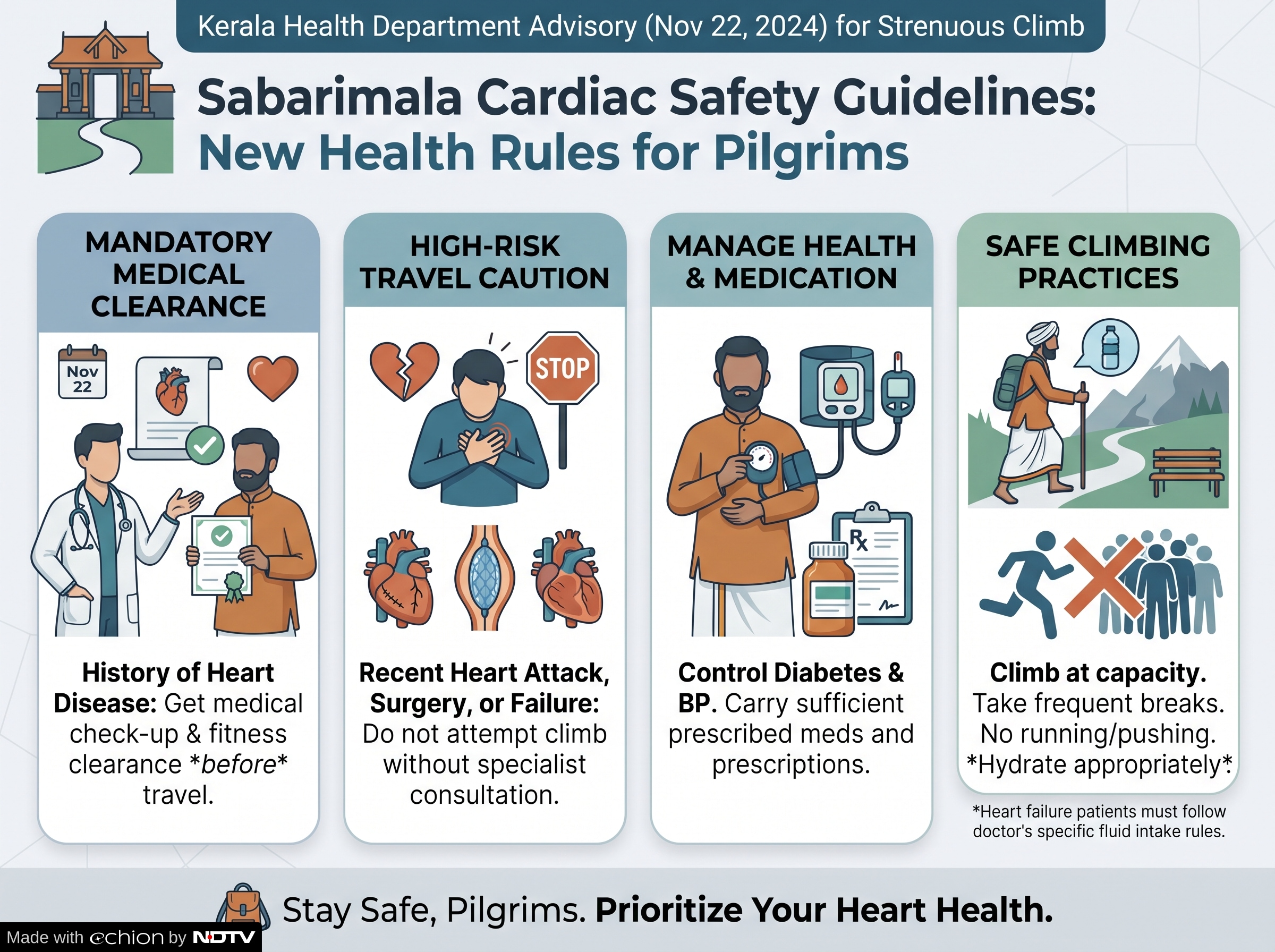
According to the Kerala Health Department's November 22 advisory, devotees with a history of heart disease must undergo a medical check-up and obtain fitness clearance from their doctors before undertaking the pilgrimage.
People who have recently experienced a heart attack, undergone heart surgery or angioplasty, or suffered heart failure should not attempt the strenuous climb without consulting a specialist.
The department has also advised pilgrims to:
- Keep existing health conditions, including diabetes and high blood pressure, under control
- Continue prescribed medication without interruption and carry sufficient medicines along with their prescriptions
- Climb according to their physical capacity instead of attempting to maintain a fast pace
- Take frequent breaks and avoid excessive physical exertion
- Drink adequate water, unless medically advised to restrict fluid intake
- Avoid beginning the climb on an empty stomach
- Refrain from running or pushing through crowds
The department has particularly cautioned people with heart failure against following general hydration advice without considering their individual medical requirements. Those prescribed fluid restrictions must follow their treating doctor's instructions.
Which Symptoms Could Indicate A Cardiac Emergency?
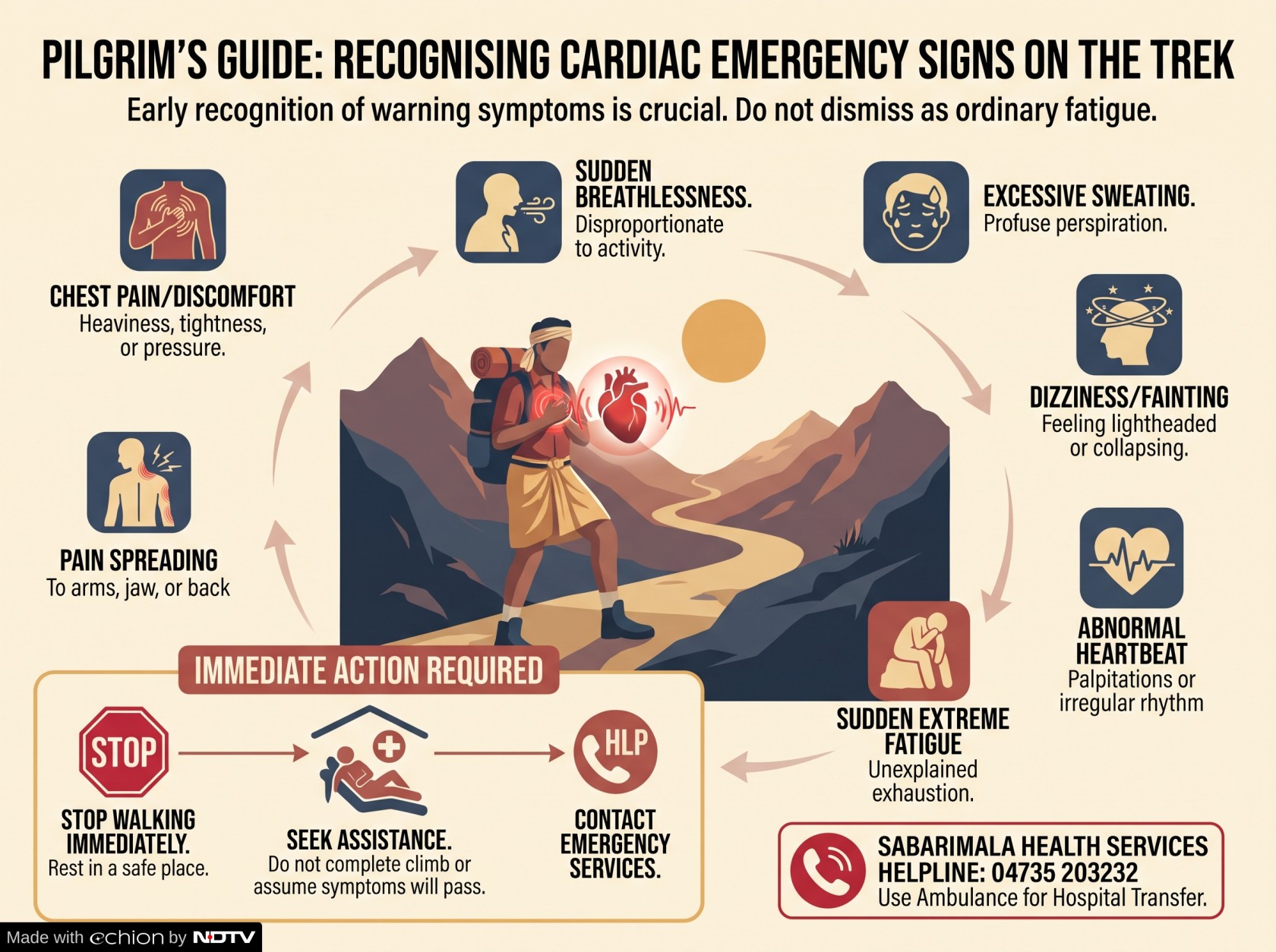
One of the most important aspects of the advisory is its emphasis on recognising early warning signs rather than dismissing discomfort as ordinary trekking fatigue.
According to the Health Department, symptoms that could indicate a cardiac emergency include:
- Chest pain, heaviness, tightness or discomfort
- Breathlessness, particularly when it is sudden or disproportionate to physical activity
- Excessive sweating
- Dizziness or fainting
- Abnormal changes in heartbeat or palpitations
- Sudden and extreme fatigue
- Pain spreading to the arms, jaw or back
Pilgrims experiencing any of these symptoms should immediately stop walking, rest in a safe place and seek assistance at the nearest emergency medical centre. They should not attempt to complete the climb or assume that the symptoms will disappear with rest.
For emergency assistance, devotees can contact the Sabarimala health services helpline at 04735 203232. Ambulance services should be used to transfer patients to hospitals when necessary.
Why Can The Sabarimala Trek Trigger Cardiac Events?
The concern is closely linked to the physical demands of the pilgrimage. The climb from Pamba to Sannidhanam involves steep sections, uneven terrain and sustained physical activity. The Neelimala-Appachimedu stretch is particularly demanding.
During strenuous exercise, the heart needs to pump more blood to supply oxygen to working muscles. This increases heart rate, cardiac output and the heart's demand for oxygen.
In people with underlying coronary artery disease, narrowed arteries may not be able to supply sufficient blood to the heart muscle during sudden or intense exertion. This can trigger myocardial ischaemia and, in some cases, a heart attack.
Strenuous activity can also trigger dangerous disturbances in heart rhythm in susceptible individuals. The risk may be higher among people with undiagnosed hypertension, diabetes, high cholesterol or existing cardiovascular disease. Age, poor physical conditioning and a sudden increase in exercise intensity can add to the strain.
Importantly, being able to perform routine daily activities does not necessarily mean someone is medically fit for a prolonged, steep uphill trek.
READ | What To Do Right After A Seizure: A Minute-By-Minute Guide
Why Are These Guidelines Particularly Important In India?
The advisory is significant because cardiovascular disease remains a major public health concern in India, where hypertension, diabetes, obesity and high cholesterol are important risk factors for heart disease.
According to the Indian Council of Medical Research (ICMR), cardiovascular diseases account for a substantial proportion of deaths in the country. The increasing burden of non-communicable diseases means that large public gatherings involving strenuous physical activity require appropriate health preparedness.
The Sabarimala pilgrimage presents a particular challenge because devotees may undertake the trek after months of relatively limited physical activity. Some also observe religious fasting and dietary restrictions during the pilgrimage period, which can complicate the management of existing health conditions.
The risks are not restricted to older devotees. People with previously undiagnosed cardiovascular conditions may also experience symptoms for the first time during intense physical exertion.
A particularly concerning finding emerged during the 2025 Mandala-Makaravilakku season. In a November 29, 2025, Kerala High Court proceeding, the Special Commissioner's report referred to approximately 150 cardiac events during a pilgrimage season, of which 40-42 reportedly resulted in deaths. The court also highlighted the potential for sudden strenuous exertion to precipitate acute cardiac episodes.
These figures underline why prevention, medical screening and timely emergency intervention are essential.
What Medical Facilities Has Kerala Arranged Along The Pilgrimage Route?
Alongside the individual safety advisory, Kerala has strengthened its healthcare infrastructure for the 2026-27 pilgrimage season. According to the Kerala Information and Public Relations Department, 22 emergency medical centres have been established along the pilgrimage routes, with round-the-clock services.
These centres provide trained healthcare personnel, first aid, basic life support and facilities to monitor oxygen saturation, blood pressure and blood glucose levels.
The government has also arranged:
- 63 hospital beds and 14 ICU beds across Nilakkal, Pamba and Sannidhanam
- Dedicated cardiology facilities at Neelimala and Appachimedu
- Regular, 108 and advanced life-support ambulance services
- Off-road ambulances and mobile medical units for difficult terrain
- Specialised treatment facilities at nearby hospitals, including Kottayam Medical College
The importance of these arrangements was evident during the first five days of the 2026 pilgrimage season. According to figures shared by Kerala Health Minister K. Muraleedharan on November 21, 13,029 pilgrims had received treatment at healthcare centres. Of 16 reported heart attacks, 11 patients were saved through timely medical intervention. This highlights the importance of having emergency medical assistance available close to the trekking route, where transporting a patient to a distant hospital could otherwise delay treatment.
READ | How Often Should Non-Diabetics Check Their Blood Sugar?
Kerala's cardiac safety guidelines serve as an important reminder that religious devotion should not come at the cost of one's health. The Sabarimala pilgrimage involves considerable physical exertion, and completing the trek should never become a test of endurance for someone who is medically unfit. People with existing heart conditions, diabetes or hypertension should consult their doctors before travelling, continue their prescribed medication and follow individual medical advice. Even otherwise healthy pilgrims should prepare physically, climb at a comfortable pace and take warning symptoms seriously.
The larger lesson extends beyond Sabarimala: strenuous religious journeys, mass gatherings and physically demanding pilgrimages need to be approached with adequate health preparation, particularly in a country where cardiovascular disease is a significant public health concern. Recognising symptoms early and seeking emergency care can make the difference between a medical emergency and a life saved.
Disclaimer: This content including advice provides generic information only. It is in no way a substitute for a qualified medical opinion. Always consult a specialist or your own doctor for more information. NDTV does not claim responsibility for this information.