

Vitamin D is essential for healthy bones, muscles and immune function. In India, where vitamin D deficiency is a recognised nutritional concern, supplements and fortified foods are often promoted as ways to improve vitamin D levels. However, consuming too much of this nutrient can be harmful, and an unusual Indian medical case involving three members of a family has brought this risk into focus.
The adults developed severe vitamin D toxicity after consuming locally sourced, unpackaged cooking oil that was subsequently found to contain dangerously high concentrations of vitamin D3. All three experienced high blood calcium levels and acute kidney injury. The case, reported in JCEM Case Reports, demonstrates how excessive vitamin D exposure can have serious consequences even when it does not come from conventional supplements.
While vitamin D toxicity is uncommon, it can become life-threatening if not recognised and treated promptly. Understanding how it develops, the symptoms to watch for and the risks of taking high-dose supplements is particularly important as vitamin supplementation becomes increasingly common.
How Did Three Family Members Develop Vitamin D Toxicity?
The case was documented by researchers including doctors from the Postgraduate Institute of Medical Education and Research (PGIMER), Chandigarh. Three adults from the same household presented at hospital within three days of one another with severe hypercalcemia, an abnormally high level of calcium in the blood, and acute kidney injury.
Investigations revealed markedly elevated levels of 25-hydroxyvitamin D, the main indicator used to assess vitamin D status, alongside suppressed parathyroid hormone (PTH). This pattern suggested that excessive vitamin D, rather than a hormone-related condition, was driving the rise in calcium.
The common exposure was locally sourced, unpackaged cooking oil consumed by the family. Laboratory testing of the retained oil confirmed vitamin D3 contamination at 1,286 micrograms per millilitre. This is an exceptionally high concentration.
The patients were treated with intravenous fluids, calcitonin and denosumab to bring down their calcium levels. One required dialysis because of the severity of the kidney injury. All three eventually recovered, according to the case report.
The authors highlighted the importance of considering food-related exposure when several people in the same household develop unexplained high calcium levels. The precise route through which the oil became contaminated was not established in the report.
What Is Vitamin D Toxicity?
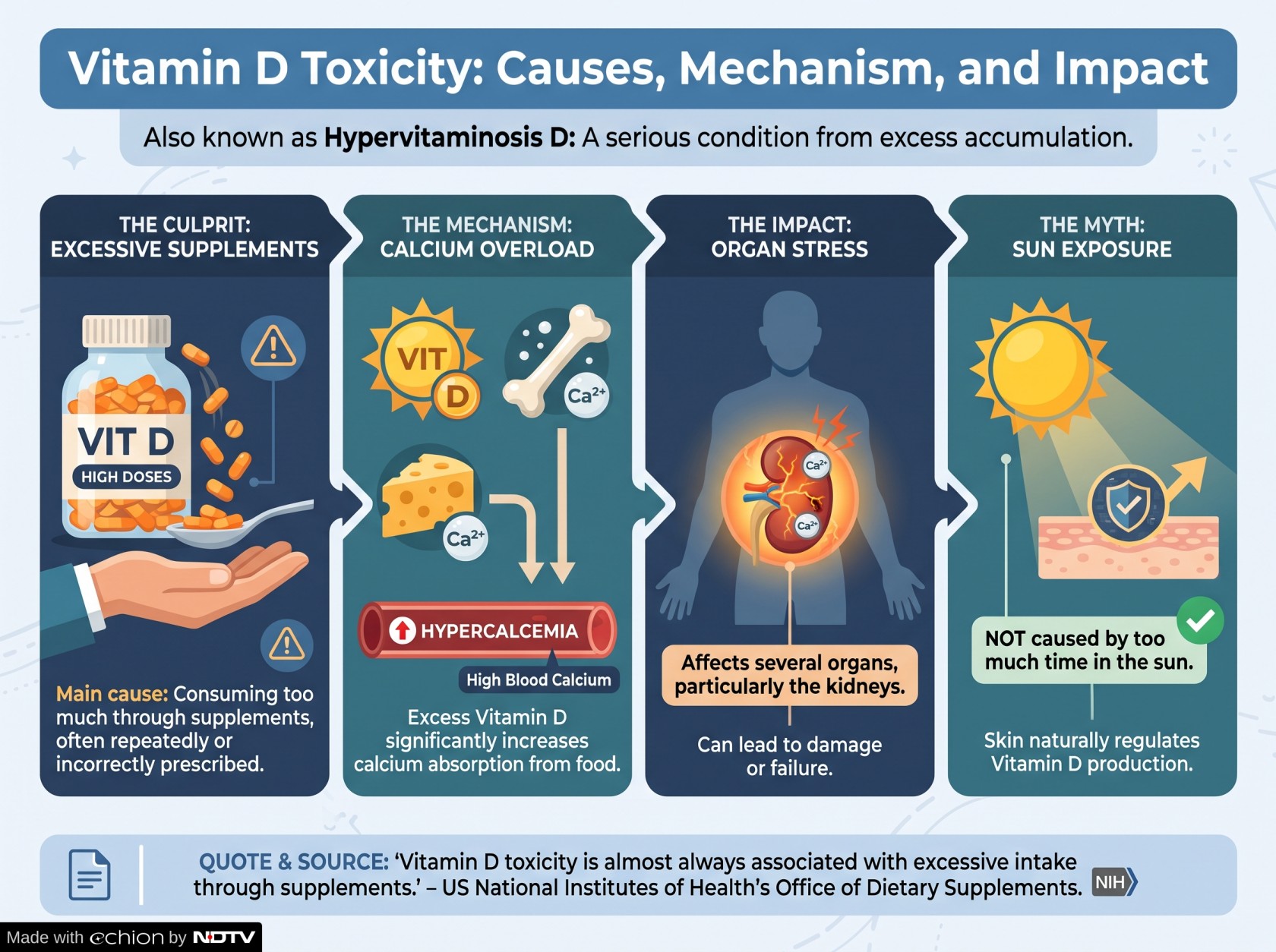
Vitamin D toxicity, also called hypervitaminosis D, occurs when excessive vitamin D accumulates in the body. It is generally caused by consuming too much vitamin D through supplements, particularly when high doses are taken repeatedly or prescribed incorrectly.
Vitamin D helps the body absorb calcium from food. When vitamin D levels become excessively high, calcium absorption can increase substantially, resulting in hypercalcemia. This excess calcium can affect several organs, particularly the kidneys.
According to the US National Institutes of Health's Office of Dietary Supplements, vitamin D toxicity is almost always associated with excessive intake through supplements. It is not normally caused by spending too much time in the sun because the skin regulates vitamin D production.
What Are The Symptoms Of Vitamin D Toxicity?
The symptoms are largely linked to high calcium levels in the blood. They may initially be mistaken for common digestive or general health problems.
Some warning signs include:
- Nausea, vomiting and loss of appetite
- Constipation and abdominal discomfort
- Excessive thirst and frequent urination
- Dehydration
- Muscle weakness and fatigue
- Confusion or other changes in mental alertness
In severe cases, vitamin D toxicity can cause kidney stones, acute kidney injury or kidney failure. It may also lead to calcium deposits in soft tissues, abnormal heart rhythms and other serious complications. Persistent vomiting, dehydration, unusual weakness or confusion, particularly in someone taking high-dose vitamin D, should not be ignored.
READ | Is It Safe To Take Multiple Supplements At Once? Here's What Expert Says
Can Vitamin D Supplements Cause Toxicity?
Yes. Although vitamin D is necessary for health, taking more than the body needs does not provide additional benefits and can be dangerous.
Toxicity can develop when people take high-dose supplements for prolonged periods, combine multiple products containing vitamin D or continue prescribed loading doses beyond the recommended duration. Manufacturing errors and incorrect dosing can also contribute.
The US National Institutes of Health identifies 4,000 IU per day as the tolerable upper intake level of vitamin D for adults. This is a safety limit for regular intake, not a recommended daily dose or a threshold at which toxicity automatically develops. Requirements and upper limits vary by age and individual circumstances.
In India, vitamin D deficiency is a concern, but this does not mean everyone should independently start high-dose supplementation. A clinician may recommend testing and treatment depending on symptoms, risk factors and medical history. The dose and duration should be appropriate to the individual's needs.
READ | Can Too Many Supplements Damage Your Liver? Doctors Explain The Risks Of Vitamin Overload
Why Does This Case Matter For India?
India has a food-fortification programme under which edible oil and milk can be fortified with vitamins A and D to help address micronutrient deficiencies. FSSAI's food fortification framework sets standards for these products, while the '+' logo helps consumers identify fortified foods.
Fortification, when carried out within prescribed limits and quality controls, is a public health intervention. The concern raised by this case is uncontrolled or accidental addition of nutrients to food, which can expose consumers to excessive amounts without their knowledge.
Consumers should buy cooking oil and fortified foods from reliable, identifiable sources, check packaging and labelling, and avoid products whose origin and quality cannot be established. This does not mean all unpackaged oil is contaminated; the reported case highlights the need for traceability, quality testing and effective food-safety oversight.
Vitamin D is essential, but excessive exposure can cause serious health complications, including dangerously high blood calcium and kidney damage. The unusual cooking-oil case is a reminder that toxicity is not always linked to supplements alone. For Indian consumers, responsible supplementation, safe food sourcing and stronger quality control are equally important. The goal should be to correct deficiencies safely, not to consume more vitamin D than the body needs.
Disclaimer: This content including advice provides generic information only. It is in no way a substitute for a qualified medical opinion. Always consult a specialist or your own doctor for more information. NDTV does not claim responsibility for this information.