

)
Neurological injuries changes life in an instant. A stroke, traumatic brain injury, or progressive neurological disorder does not merely weaken muscles; but it disrupts coordination, balance, perception, and, perhaps most profoundly, confidence. In my clinical practice, patients often tell me that the hardest part is not the paralysis itself, but the uncertainty that follows. Will I walk again? Will I be able to care for myself? Will I remain dependent on my family? These questions reflect a deeper fear which involves the loss of independence and identity.
Therefore, I believe that rehabilitation must respond to these concerns in a practical and a measurable manner where a patient's recovery is not defined by their survival alone; but measured by their ability to return to participation in daily life activities. Structured neurorehabilitation frameworks, such as Bobath therapy (Neurodevelopmental Treatment), play a critical role in such journeys by helping patients relearn movement safely, efficiently, and functionally.
Beyond Exercise: Understanding the Bobath Concept
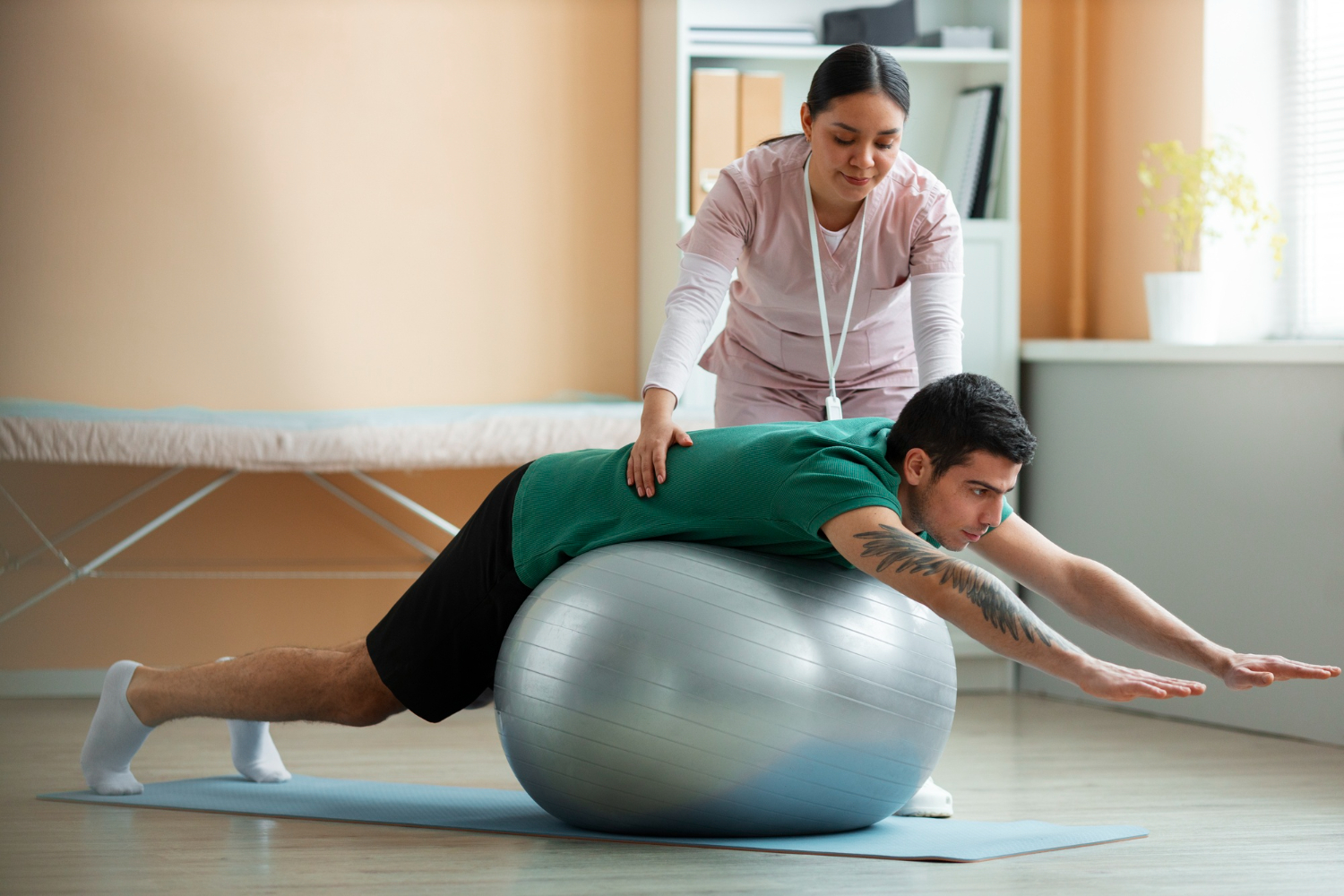
Bobath therapy is often misunderstood as a set of exercises to be done regularly. While in reality, it is a clinical reasoning approach grounded in neuroplasticity and motor control science. The goal is not merely to develop movement, but it is to restore the quality of movement which includes alignment, timing, coordination, and efficiency.
Neurological injury frequently leads to compensatory patterns. Patients may lean excessively to one side, use abnormal muscle synergies, or lock joints to create stability. While these strategies may allow short-term function, they increase long-term risks such as falls, pain, joint damage, and fatigue.
Bobath therapy addresses these challenges through:
- Facilitated movement: Skilled hands-on guidance helps normalize tone, improve alignment, and enable safer movement patterns.
- Postural control and trunk stability: Since functional movement originates from the trunk, improving the core control is fundamental to in recovery process.
- Task-specific practice: Activities such as sit-to-stand, reaching, turning, and walking are practiced in progressively challenging environments.
- Adaptive clinical reasoning: Therapy evolves continuously based on patient response, fatigue, cognition, and stage of recovery.
- Functional integration: Gains are translated into Activities of Daily Living (ADLs) such as dressing, feeding, transfers, and mobility.
The emphasis is always on purposeful activity. The brain does not relearn movement through isolated muscle contractions alone, but it relearns through meaningful tasks that mirror real life.
Also Read: Can Wearables Really Detect Brain Health Problems? Neurologists Explain
The Neuroscience Behind Recovery
Bobath therapy is grounded in neuroplasticity, which is the brain's capacity to reorganize and establish new neural connections after injury. The research in motor learning demonstrates that repetitive, goal-directed, and context-specific practice strengthens neural pathways and improves functional outcomes.
Clinical evidence suggests that Bobath-based interventions can improve postural control, balance, and mobility, particularly in early recovery phases and in patients with significant tone abnormalities. However, contemporary systematic reviews also indicate that Bobath is not consistently superior to other task-specific approaches, especially for fine upper-limb recovery.
This does not diminish its value. Rather, it reflects the evolution of neurorehabilitation. No single approach is universally optimal. Outcomes depend more on early intervention, therapy intensity, and functional relevance than on strict adherence to one model.
In modern practice, Bobath principles are most effective when integrated with strength training, constraint-induced movement therapy, occupational therapy, and technology-assisted rehabilitation. The emphasis is on individualized care such as selecting the right combination of interventions for each patient.
Who Benefits from Bobath Therapy?
Bobath therapy is widely used across the lifespan in conditions such as:
- Stroke
- Traumatic brain injury
- Spinal cord injury
- Cerebral palsy
- Multiple sclerosis
- Parkinsonian disorders
In adult stroke rehabilitation, patients often validate improvements with their trunk stability, balance, transfer ability, and step symmetry. Improved postural control can significantly reduce fall risk which is a key element of long-term independence.
In paediatric neurorehabilitation, early intervention helps children develop more efficient movement patterns, supporting motor milestones and participation in school and play.
These improvements are equally important to the caregivers. When a patient regains the ability to sit independently or perform safe transfers, caregiver's strain reduces and home environment becomes normal.
Restoring Function, Confidence, and Dignity
Neurological injury affects identity as much as it affects muscle tone. The inability to perform everyday tasks often leads to social withdrawal, build anxiety, and reduced self-worth. Therefore, rehabilitation must restore the strength and also rebuild the confidence and independence of every patient.
Bobath therapy provides a structured pathway to reconnect movement with a meaning. Improved trunk alignment enables safe walking. Such functional gains are not minor achievements but they help restore dignity and urge of participation.
Ideally, in rehabilitation centres and treatment clinics, Bobath principles should be integrated within a multidisciplinary framework that includes physiotherapy, occupational therapy, speech therapy, cognitive retraining, and advanced rehabilitation technologies. This Bobath therapy framework supports clinical reasoning, adaptability, and patient-centred care. Therapy plans should be individualised and aligned with real-life goals to enable better, long-term physical and mental health outcomes. When initiated early and delivered with appropriate intensity, it can significantly influence recovery speed.
Rehabilitation is ultimately a journey of rebuilding. With structured guidance, meaningful practice, and scientific integration, the physical movement can be return and help regain independence.
(By Dr Gaurish Kenkre, Senior General Manager and Centre Head, Atharv Ability)
Disclaimer: The opinions expressed within this article are the personal opinions of the author. NDTV is not responsible for the accuracy, completeness, suitability, or validity of any information on this article. All information is provided on an as-is basis. The information, facts or opinions appearing in the article do not reflect the views of NDTV and NDTV does not assume any responsibility or liability for the same.