

)
A stroke or traumatic brain injury (TBI) can change life in an instant. Abilities we rarely notice such as walking, speaking, even recognising familiar faces can suddenly feel unfamiliar. In India alone, the burden is staggering. Studies suggest that nearly 15-30% of stroke survivors are left living with severe, long-term disabilities, making the recovery journey not just medically complex, but deeply personal. Globally, the World Health Organization (WHO) estimates that 15 million people suffer a stroke worldwide each year, with 5 million left permanently disabled.
What often surprises patients and families the most is the unpredictability. Recovery does not move in a straight line. There are instances of progress, and some days it feels like a complete setback. It is important to realize that these shifts are not signs of failure but they reflect the complex ways the brain gradually adapts, rewires, and heals, something known as neuroplasticity. The pace depends not only on the severity and location of the injury but also on how early and consistently targeted rehabilitation begins.
Why Recovery Looks Different for Everyone
No two brain injuries are the same, and therefore, no two recovery paths will mirror each other. With over 1.5 million cases reported annually in India (amounting to roughly 119 to 145 cases per 100,000 population) and a high incidence of TBIs mainly caused by road traffic accidents, the spectrum of symptoms is vast. Recovery can look very different from one individual to another. Depending on which hemisphere or lobe of the brain was affected, some survivors may struggle profoundly with speech and language (aphasia), while others might experience severe deficits in memory, attention, or executive functioning.
Age is also a significant factor. Younger brains generally show higher chances of recovery. A patient's overall metabolic health, including the presence of comorbidities like hypertension, diabetes, or cardiovascular disease also impacts recovery. Ultimately, the intensity, duration, and consistency of therapeutic interventions dictate the ceiling of a patient's functional recovery.
Beyond Physical Recovery: Changes in Thinking and Behaviour
When we think of stroke recovery, we often picture a patient learning to walk again or regaining the use of a paralyzed limb. In reality, recovery covers far beyond physical movement. Strokes and TBIs affect cognitive abilities like memory, decision-making, spatial awareness, and emotional regulation. While many others might experience anxiety, frustration, or even a sense of lost identity and these challenges are often not spoken about.
Patients battling stroke undergo behavioural changes such as irritability, impulsiveness, or reduced motivation. This is known as post-stroke depression (PSD); a widely lesser known condition that affects roughly 30% to 33% of Indian stroke survivors. Unfortunately, these behavioral challenges are frequently overshadowed by physical rehabilitation. Many patients experience intense anxiety, frustration, or even a sense of lost identity, which quietly affect their relationships. Therefore, recognizing these invisible scars is important. When left untreated, they can affect physical rehabilitation efforts, and therefore, their everyday independent functioning.
Why Timing Shapes Recovery
In neurological recovery, timing plays a critical role. The "golden window" is the first three to six months of the injury, when maximized brain recovery takes place. Early, structured intervention gives the brain its best chance to regain function as the central nervous system gains the best possible chance to reorganize itself, from neurological and physical damage. As we delay it can lead to stiffness, weakness, and reduced mobility, while also affecting emotional recovery.
Recovery Takes a Team and Time
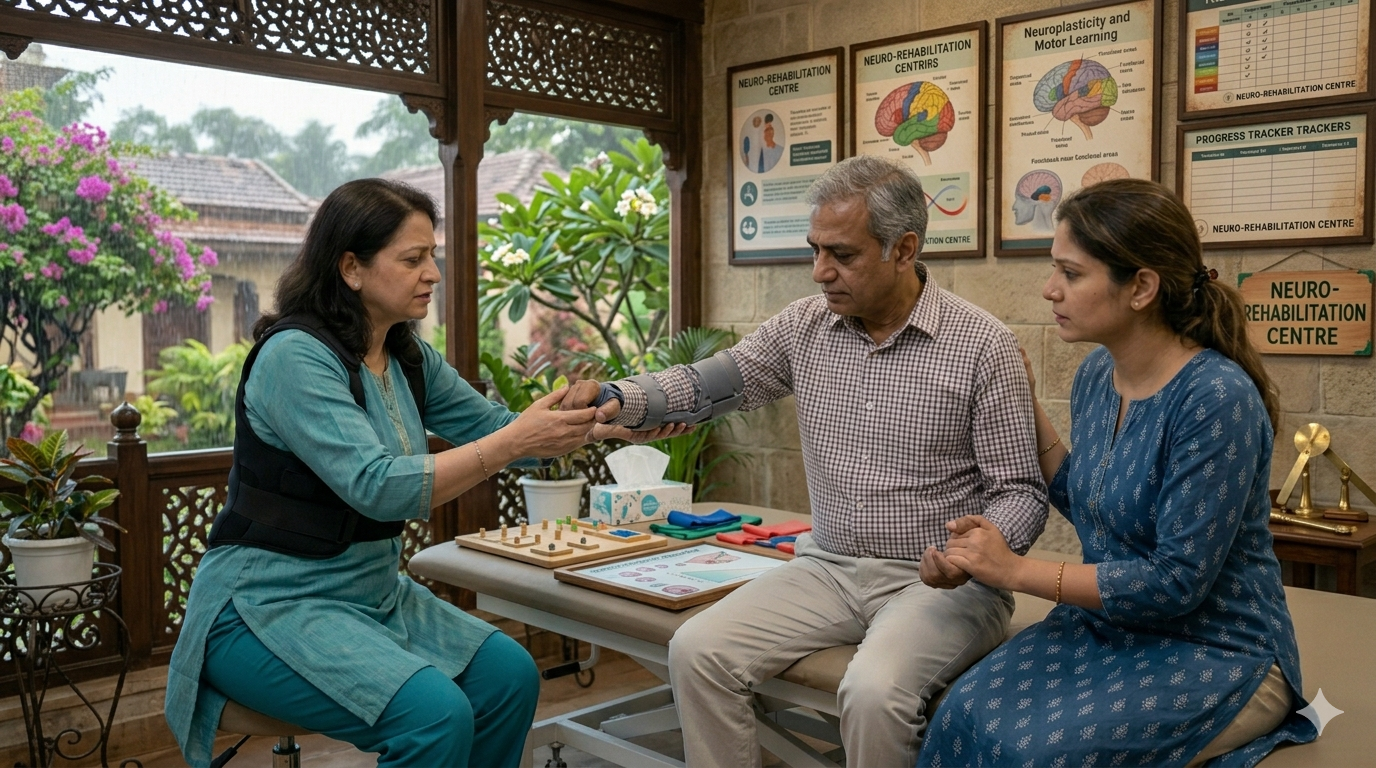
Recovery is rarely achieved in isolation. It requires a synchronized approach which includes physiotherapy, occupational therapy, speech therapy, and cognitive rehabilitation working together. The focus is always on restoring everyday functions such as walking, eating, dressing, and communicating. Studies show that patients who receive organized, multidisciplinary care within the first few weeks are significantly more likely to be independent and living at home one year after the event.
Recovery also continues well beyond initial therapy which requires consistent effort, routine medical follow-ups, and dedicated daily practice at home.
Recovery Is About Progress, Not Perfection
Recovery after brain injury is slow and often uneven. Patients and caregivers must be prepared for both progress and pauses along the way.
While returning to exactly who they were before the injury might not always be medically possible, adaptation is. With early intervention, structured care, and sustained support, individuals can rebuild independence, confidence, and a meaningful quality of life successfully.
(By Dr Gaurish Kenkre - Senior General Manager and Centre Head - Atharv Ability, Mumbai)
Disclaimer: The opinions expressed within this article are the personal opinions of the author. NDTV is not responsible for the accuracy, completeness, suitability, or validity of any information on this article. All information is provided on an as-is basis. The information, facts or opinions appearing in the article do not reflect the views of NDTV and NDTV does not assume any responsibility or liability for the same.