

)
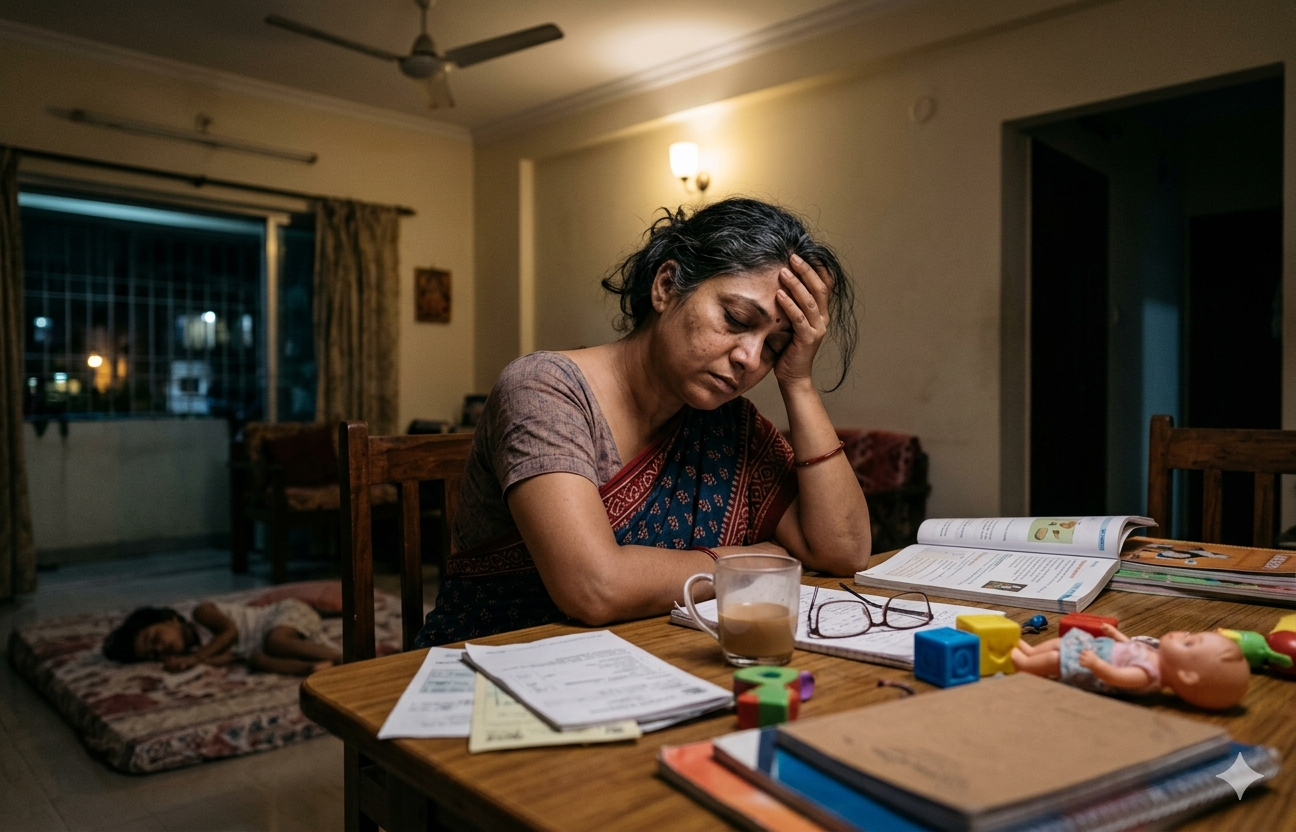
In recent years, the conversation surrounding women's health in India has shifted from physical ailments to a more complex, psychological phenomenon: maternal burnout. While tiredness is a common byproduct of parenting, the burnout currently observed in mothers is a chronic state of emotional, mental, and physical depletion that stems from prolonged exposure to parenting stress. The data paints a realistic picture as the India's Time Use Survey 2024 shows that 41% of women aged 15-59 participate in daily caregiving for household members, compared to 21.4% of men.
Additionally, women spend about 140 minutes per day on caregiving, which is nearly double the time men spend. Also, women spend over 300 minutes daily on unpaid domestic and care work, reinforcing the expectation of constant availability. All of these factors, when combined, contribute to burnout, stress, and emotional fatigue.
Understanding The Spectrum: Tiredness vs Burnout
Psychologist Ms Mimansa Tanwar from Fortis Memorial Research Institute, Gurugram, explains that this is not merely a personal struggle but a systemic issue rooted in the "assumed responsibility" of the maternal role. Mothers are often expected to be "constantly available", bearing the primary weight of a child's physiological, emotional, and logistical needs.
It is crucial to differentiate between the standard exhaustion of a long day and the clinical state of maternal burnout.
- Normal Tiredness: Resolved by a good night's sleep or a weekend of rest.
- Maternal Burnout: Characterised by emotional exhaustion, detachment from one's children, and a pervasive sense of maternal inadequacy or guilt.
Research highlights the severity of this issue. A study published in the International Journal of Indian Psychology found a strong positive correlation between chronic guilt and burnout among urban North Indian working mothers. The study noted that maternal guilt-the feeling that one is "never doing enough"-is the strongest predictor of burnout, even more than the number of children or spousal support levels.
Also Read: From Brain Fog To Back Pain: How Burnout Manifests In Your Body Before You Even Realise It
The Psychological Architecture Of Burnout
1. The "Invisible" Mental Load
Maternal burnout is rarely caused by the physical act of caregiving alone. It is driven by the mental preoccupation and the anticipation of needs. Ms Tanwar notes that a mother's mind is often in a state of "constant chatter", planning for the next day before the current one ends.
"It is the mental work of thinking about what the child needs before the time even comes-what they will eat when they wake up, what they need for school, or what must be prepared before the mother leaves the house," Ms Tanwar explains.
2. The "Double Burden" And Lack of Recovery
For many Indian mothers, the "double burden" of managing professional roles alongside traditional household expectations leaves zero "off-duty" hours. A 2026 report on mental labour indicates that cognitive labour-the remembering and planning-is the most persistent and gendered form of work, often remaining high even in dual-earner households. This lack of recovery time leads to chronic stress and interrupted sleep, which prevents the nervous system from returning to a baseline of calm.
3. Unrealistic Social Expectations
The pressure to be the "perfect mother", further amplified by curated social media portrayals, creates a cycle of comparison and emotional suppression. Mothers often feel they cannot express frustration due to the sacred status of motherhood held in Indian society, leading to internal pressure and identity loss.
Signs of Emotional Fatigue
When stress turns chronic, it evolves into emotional fatigue. Common indicators include:
- Pervasive irritability or "snapping" at small triggers.
- Emotional numbness or feeling like one is on "autopilot".
- Frequent, unexplained crying and deep-seated resentment.
- Increased anxiety and depressive symptoms.
Also Read: 5 Signs And Symptoms Of Digital Burnout
Evidence-Based Strategies for Prevention
To combat this systemic fatigue, a psychologist recommended a shift from "rest" to "recovery" and "redistribution".
- Create Recovery Pathways: Ms Tanwar suggests carving out small, guilt-free recovery periods. "If the body requires a short nap at an odd hour, take it. If you are out of the house, push the mental chatter aside and focus on that moment rather than carrying the guilt of being away."
- Communicate and Validate: Talking to a spouse, friend, or family member provides essential validation. Sharing that these feelings are "normal" helps mitigate the self-doubt that often accompanies the role.
- Ask for Specific Help: Support systems only work if the support is targeted. Mothers are encouraged to explicitly state where they require help-whether in logistical planning or physical chores-to reduce the cognitive load.
- Structural Support: Organisations must play a role by providing work flexibility, acknowledging that mothers often carry a disproportionate share of unpaid domestic labour.
When To Seek Professional Help
Therapy should not be viewed as a sign of failure but as essential "maintenance". If emotional fatigue begins to impact functionality, mood, or the ability to parent, reaching out to a mental health expert is vital.
Ultimately, maternal burnout is not an individual failing; it is a response to an unsustainable load. Supporting mothers' mental health is not a luxury-it is the foundation of a healthy family and society.
Disclaimer: This content, including advice, provides generic information only. It is in no way a substitute for a qualified medical opinion. Always consult a specialist or your own doctor for more information. NDTV does not claim responsibility for this information.