

)
As H1N1 influenza cases rise in Delhi, Bengaluru and other parts of India, one question is making a comeback from the pandemic years: Should you wear a mask every time you step outside? The answer is no, at least not as a blanket rule for everyone.
Masking up can be useful when the risk of respiratory-virus transmission is higher, particularly in crowded or poorly ventilated indoor spaces, healthcare settings and when you are around someone who is vulnerable to severe influenza. It is also particularly important when you are the one who is sick, because a mask can reduce the amount of infectious respiratory material reaching people around you.
"The aim is not to be afraid of H1N1; it's to minimise unnecessary spread and be ready to get medical attention if necessary and be watchful of symptoms," said Dr Navneet Sood, Associate Director & Senior Consultant - Pulmonology, Dharamshila Narayana Superspeciality Hospital, Delhi. India's National Centre for Disease Control (NCDC) continues to maintain specific technical guidance on seasonal influenza, including guidance on mask use, patient categorisation and home care.
So, as flu activity rises, the question isn't simply mask or no mask. It is when, where and for whom does a mask make sense?
H1N1 spreads through respiratory particles
H1N1 is a subtype of influenza A and spreads through respiratory particles released when an infected person coughs, sneezes or talks. Transmission becomes easier when people spend prolonged periods in close proximity, particularly indoors.
Laboratory research has also detected influenza virus in fine particles exhaled by infected people, supporting the importance of respiratory precautions in settings where exposure is likely.
This is why ventilation matters. A crowded metro coach, packed waiting room or poorly ventilated office presents a different exposure scenario from taking a walk outdoors or spending time in a well-ventilated room.
Dr Sood said masking should therefore be viewed as one layer of protection rather than a substitute for other preventive measures.
Also Read: H1N1 Surge Is Seasonal, No New Strain, No Cause For Panic: ICMR Clarifies
So, should everyone wear a mask all day?
Not necessarily. There is no need for healthy people to automatically wear a mask throughout the day simply because H1N1 cases are increasing. Instead, the decision can be based on the level of exposure and individual risk.
Dr Sood said a mask can be a sensible additional precaution when someone is travelling in a crowded metro, sitting in a crowded waiting room, visiting a hospital or spending several hours in a poorly ventilated workplace.
This risk-based approach is consistent with evidence on influenza prevention. A CDC review found that evidence for the effectiveness of ordinary medical masks in preventing laboratory-confirmed influenza transmission in community settings has been limited, while properly fitted respirators provide greater filtration against fine particles.
That does not mean masks are useless. Rather, context, fit, duration of exposure and whether the wearer is infected all matter.
If you are sick, masking matters more
This is arguably the most important situation in which to reach for a mask. If you have fever, cough, sore throat, body aches or significant fatigue, the first choice should be to stay home and avoid close contact with other people wherever possible. But if you need to travel, go to work, visit a doctor or use public transport, wearing a mask can help reduce exposure to your respiratory secretions.
Dr Sood said that people with flu-like symptoms should avoid close contact and, if they cannot self-isolate, use a mask when around others. NCDC's existing H1N1 guidance similarly advises people with mild influenza-like illness to confine themselves at home and avoid mixing with the public and high-risk household members.
In other words, a mask shouldn't become an excuse to go about your normal routine while unwell. Staying home is the stronger intervention when it is possible.
Which mask is better for H1N1?
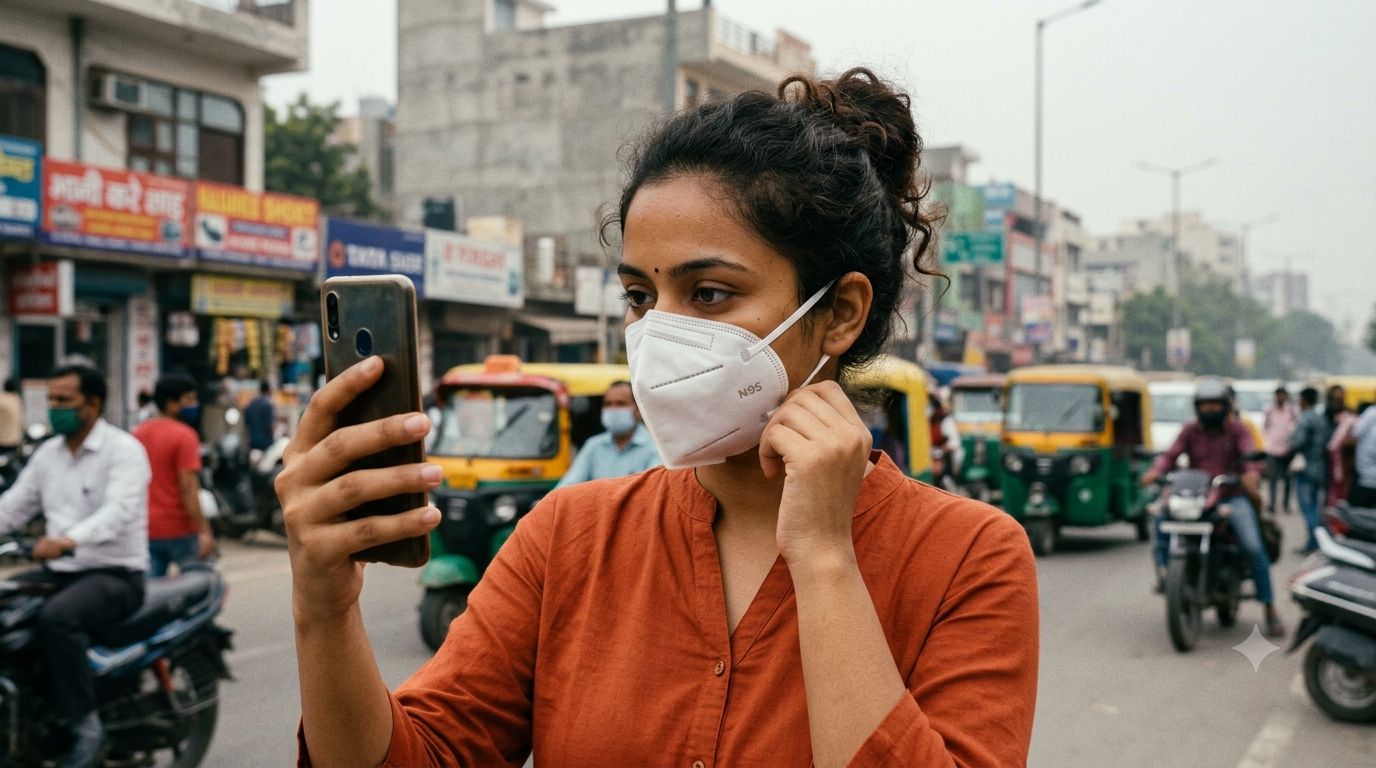
Fit matters. A mask that leaves large gaps around the nose and cheeks will generally provide less protection than one that fits closely. For people who choose additional respiratory protection in higher-risk settings, N95-type respirators can provide better filtration than loose-fitting masks when properly fitted and worn. NCDC's technical guidance includes both triple-layer surgical masks and N95 respirators among the masks used for influenza-related protection.
The key is not simply buying an N95. It needs to sit securely over the nose, mouth and chin, with minimal gaps. And don't wear a mask under your nose. It rather defeats the point.
What if you are healthy?
A healthy person does not necessarily need to mask every time they leave home. But there are situations in which choosing to mask can be reasonable, particularly if influenza activity is high or you have a household member who is vulnerable.
Consider wearing a well-fitting mask when:
- Travelling in a crowded bus or metro
- Sitting in a packed waiting room
- Visiting a hospital or clinic
- Spending prolonged periods in a poorly ventilated indoor space
- Caring for someone with influenza
- You are at increased risk of severe influenza and community activity is high
The CDC's current respiratory-virus guidance also advises people with respiratory symptoms to consider masking, alongside other measures to reduce transmission.
What if you have H1N1 symptoms?
Don't make masking the only thing you do. If you develop fever, cough, sore throat, body aches or marked weakness, reduce contact with others and seek medical advice where appropriate. People at greater risk of influenza complications, including older adults, young children, pregnant women and people with chronic medical conditions, should be particularly cautious.
Seek prompt medical attention if there is difficulty breathing, worsening breathlessness, persistent or unusually high fever, confusion, severe weakness or falling oxygen levels. Early medical assessment can also help determine whether antiviral treatment such as oseltamivir is appropriate for people at increased risk or with more severe disease.
Masking works best as part of a bigger strategy
One mask cannot carry the entire burden of influenza prevention. Other measures matter too:
- Stay home when sick: This reduces opportunities for transmission more effectively than simply masking while continuing normal activities.
- Improve ventilation: Open windows where feasible and avoid spending long periods in poorly ventilated crowded spaces.
- Cover coughs and sneezes: Use a tissue or your elbow rather than your hands.
- Wash your hands: Particularly after coughing, sneezing or touching potentially contaminated surfaces.
- Avoid close contact with vulnerable people when unwell: Influenza can be considerably more serious in high-risk individuals.
- Consider annual influenza vaccination: Particularly if you belong to a group for whom vaccination is recommended by your doctor.
WHO guidance on respiratory infection prevention similarly emphasises appropriate personal protective measures alongside infection-control practices rather than relying on a single intervention.
Does the current H1N1 surge mean another pandemic?
No. A rise in seasonal H1N1 cases does not automatically signal a new pandemic. The H1N1 virus that caused the 2009 pandemic has since become part of the viruses that circulate as seasonal influenza. What matters now is monitoring the virus, tracking changes in its behaviour and responding appropriately to increases in illness.
NCDC continues to maintain national technical guidance and influenza surveillance, including information on H1N1 testing, patient categorisation and prevention. The current situation therefore calls for awareness rather than alarm.
So, should you wear a mask for swine flu?
Sometimes, but not necessarily all the time. If you're sick, masking around others can help reduce transmission, but staying home and avoiding close contact is better whenever possible. If you're healthy, a well-fitting mask becomes more useful in crowded, poorly ventilated or healthcare settings, particularly if you or someone close to you is at high risk of complications.
The goal isn't to turn every trip outdoors into a pandemic-era routine. It is to recognise that H1N1 prevention is about layers: stay home when sick, improve ventilation, practise hand and respiratory hygiene, protect vulnerable people and use a well-fitting mask when the situation warrants it.
As Dr Sood puts it, the objective is not fear. It's sensible precautions and knowing when to act.
Read More: Antivirals, Not Antibiotics, Work For H1N1: How Oseltamivir Treats Influenza Viruses
Disclaimer: This content including advice provides generic information only. It is in no way a substitute for a qualified medical opinion. Always consult a specialist or your own doctor for more information. NDTV does not claim responsibility for this information.