

)
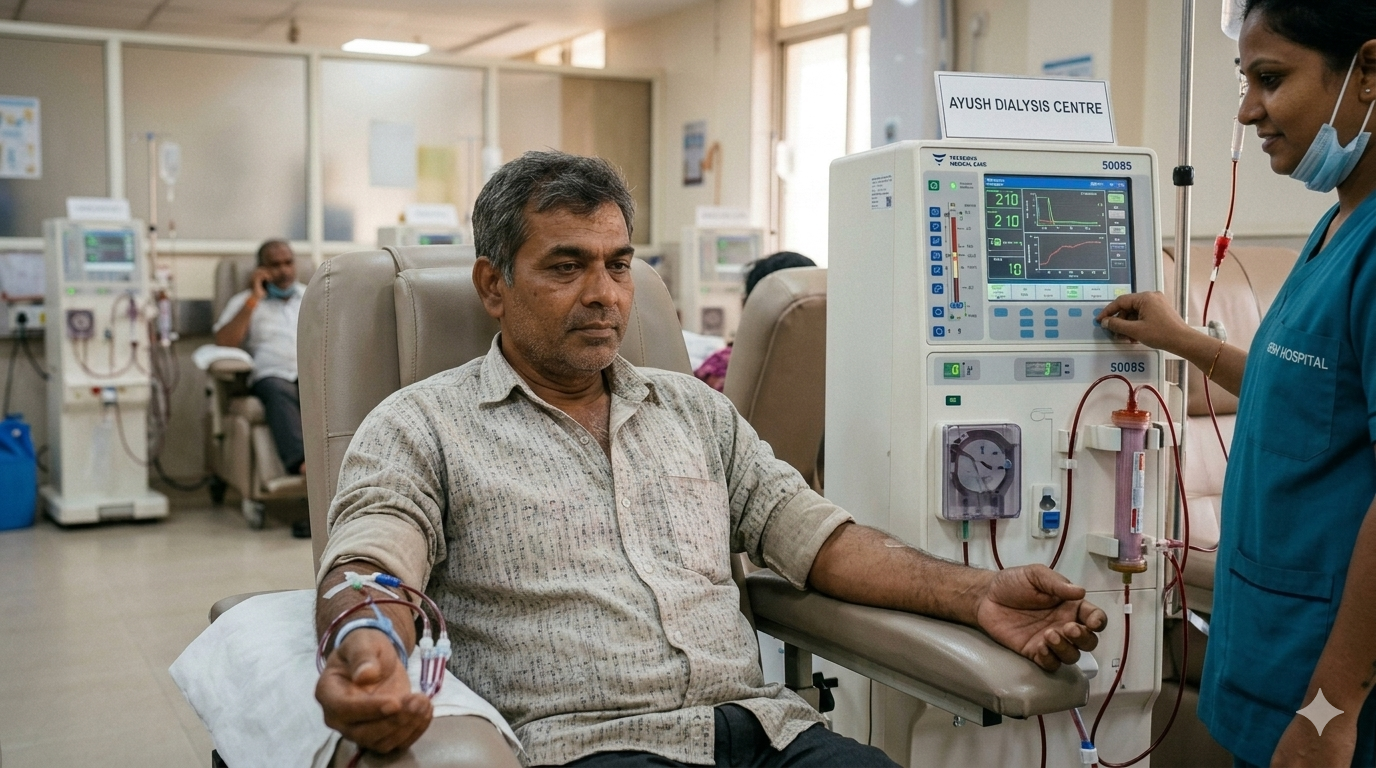
There has been a rise in kidney disease and kidney failure cases in India. People with kidney failure have to undergo dialysis to remove harmful waste products, excess fluids, and balance sodium and potassium levels in the blood. During regular haemodialysis, patients have to visit a dialysis centre several times a week, where a machine removes waste products and excess fluid from the blood. This treatment can involve repeated needle pricks and long hours which can make daily activities difficult.
Now, researchers have developed an implantable artificial kidney that could change how dialysis is done. The device, called Holly, is designed to be placed inside the body and continuously filter waste from the blood, more like a natural kidney. If human trials prove that it is safe and effective, it could reduce dependence on dialysis centres and give patients benefits. However, it is important to note that Holly is still under development and is not yet available as a routine treatment.
What Is The Holly Artificial Kidney?
Holly is an implantable artificial kidney being developed by Dr Nikhil Shah and Dr Hiep Nguyen, co-founders of the medical device company Nephrodite. Unlike a standard dialysis machine, which works outside the body during scheduled sessions, Holly is surgically placed inside the body and connected to blood vessels in the pelvis.
Its main purpose is to continuously filter waste from the blood. This could more closely resemble the way healthy kidneys work, as natural kidneys filter the blood continuously rather than only for a few hours on certain days.
How Could The Implant Reduce Dialysis Visits?
Traditional haemodialysis generally filters waste and excess fluid from the blood two or three times a week. This means patients have to plan their daily lives around appointments and spend significant time at a dialysis centre.
Holly is designed to work continuously. According to its developers, the device remains connected to the body's blood vessels and filters waste throughout the day. This part could potentially be done at a convenient time, usually at night, rather than requiring a patient to spend several hours at a hospital or dialysis centre. Speaking to Times of India, Dr Shah said, "Holly is surgically placed inside the body, stays connected to blood vessels in the pelvis, and keeps filtering waste continuously like a normal kidney."
What Could Everyday Life Look Like?
Patients who currently need frequent dialysis may have difficulty travelling, working regular hours or maintaining normal routines. Doctors involved with the project say that, during the day, a person with the implant could potentially work, travel and continue daily activities without the device being noticeable. The bedside system for water removal could be used when convenient.
For some patients, the device could potentially act as a temporary bridge while they wait for a kidney transplant. It may also eventually be considered as a longer-term treatment for people who cannot receive a transplant.
Why Is This Important For India?
India has a very large burden of kidney disease. However, the access to dialysis and kidney transplantation remains limited. According to a report in The Economic Times, more than two lakh patients are diagnosed with end-stage kidney disease in India each year, while only about 6-10% undergo dialysis and roughly 1% receive a kidney transplant.
An implantable system could potentially help reduce the pressure on dialysis centres and make kidney replacement therapy more accessible. The device is already being manufactured in Kochi, Bengaluru and Mumbai, while India has been selected for planned clinical trials because of its engineering, manufacturing and clinical research capabilities.
Can The Device Replace Conventional Dialysis?
The goal is to reduce dependence on conventional dialysis, but it is too early to say that the implant will completely replace current treatment. The technology still has to pass human clinical trials and regulatory checks.
Dr Shah said, "Our goal is to develop a scalable artificial kidney that can reduce dependence on dialysis centres and improve access to kidney replacement therapy worldwide."
Disclaimer: This content including advice provides generic information only. It is in no way a substitute for a qualified medical opinion. Always consult a specialist or your own doctor for more information. NDTV does not claim responsibility for this information.