

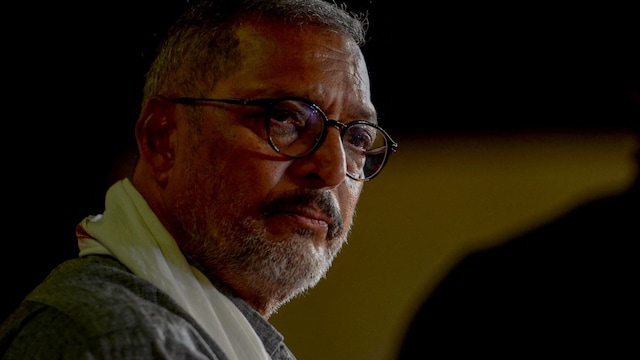
Veteran actor Nana Patekar died at the age of 75 on Thursday after suffering a severe cardiac arrest at his residence in Goa. According to information shared by Manipal Hospital, Patekar was found unconscious at home and was taken for emergency medical care. Doctors attempted to revive him with continuous cardiopulmonary resuscitation (CPR) for almost 45 minutes, but he could not be revived. He was declared dead at 5:20 am, according to Dr Shekhar Salkar, Chief of Oncology at Manipal Hospital, who told news agency ANI that despite 45 minutes of CPR, the actor could not be revived. A medico-legal case has been registered and a post-mortem is expected to be conducted.
Nana Patekar's death due to a severe cardiac arrest highlights the fact that cardiac arrests and heart attacks can show up suddenly. But does the body sometimes give warning signs before the heart suddenly stops pumping effectively? And can recognising those symptoms prevent a fatal event?
According to Dr Anshul Kumar Jain, Director, Cardiology, CK Birla Hospital, Delhi, cardiac arrest is generally sudden and there is no reliable symptom that can predict exactly when it will happen. However, the heart condition or electrical abnormality that increases a person's risk may produce symptoms beforehand. Dr. Amit Handa, Consultant Cardiologist, Kailash Hospital & Neuro Institute, Noida, adds that these early signs are particularly important to notice for those above 50 years. "The fact that veteran actor Nana Patekar has died as a result of a cardiac arrest serves to underline how important it is to be aware of sudden cardiac emergencies, especially among older people," he said.
What is cardiac arrest and why is it so dangerous?
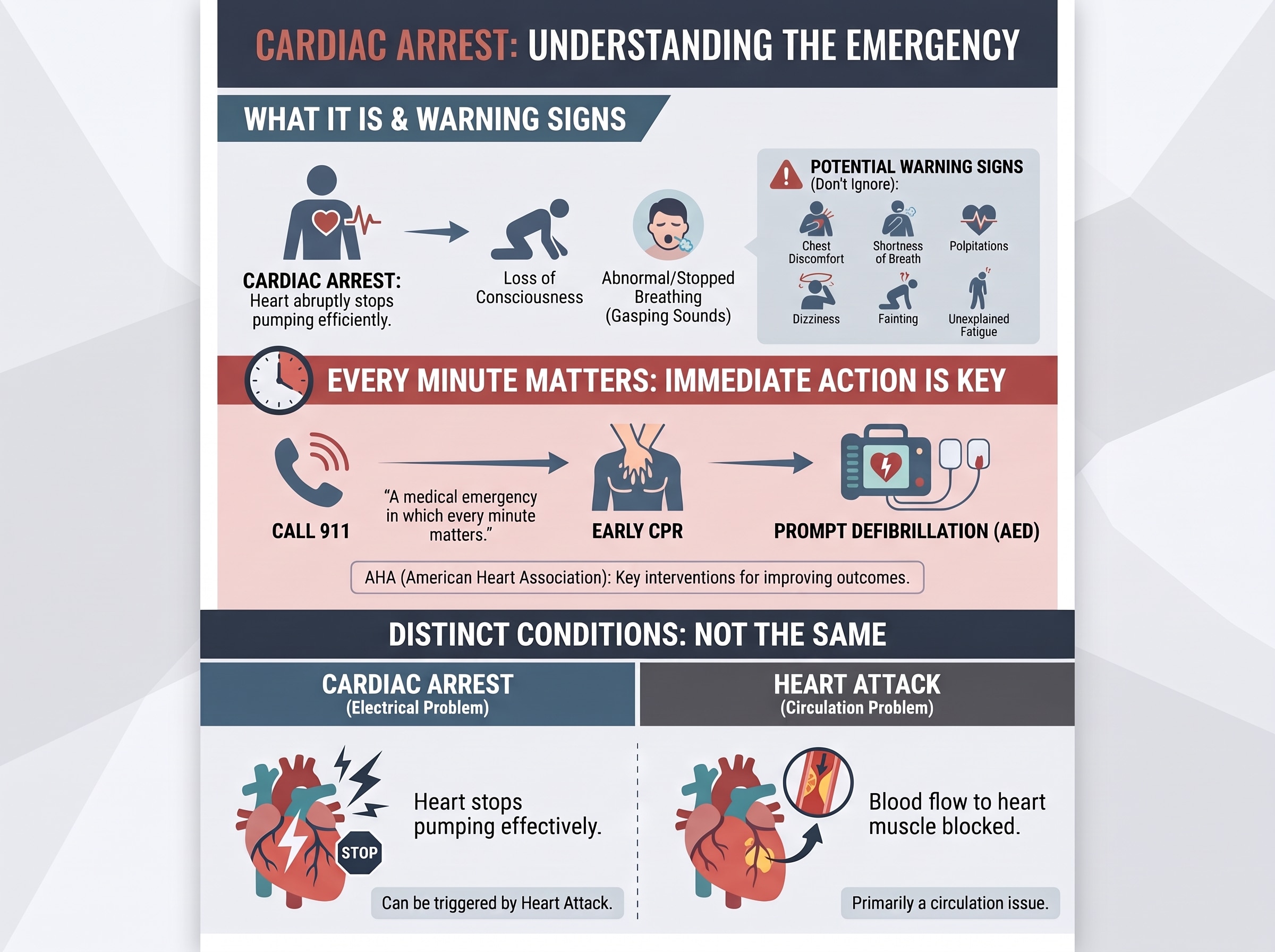
"A cardiac arrest happens when the heart abruptly stops pumping blood efficiently, causing a person to lose consciousness and leading to abnormal or stopped breathing," Dr. Handa explains. "It may occur suddenly; yet symptoms like chest discomfort, shortness of breath, palpitations, dizziness, fainting or unexplained fatigue might sometimes be a sign of an existing cardiovascular issue and should therefore not be ignored." A person may also make abnormal gasping sounds, which should not be mistaken for normal breathing.
This is a medical emergency in which every minute matters. The American Heart Association (AHA) says early CPR and prompt defibrillation are key interventions for improving outcomes after cardiac arrest.
Importantly, cardiac arrest and heart attack are not the same thing.
A heart attack is primarily a circulation problem: blood flow to part of the heart muscle becomes blocked, usually because of a clot forming over a ruptured fatty plaque in a coronary artery. Cardiac arrest, in contrast, is an electrical problem that causes the heart to stop pumping effectively. A heart attack can trigger cardiac arrest, but many heart attacks do not lead to cardiac arrest.
Can there be subtle warning signs before cardiac arrest?
"Cardiac arrest itself is generally sudden. However, the underlying heart disease or rhythm abnormality that increases the risk may cause symptoms beforehand, and these should not be dismissed," Dr Jain said.
Possible symptoms include unusual breathlessness, unexplained fatigue, reduced exercise tolerance, dizziness, fainting episodes, recurrent palpitations or intermittent chest discomfort.
These symptoms do not mean that cardiac arrest is imminent. They can have several other causes, ranging from anaemia and respiratory conditions to anxiety or other medical problems. However, if such symptoms are new, persistent, unexplained or becoming more frequent, they should be medically evaluated.
Fainting, in particular, should not automatically be dismissed as weakness or dehydration when it is recurrent or occurs during physical exertion. Similarly, new palpitations accompanied by dizziness, chest discomfort or fainting warrant prompt medical attention.
Chest pain does not always mean a dramatic heart attack
The classic image of a heart attack involves severe, crushing chest pain. But heart attacks can present differently.
According to the World Health Organization (WHO), heart attack symptoms can include pain or discomfort in the centre of the chest, discomfort spreading to the arms, shoulder, jaw, neck or back, shortness of breath, nausea or vomiting, light-headedness, faintness, cold sweating and paleness.
Some people, particularly older adults and those with diabetes, may experience less typical symptoms or very little chest pain.
This is why a new combination of breathlessness, unusual fatigue, sweating, nausea, dizziness or chest discomfort should not simply be attributed to ageing, acidity, stress or exertion.
What does Indian data show about sudden death?
Sudden cardiac events are not only a concern in Western populations. An Indian Journal of Medical Research study involving researchers from AIIMS, Vardhman Mahavir Medical College and Safdarjung Hospital, PGIMER and the Indian Council of Medical Research (ICMR) examined sudden deaths at a tertiary-care centre in Delhi. Among the sudden deaths in people aged 18-45, men substantially outnumbered women, with a male-to-female ratio of 4.5:1. Cardiovascular causes accounted for 42.6% of sudden deaths in this younger group, making them the leading cause. Among cardiovascular deaths, coronary artery disease and myocardial infarction accounted for 85% of cases.
The study also found a strong male predominance among cardiovascular deaths, with a male-to-female ratio of 7:1. In older adults aged 46-65, cardiovascular causes accounted for 72.1% of sudden deaths.
These findings do not establish what caused Patekar's cardiac arrest, and his post-mortem findings will be important for determining the exact circumstances of his death. But they underline why cardiovascular risk cannot be ignored, even when a person appears outwardly well.
Globally, cardiovascular disease remains the leading cause of death. WHO estimates that 19.8 million people died from cardiovascular diseases in 2022, accounting for about 32% of all deaths worldwide.
What should you do if someone suddenly collapses?
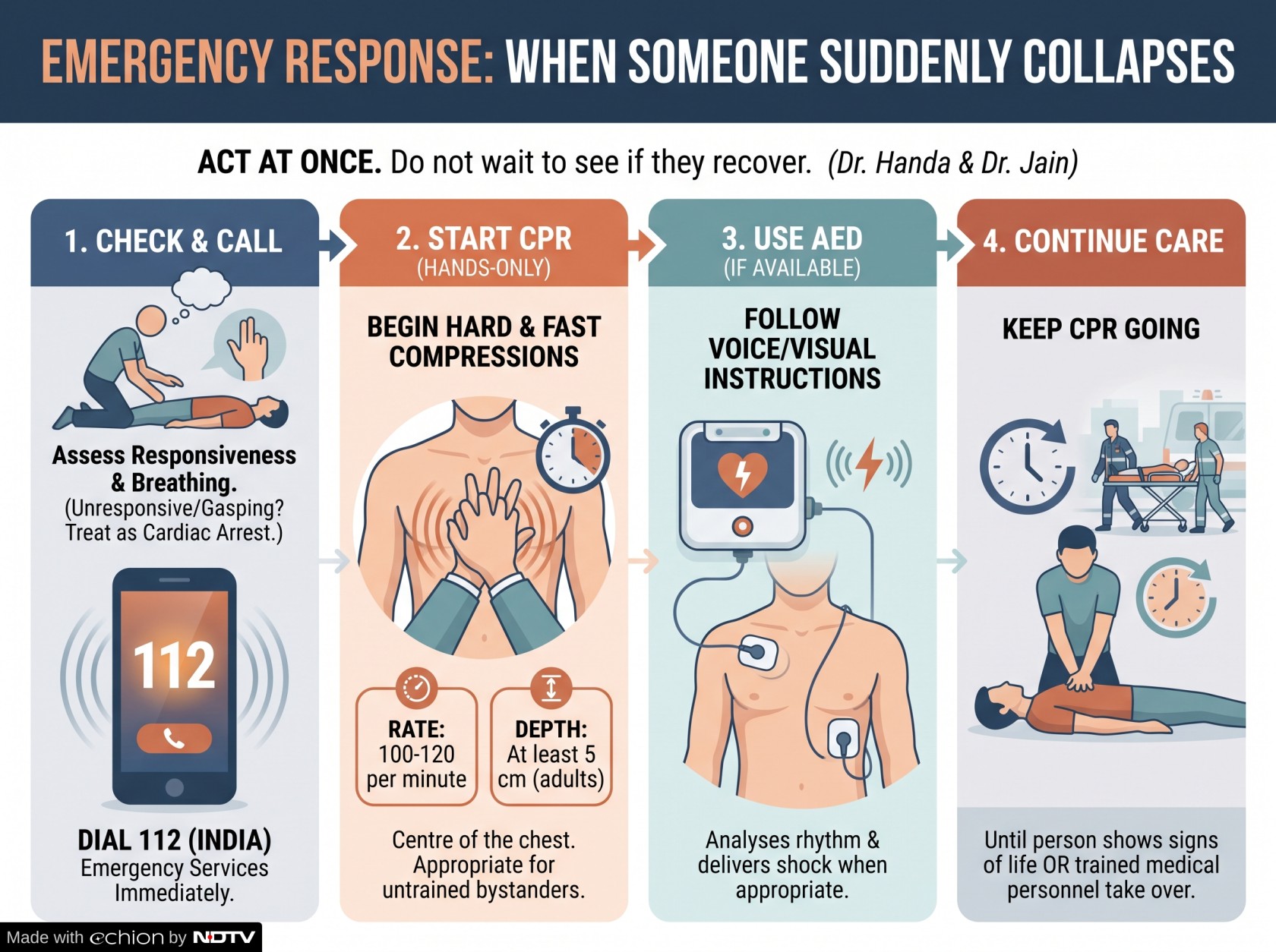
"If a person suddenly collapses and does not respond, it is essential to act at once," Dr. Handa says. Dr. Jain says that if a person suddenly collapses and is unresponsive, do not wait to see if they recover. Do the following immediately:
- Check responsiveness and breathing. If the person is unresponsive and is not breathing normally, or is only gasping, treat it as a possible cardiac arrest.
- Call emergency services immediately. In India, dial 112, the government's integrated emergency response number.
- Start CPR. For an adult, begin hard and fast chest compressions in the centre of the chest. The AHA recommends a rate of 100-120 compressions per minute and a depth of at least 5 cm for an average adult.
- Use an AED if one is available. An automated external defibrillator analyses the heart rhythm and can deliver a shock when appropriate. Follow its voice or visual instructions.
- Keep CPR going. Continue until the person shows signs of life or trained medical personnel take over.
For an untrained bystander witnessing an adult suddenly collapse, hands-only CPR is an appropriate immediate response while emergency help is being activated.
READ | Is It A Heart Attack Or Cardiac Arrest? Here Is How To Tell And When To Give CPR
Can cardiac arrest be prevented?
Not every cardiac arrest can be predicted or prevented. Some occur because of previously undiagnosed electrical or structural heart conditions. But cardiovascular risk can often be reduced.
"Blood pressure, cholesterol and blood sugar should be monitored, particularly in people with increasing age or cardiovascular risk factors," Dr Jain said. Avoiding tobacco, maintaining physical activity appropriate to one's health, following a heart-healthy diet and taking prescribed treatment for conditions such as hypertension, diabetes or high cholesterol are important preventive measures.
WHO identifies tobacco use, physical inactivity, unhealthy diet, harmful alcohol use, high blood pressure, high blood glucose, high blood lipids, overweight and obesity among major cardiovascular risk factors.
The key lesson from a sudden cardiac arrest is therefore not that every episode of tiredness or breathlessness signals impending death. Rather, new or unexplained cardiovascular symptoms deserve attention, while a sudden collapse demands immediate action.
Cardiac arrest can happen with little or no warning. But recognising potentially serious symptoms early, managing cardiovascular risk factors and knowing how to perform CPR can make a crucial difference when an emergency occurs.
Disclaimer: This content including advice provides generic information only. It is in no way a substitute for a qualified medical opinion. Always consult a specialist or your own doctor for more information. NDTV does not claim responsibility for this information.