

)
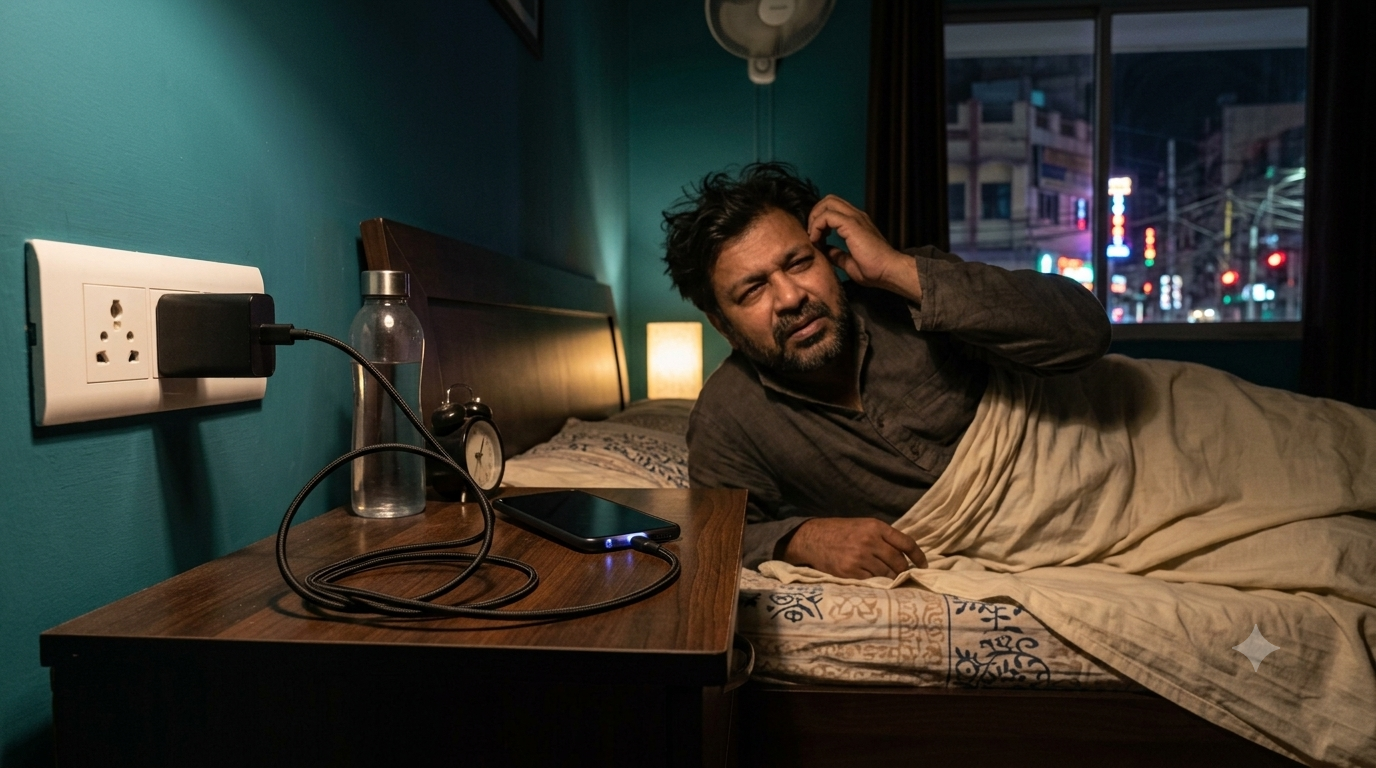
The bedside table has changed over the years. Along with a glass of water and an alarm clock, it now almost always holds a smartphone connected to a charger. For many people, the phone remains within arm's reach throughout the night, ready for one last scroll before sleep or the first notification in the morning. This has led to a common question: does sleeping next to a phone charger affect the brain?
Current scientific evidence does not suggest that a certified mobile phone charger produces electromagnetic fields strong enough to directly disturb brain function or interfere with sleep. The charger itself is unlikely to be the problem. The bigger concern is what it keeps close at hand: the smartphone.
Keeping the phone beside the bed often encourages habits that quietly interfere with healthy sleep. A quick look at messages can become half an hour of social media. A late night email, a news update or a video may seem harmless in the moment, but each extends the time before the brain settles into sleep.
The effect is not only psychological. Light from the phone screen, particularly blue light, suppresses the release of melatonin, the hormone that helps regulate the body's sleep wake cycle. Lower melatonin levels can delay the onset of sleep and reduce the amount of deep sleep during the night. Deep sleep plays an important role in memory formation, emotional balance and the brain's natural recovery process.
The content viewed before bedtime also matters. Reading work emails, following distressing news, watching emotionally charged videos or engaging in online discussions keeps the brain mentally active at a time when it should gradually be winding down. Instead of preparing for rest, the brain remains alert and continues processing information.
Poor sleep does not only cause tiredness the next day. When sleep disruption becomes frequent, it can affect several aspects of brain function, including:
- Reduced attention span and slower thinking
- Difficulty concentrating at work or during studies
- Problems with learning and memory consolidation
- Mood changes, including irritability and emotional instability
- Daytime sleepiness and reduced productivity
Over time, persistent sleep deprivation has also been linked with a higher risk of anxiety, depression, cardiovascular disease and metabolic disorders. Growing evidence also suggests that long term poor sleep may increase vulnerability to neurodegenerative conditions later in life, making healthy sleep an important investment in brain health.
Another factor that often goes unnoticed is the expectation of interruption. Even when notifications are switched off, many people remain mentally aware that the phone is nearby. A slight vibration, a screen lighting up or even the anticipation of receiving a message may be enough to disturb sleep or make it more fragmented. Although these interruptions may not always be remembered in the morning, they can reduce the restorative quality of sleep.
Simple changes in bedtime habits can make a meaningful difference.
Healthy sleep practices include:
- Keep the smartphone at least a few feet away from the bed or, where possible, outside the bedroom
- Avoid looking at screens for about one hour before bedtime
- Activate Do Not Disturb mode or silence unnecessary notifications during sleeping hours
- Follow a consistent sleep schedule by going to bed and waking up at roughly the same time each day
- Choose calming activities such as reading a printed book, listening to soft music or practising relaxation techniques before sleep
Adults generally require seven to nine hours of quality sleep each night for optimal brain function. Good sleep supports attention, decision making, emotional wellbeing and memory while allowing the brain to clear metabolic waste products that accumulate during the day.
The discussion, therefore, should not centre on the charger itself. There is no convincing evidence that a properly certified charger directly keeps the brain awake. The real issue is the uninterrupted access to the digital world that comes with a phone resting beside the pillow. Creating healthy boundaries with technology before bedtime allows the brain to transition naturally into sleep, supporting both immediate cognitive performance and long-term neurological health.
(By Dr Neha Pandita, Senior Consultant, Neurology, Fortis Hospital, Noida)
Disclaimer: The opinions expressed within this article are the personal opinions of the author. NDTV is not responsible for the accuracy, completeness, suitability, or validity of any information on this article. All information is provided on an as-is basis. The information, facts or opinions appearing in the article do not reflect the views of NDTV and NDTV does not assume any responsibility or liability for the same.