

)
Once upon a time... No, it wasn't really that long ago.
People went to work, returned home, and that was the end of the workday. No one knew what their colleagues, bosses, or clients were doing between that evening and the following morning and no one was expected to. If someone had an idea at 10 p.m., it could wait until the next day.
Friends and relatives travelling to another city exchanged letters and postcards. Waiting was a part of life. Someone who fell ill visited the neighbourhood doctor, received treatment, and returned home. There was no expectation that help should arrive instantly at the tap of a screen. People were connected but they were not constantly accessible.
Carrying the World in Our Pockets
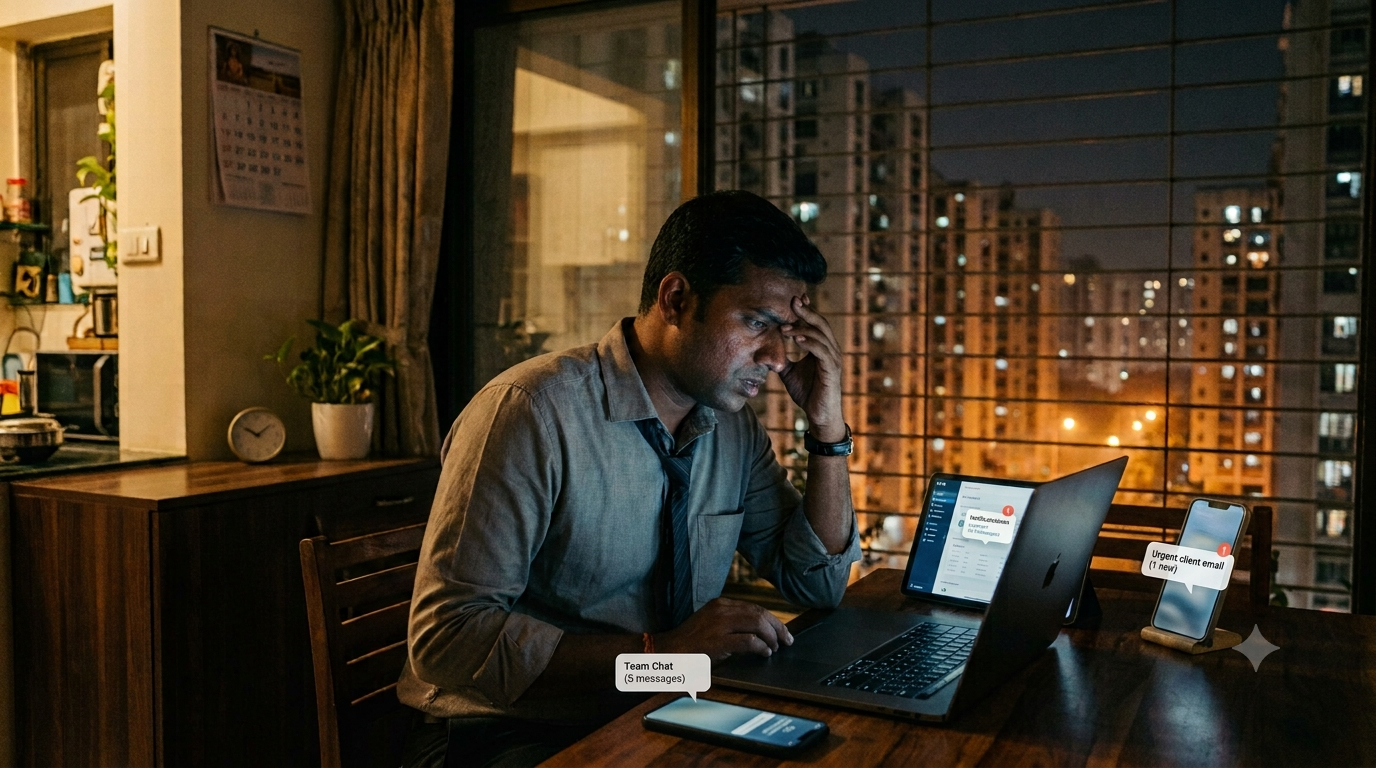
Then came expanding telephone networks, followed by the internet, emails, smartphones, and instant messaging. Gradually, everyone began carrying the world in their pocket. What we failed to realise, however, was that we were not merely carrying the world-the world had entered our private moments of rest, reflection, and recovery. It began demanding our attention, expecting our response, and quietly erasing the boundaries between work and life.
That which was once silent is no longer quiet. Today, people describe themselves as constantly tired, mentally exhausted, unable to switch off, struggling to focus, irritable, restless, and perpetually under pressure, not merely to perform, but simply to remain available.
Stuck in Overdrive: What Vigilance Does to the Body
The human nervous system has evolved to alternate between brief periods of sympathetic mobilisation, when readiness and action are required, and longer periods of parasympathetic restoration, during which energy is conserved, tissues are repaired, and the brain recalibrates itself. This dynamic rhythm is fundamental to both physical and psychological well-being.
The modern culture of being always available is disrupting this finely tuned mechanism. Smartphones, emails, instant messaging, and the expectation of immediate responses keep the sympathetic nervous system perpetually switched 'on,' leaving little opportunity for the parasympathetic system to restore equilibrium. This chronic physiological imbalance has quietly become one of the defining health challenges of our time.
The Price of Standby: Brain Fog, Burnout, and Broken Sleep
Today, many people complain of persistent fatigue, weakness, poor concentration, and a constant sense of exhaustion despite not engaging in sustained physical or mentally demanding activity. At the same time, lifestyle disorders have reached unprecedented levels. Anxiety disorders, depression, chronic fatigue syndromes, sleep disturbances, cognitive dysfunction, and the increasingly familiar complaint of 'brain fog' are becoming everyday clinical realities. This is the silent price the body pays for remaining in a state of constant anticipation-waiting for the next email, notification, phone call, or message.
Scientific evidence increasingly supports what clinicians observe every day. A recent systematic review examining research published over the past fifteen years found that extended work-related availability was consistently associated with higher stress levels, emotional exhaustion, poorer mental well-being, and greater conflict between professional and personal life. The inability to psychologically detach from work reduced opportunities for recovery, making burnout progressively more likely.
The consequences extend far beyond the workplace. Students, homemakers, entrepreneurs, and older adults are equally exposed to a culture where immediate responses have become the norm. Even when there is no genuine urgency, the expectation of being reachable creates a persistent sense of vigilance.
Divided Hearts and Fragmented Sleep
Sleep is often one of the earliest casualties. Many people continue checking emails or messages moments before going to bed. Bright screens delay melatonin release, while unfinished conversations and work-related thoughts keep the brain alert long after the phone has been put away. The following day brings poorer concentration, impaired decision-making, emotional reactivity, and reduced memory.
Relationships suffer more quietly. Being physically present is no longer synonymous with being emotionally present. Conversations interrupted by notifications become fragmented. Meals are shared with screens. Family time competes with emails. Gradually, meaningful connection gives way to divided attention.
Rest Is Biological Maintenance, Not Lazy Time
One of the greatest misconceptions about boundaries is that they reduce productivity. The opposite is often true. Recovery is not wasted time; it is biological maintenance. A well-rested brain concentrates better, makes wiser decisions, solves problems more creatively, and regulates emotions more effectively than one that is continuously interrupted.
Technology itself is not the problem. It has transformed healthcare, education, communication, and countless aspects of modern life. The challenge lies in allowing technology to serve us rather than allowing it to dictate the rhythms of our nervous system.
Reclaiming Your Psychological Space
Restoring balance does not require abandoning technology or retreating from modern life. It begins with reclaiming small pockets of psychological space. Not every email requires an immediate reply, nor does every notification deserve instant attention. Designating specific times to check messages, protecting the hours before sleep from digital interruptions, and creating uninterrupted time for family, reading, movement, or simply quiet reflection allow the nervous system to remember what recovery feels like. These are not acts of disengagement; they are acts of preservation.
Being available is often celebrated as a sign of commitment, efficiency, and reliability. Yet somewhere along the way, we have begun to confuse accessibility with responsibility. The mind was never designed to remain on standby every waking moment. Like every other organ in the body, it needs periods of recovery to function at its best. Rest is not the opposite of productivity; it is what makes productivity sustainable.
In my clinical practice, I have come to believe that one of the most important boundaries we can establish today is not between work and home, but between stimulation and restoration. We cannot expect a nervous system that is perpetually anticipating the next demand to remain calm, creative, or compassionate.
The world will continue to send emails, notifications, messages, and reminders. There will always be another call to answer and another task to complete. But perhaps the healthiest response is not to become increasingly available to the world. Perhaps it is to become increasingly available to ourselves. Because sometimes, the most therapeutic thing we can do for our brain is to allow it the rare luxury of being unreachable.
(By Dr. Jyoti Kapoor, Consultant Psychiatrist, Psychotherapist & Addiction Psychiatrist, Maarga MindCare Hospital, Gurgaon)
Disclaimer: The opinions expressed within this article are the personal opinions of the author. NDTV is not responsible for the accuracy, completeness, suitability, or validity of any information on this article. All information is provided on an as-is basis. The information, facts or opinions appearing in the article do not reflect the views of NDTV and NDTV does not assume any responsibility or liability for the same.