

)
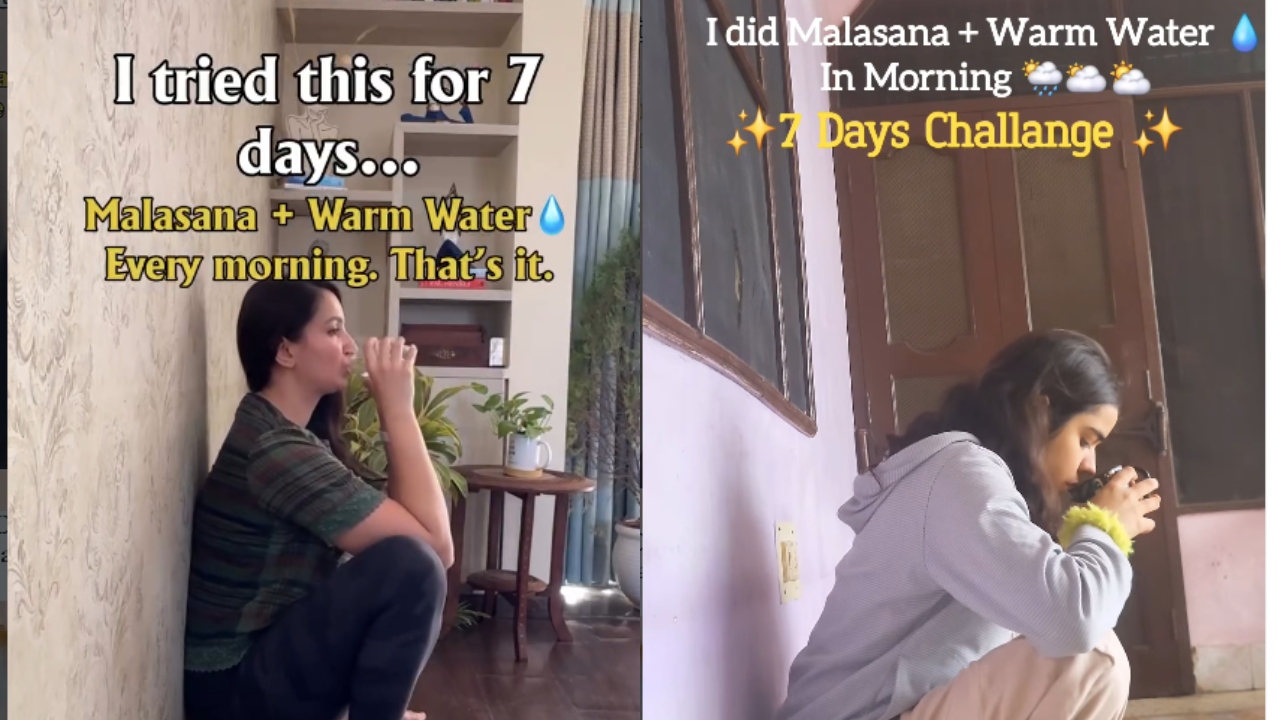
Have you recently seen videos of social media users sitting in malasana (yogic squat) while sipping warm water every morning? This new wellness trend is packed with the goodness of yoga. Starting your day by drinking warm water in malasana is a powerful morning ritual that combines thermal therapy with deep pelvic alignment, which significantly improves digestion and boosts metabolic health. Social media influencers are participating in the "7-Day Malasana + Warm Water Challenge," calling it an absolute "clockwork" routine that your gut will love.
Malasana, commonly known as the Garland Pose or Yogic Squat, is a deep, low-squatting yoga posture that stretches the lower body and mirrors the way humans naturally sat before the invention of chairs. Derived from the Sanskrit words Mala (garland) and Asana (posture), it is a powerful grounding pose that targets the hips, groin, lower back, and ankles simultaneously.
What happens if you sip warm water every morning while doing malasana?
1. It kickstarts your digestion
Warm water can help stimulate the digestive system, aiding in better digestion throughout the day. When paired with the malasana position, which encourages the opening of the hips and promotes intestinal health, this practice enhances overall digestive function.
2. Eliminates constipation
In Malasana, your thighs gently compress your lower abdomen. This natural compression massages the internal organs and mechanically moves stagnant waste downward.
Improves Digestion & Relieves Constipation: Deep squatting alters the anorectal angle and compresses the abdomen, stimulating the digestive tract and facilitating easy bowel elimination.
3. Relaxes pelvic floor
Holding the deep squat hydrates, tones, and relaxes the pelvic floor muscles, reducing the need to strain during a bowel movement. Additionally, this pose increases the angle between your rectum and anal canal, straightening the passage for effortless waste elimination.
4. Softens stool
After 6 to 8 hours of sleep, your body is naturally dehydrated. Sipping warm water immediately rehydrates the colon, softening stools to treat and prevent chronic constipation.
5. Increases flexibility
Sitting in malasana regularly can improve flexibility in the hips, knees, and ankles. Drinking warm water in this position might help relax the muscles and joints, further enhancing flexibility over time.
6. Mindfulness and relaxation
This practice can foster mindfulness, providing a moment of calm and focus at the start of the day. Taking the time to sit and drink water mindfully can reduce stress levels and set a positive tone for the day ahead.
7. Enhanced blood circulation
The posture of malasana can promote better blood circulation in the lower body.
Mehaq Mehta, an advanced Yoga Teacher, tried this wellness trend for 7 days and shared the results in an Instagram video.
"By day 3, I felt a shift. By day 7, it was absolute clockwork."
"Mornings felt more complete. Gut woke up faster. Lower back felt easier, and hips started opening up - not overnight, but by day 5 the squat felt noticeably more natural," she wrote in the post.
"This isn't a new hack. Ayurveda has recommended this combination for centuries. The anatomy supports it too."
"Try this for 7 days. Your gut will thank you," she added.
Another yoga instructor on Instagram shared the benefits of this practice.
"After sitting in malasana for almost 1 month and drinking warm water", she experienced zero constipation, less severe menstrual cramps, less nausea, increased hip mobility, smooth digestion, better energy levels and mental stability.
How to do
Take a glass of warm water and sit in malasana. Hold the glass with both hands and sip the warm water slowly while taking deep abdominal breaths. Sit in the same position for at least 3-5 minutes. Do this every morning as soon as you wake up.
The practice of sipping hot water while performing malasana is highly beneficial for your digestion and overall health. It is not just another social media trend; it is an ancient yoga practice that can be a great addition to your morning routine.
Disclaimer: This content including advice provides generic information only. It is in no way a substitute for a qualified medical opinion. Always consult a specialist or your own doctor for more information. NDTV does not claim responsibility for this information.