)
Every year, Kidney Donation Awareness Day shines a spotlight on the life-changing impact of organ donation. For people living with end-stage kidney disease, a kidney transplant often offers a new lease on life, allowing them to regain their independence, improve their quality of life, and reduce their dependence on dialysis. Yet, despite advances in transplant medicine, many people remain hesitant about kidney donation because of persistent myths about living with just one kidney. According to Dr. Gagandeep Chhabra (Director of Nephrology at Fortis Memorial Research Institute, Gurugram), modern medical evidence shows that carefully selected healthy individuals can safely donate a kidney and continue to lead normal, active, and fulfilling lives.
Why Kidney Donation Matters
"Chronic kidney disease is becoming increasingly common worldwide, with many patients eventually progressing to kidney failure. While dialysis can sustain life, a successful kidney transplant usually provides better long-term health outcomes and a significantly improved quality of life," says Dr, Chhabra.
"Unfortunately, the demand for donor kidneys continues to far exceed the number of organs available, leaving many patients waiting for years," he adds.
Myth: You Can't Live Normally With One Kidney
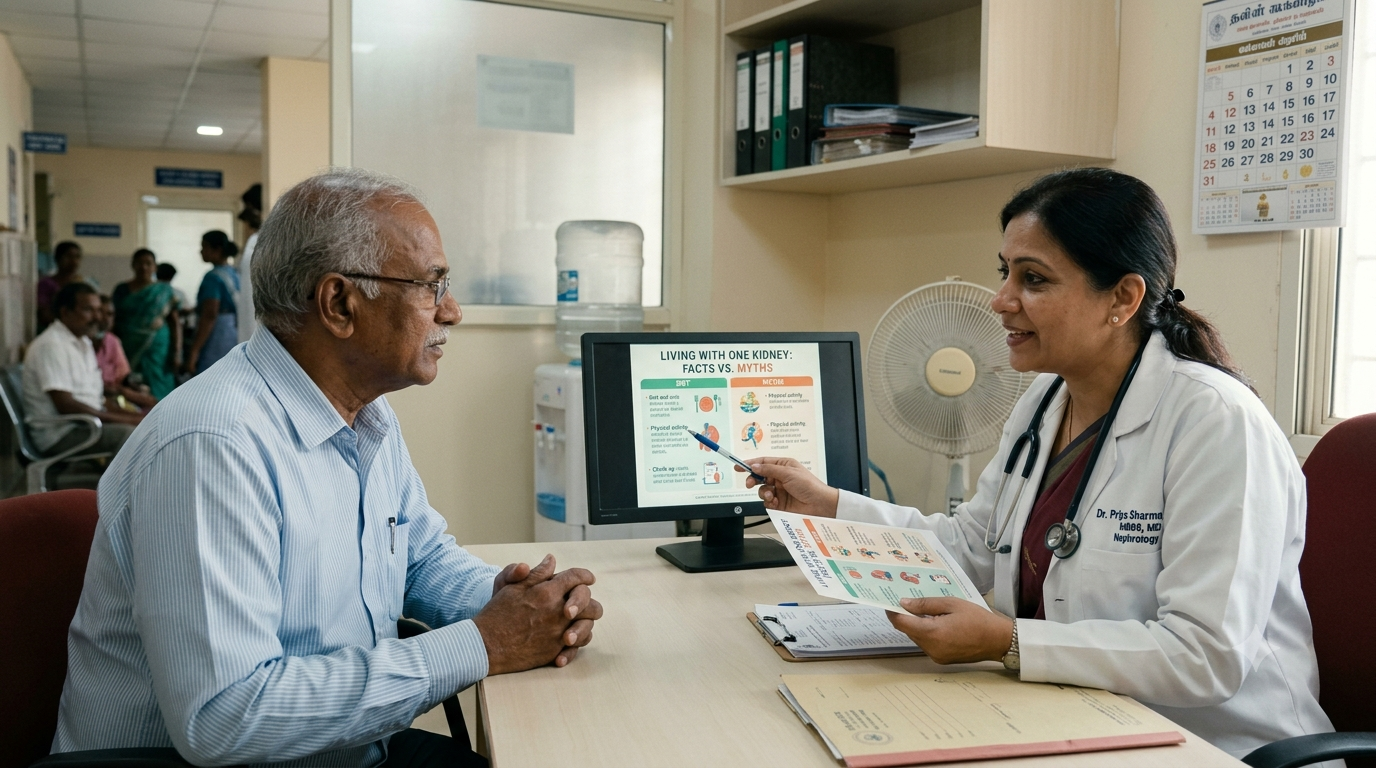
Fact: One of the biggest misconceptions is that donating a kidney will severely limit a person's lifestyle. In reality, a healthy individual can live a completely normal life with a single kidney.
Also read: India's Chronic Kidney Disease Burden Soars To 138 Million, Second Highest Worldwide
The remaining kidney gradually adapts to perform the work of both kidneys. With proper medical evaluation before donation and regular health check-ups afterward, most kidney donors enjoy a normal lifespan without significant restrictions.
Myth: Kidney Donation Is Unsafe
Fact: Living kidney donation is considered a safe procedure when performed at experienced transplant centres. Donors undergo comprehensive medical, psychological, and laboratory assessments to ensure they are suitable candidates before surgery. Modern surgical techniques have further improved recovery, making kidney donation safer than ever before.
Myth: Anyone Can Donate A Kidney
Fact: Kidney donation in India is governed by the Transplantation of Human Organs and Tissues Act (THOTA), making it a strictly regulated and transparent process.
"Healthy adults above 18 years of age may be considered after detailed medical and psychological evaluation. Parents, siblings, children, spouses, grandparents, and grandchildren can donate to eligible recipients, while other donations require approval from the Authorization Committee to prevent illegal commercial transactions," says Dr Chhabra.
Myth: Donors Don't Need Follow-Up Care
Fact: Although donors generally remain healthy, regular follow-up is important. Maintaining a healthy weight, staying hydrated, controlling blood pressure, exercising regularly, avoiding smoking, and undergoing periodic medical check-ups help protect long-term kidney health.
Also read: Kidney Cancer Genetic Factors: Doctor Explains Who Is At A Higher Risk
Awareness Can Save More Lives
According to Dr. Chhabra, misinformation continues to discourage many people from considering organ donation. Increasing awareness, discussing donation with family members, and understanding the facts can help bridge the gap between the growing demand for kidneys and the limited number of available donors. Kidney donation is far more than a medical procedure. It is an extraordinary act of compassion that can transform another person's life. With appropriate donor selection, expert medical care, and long-term follow-up, living with one kidney is both safe and compatible with a healthy, active life. As Dr. Chhabra puts it: "One Donor. One Kidney. One Life Saved. A Lifetime of Hope Created."
Disclaimer: This content including advice provides generic information only. It is in no way a substitute for a qualified medical opinion. Always consult a specialist or your own doctor for more information. NDTV does not claim responsibility for this information.