

)
What does a healthy heart look like? A lean body? Visible muscles? Someone who spends hours at the gym and follows a strict diet? Or perhaps someone who simply feels well and has never experienced chest pain?
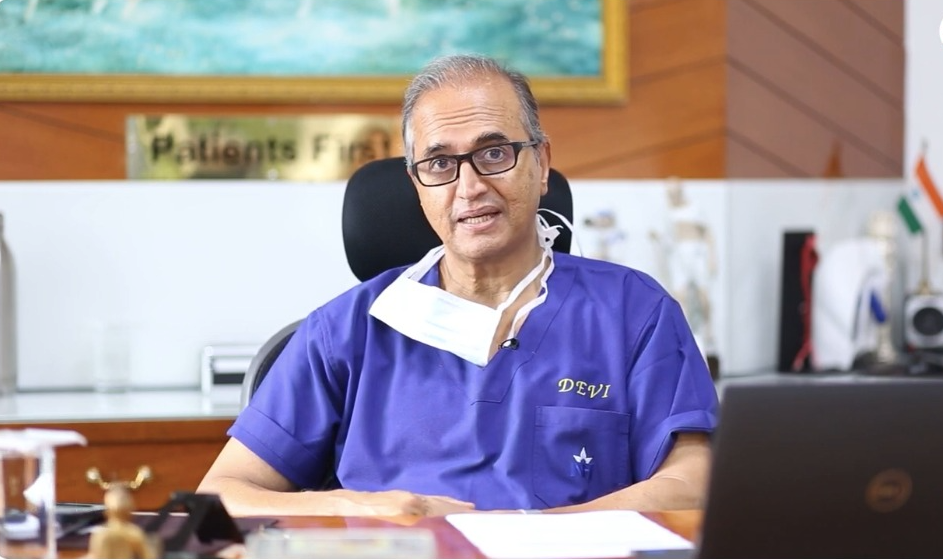
According to Dr Devi Shetty, one of India's best-known cardiac surgeons, none of these can reliably tell you what is happening inside your arteries or heart.
In fact, some of the people he sees after a heart attack are those who believed they were among the fittest. Around half of the patients his team sees after a heart attack, he says, have experienced what they describe as a silent heart attack, without knowing they had a heart problem.
For World Heart Day 2026, Dr Shetty speaks to NDTV about a changing face of heart disease in India: young people using supplements and hormones to look fit, diabetes appearing at younger ages, the cardiovascular impact of metabolic health, the changing risk for women after menopause and why India needs to make early diagnosis far more accessible.
His message is less about how healthy we look, and more about finding out how healthy we actually are.
"People can look fit and still have a heart problem"
Q. India's next heart-health crisis could actually be sitting in the gym. Are extreme workouts, supplements and the pressure to look a certain way creating a new cardiac risk among young people?
Dr Devi Shetty: It is a big problem. We have seen many young people with no blockages in their heart developing massive heart attacks because of the use of dietary supplements, hormones and all kinds of substances used to look fit and feel fit.
Unfortunately, these are becoming a problem. We need awareness campaigns to educate young people that artificially pumping muscles with chemicals can put them in serious trouble.
I know many highly educated and successful people who have developed a brain stroke or heart attack because of these chemical substances.
Q. Is there such a thing as a "normal" heart attack anymore? We are seeing patients whose risk profile doesn't seem to fit the traditional textbook picture.
Dr Devi Shetty: Around 50% of the patients we see after a heart attack have suffered a silent heart attack. They had no idea they had a problem with their heart.
They thought they were among the fittest people, and then they developed a heart attack.
With the technology we have today, virtually every heart problem can be detected. There is no excuse for saying that a heart problem was missed because it was too rare or difficult to detect.
Can emotional stress really break your heart?
Q. What about heartbreak, loneliness, grief and emotional stress? Can emotional trauma physically damage the heart?
Dr Devi Shetty: If somebody has a tendency to develop blockages, or has already developed blockages, poor lifestyle and stress can dramatically increase the progression of the disease.
Emotional stress can cause changes in the body that can result in a heart attack. But these people generally have a pre-existing disease.
The idea that somebody with a completely normal heart simply dies because of a broken heart does not happen in real life in the way it is popularly described.
"We have blamed oil for the mischief played by carbohydrates"
Q. If you could ban just one thing from India's food environment to reduce heart disease - and I mean ban, not moderation - what would it be?
Dr Devi Shetty: All along, we have blamed oil for the mischief played by carbohydrates. It is carbohydrates that create maximum havoc.
I am not saying we should ban carbohydrates because they are important, but they are a major contributor to the problem.
For example, one bowl of rice can ultimately be converted into a large amount of glucose in the body. You may never sit down and eat that amount of sugar, but most Indians eat a bowl of rice at lunch and dinner every day.
That is the irony of the situation.
The case for early detection
Q. If you knew today that you had just ten years to reduce India's heart-disease burden, what is the one thing you would change that nobody in healthcare is talking about enough?
Dr Devi Shetty: I would create a chain of diagnostic centres across the country, particularly in Tier-II and Tier-III cities, where every Indian can walk in, spend around 60 minutes and come out knowing whether they are likely to develop heart disease or cancer.
Cardiovascular disease accounts for a significant proportion of premature deaths, and cancer is another major cause.
If these two diseases can be diagnosed at a very early stage, we can transform healthcare in the country.
No investment will give us that kind of return as investing in screening centres where heart disease and cancer can be detected early.
Q. So, diagnostics and early detection are the way forward?
Dr Devi Shetty: Absolutely. Find the culprit before it makes things worse for you.
Why women's heart risk changes after menopause
Q. Women are often considered less vulnerable to heart disease. What role does menopause play in changing a woman's cardiovascular risk?
Dr Devi Shetty: Young women are naturally protected to some extent by their hormones. After menopause, however, their incidence of heart disease becomes more similar to that of men and they can develop heart attacks.
Overall, the incidence of heart attack among women is still lower than among men, but after menopause the risk changes significantly.
Why diabetes is a heart-health problem
Q. You have spoken about the importance of controlling diabetes. How big a role does metabolic disease play in India's heart-health crisis?
Dr Devi Shetty: Unfortunately, because of our food habits and the availability of food, we are becoming a nation of obesity and diabetes.
Genetically, perhaps, we are more vulnerable than Europeans to developing diabetes. We also become diabetic at a much younger age.
When I worked in England, the incidence of diabetes among people undergoing heart surgery was not very high. In India, nearly 50% of the patients we operate on are diabetic.
That is a very high incidence.
Q. Why do Indians underestimate diabetes?
Dr Devi Shetty: We don't take diabetes seriously because it does not immediately cause problems.
People may check one blood sugar reading and think everything is fine. But they don't always look at HbA1c, which tells you how well your diabetes has been controlled over a three-month period.
Awareness is very poor.
This is one of the main reasons we have a higher incidence of heart disease, stroke, kidney failure, eye problems and other complications associated with uncontrolled diabetes.
A large number of Indians may not even know they are diabetic because people, particularly in rural India, do not routinely undergo annual health check-ups.
COVID, vaccines and young heart attacks
Q. Every time a video surfaces of a young person suddenly collapsing at a gym, social media immediately blames COVID-19 or the COVID vaccine. What is your assessment?
Dr Devi Shetty: I don't think there is any major correlation between COVID vaccination and the higher incidence of heart disease we are seeing today.
Patients who suffered severe COVID did develop heart attacks because COVID was known to cause thrombosis - blood clots in the coronary arteries and the brain.
But whatever we are seeing today, I honestly don't think it has a relationship with the COVID vaccine or COVID disease in that sense.
Q. So, when it comes to COVID-related heart attacks, are we talking about the period when someone was infected, rather than years later?
Dr Devi Shetty: Yes. Severe COVID could cause complications because of thrombosis during the disease.
Q. And what about vaccines? Could a vaccine cause an adverse cardiac event much later?
Dr Devi Shetty: If there are adverse events, they would generally occur relatively soon after vaccination.
There have been medicines in the past that were later found to have major side effects. Thalidomide, for example, was given to pregnant women and caused congenital defects in children. There have been many such instances.
But regarding the COVID vaccine, I am not really sure whether there is any such relationship, at least based on my knowledge.
Are heart attacks among young people actually increasing?
Q. Has the incidence of heart attacks among young people actually increased, or are we simply seeing more of them because of social media and greater awareness?
Dr Devi Shetty: Awareness has certainly increased. Heart attacks were happening in the past as well.
Earlier, people didn't always relate sudden death to a heart attack. Now, because we have technological tools to diagnose these conditions, people are more aware.
I am not really sure whether the incidence has increased drastically, but awareness has certainly increased.
Because of social media, anything that happens in any part of the world can be seen across the world.
The positive impact is that more people are going for investigations at an early stage and discovering blockages earlier.
Perhaps the most striking thread running through Dr Devi Shetty's assessment is that heart health cannot be judged in the mirror.
A muscular physique does not rule out cardiovascular risk. Feeling well does not necessarily mean that the arteries are healthy. Diabetes can quietly damage the body for years, while women can see their cardiovascular risk change substantially after menopause. Even the familiar idea of a "heart attack patient" is becoming harder to define by appearance or age alone.
That does not mean every young person who exercises intensely is at risk, nor does it mean every symptom-free person needs extensive cardiac testing. It does mean that risk factors such as diabetes, blood pressure, cholesterol, smoking, family history and lifestyle deserve attention even when someone looks perfectly healthy.
For India, Shetty sees early detection as a crucial part of the answer, particularly outside the country's biggest cities.
And perhaps that is the more useful definition of being fit: not simply having a body that looks healthy, but knowing what is happening inside it.
As he puts it: "Find the culprit before it makes things worse for you."
Disclaimer: This content including advice provides generic information only. It is in no way a substitute for a qualified medical opinion. Always consult a specialist or your own doctor for more information. NDTV does not claim responsibility for this information.