

)
Dengue outbreaks are often recognised only after hospitals begin seeing a sharp rise in patients. By then, mosquito-control measures, testing capacity and healthcare resources are already under pressure. Scientists at Kerala's Institute of Advanced Virology (IAV) are working on a different approach: using disease surveillance and weather data to identify dengue trends before they become visible as a major surge in cases.
The institute's newly developed Dengue Early Warning System (DEWS) combines epidemiological information with climatic variables such as rainfall, temperature and humidity and uses machine learning to generate weekly dengue forecasts. The model has been trained using six years of data, from March 2020 to February 2026, according to IAV scientist Abhinand C.S., who developed the system.
The system is designed to provide district-wise indications of expected dengue risk, potentially giving public-health authorities more time to intensify surveillance, mosquito control and preparedness.
The approach is scientifically relevant because dengue transmission is strongly influenced by environmental conditions. But forecasting dengue is considerably more complicated than predicting rainfall. Human movement, urbanisation, water storage, mosquito abundance, circulating dengue serotypes and population immunity can all influence transmission.
How does Kerala's dengue early warning system work?
According to details provided by IAV, DEWS brings together epidemiological data from Kerala's State Surveillance Unit and meteorological data from the India Meteorological Department.
The model uses variables including:
- Rainfall
- Temperature
- Average humidity
- Reported dengue cases
The data are processed through a machine-learning model to generate weekly forecasts of dengue trends.
A key feature is the system's district-level approach. Rather than treating Kerala as one uniform geographical area, individual districts are modelled separately, allowing the system to account for differences in local environmental and geographical conditions.
The resulting forecasts are classified into four risk levels, very high, high, moderate and low, to make them easier for public-health officials to interpret.
IAV says preliminary evaluation using State Surveillance Unit data from March to July 2026 showed that predicted dengue trends had a positive correlation with the actual reported case patterns.
However, this should not be interpreted as proof that the system can predict every dengue outbreak accurately. The institute itself says the model will require continued refinement and annual updating before it can evolve from a research model into a routinely functioning public-health forecasting system.
Why can weather help predict dengue?
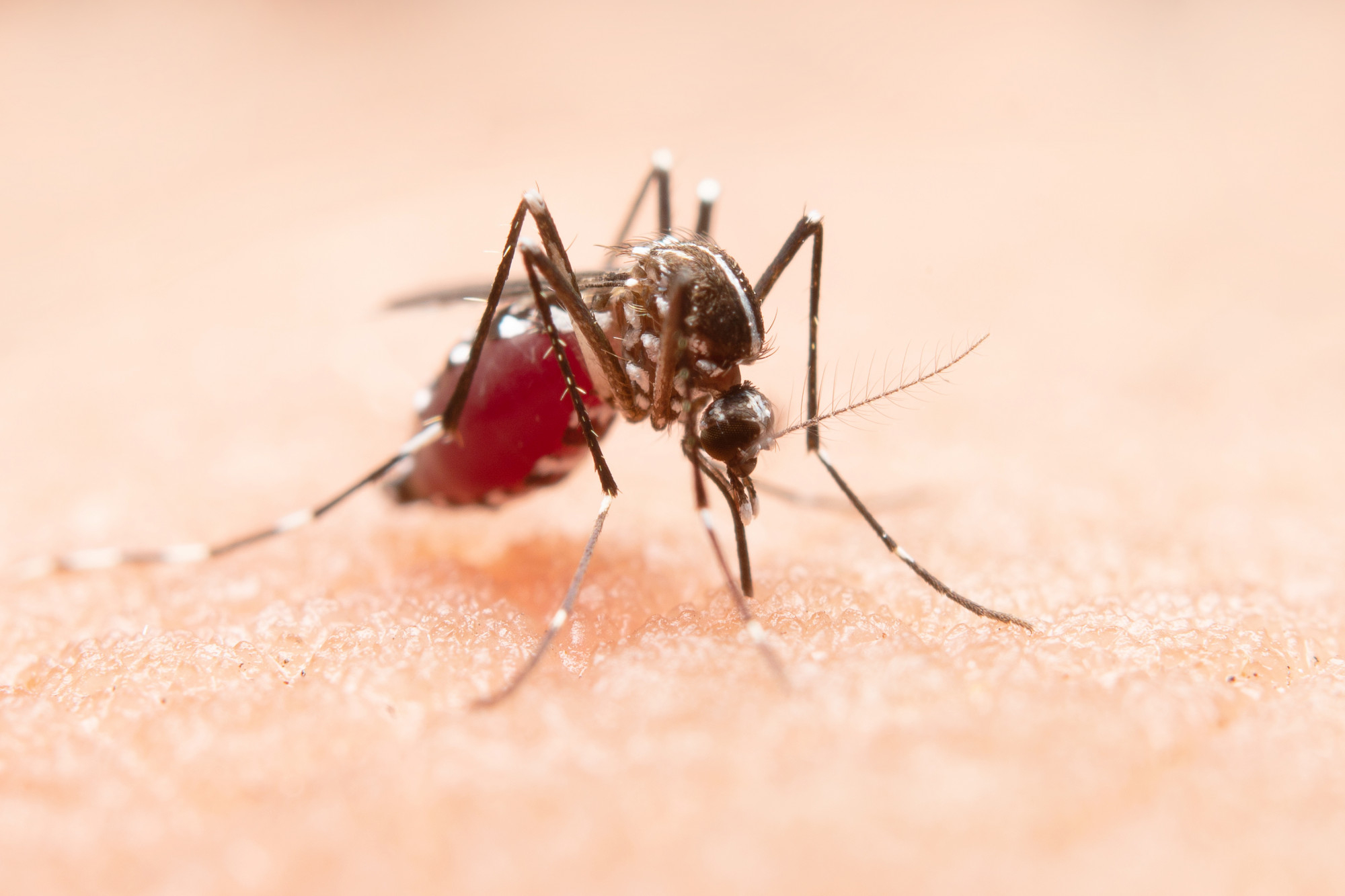
Dengue is transmitted primarily by Aedes aegypti and Aedes albopictus mosquitoes. Their breeding, survival and ability to transmit dengue virus are affected by environmental conditions.
Rainfall can create breeding sites, particularly where water collects in containers and other artificial habitats. Temperature influences mosquito development as well as the time taken by dengue virus to become transmissible inside an infected mosquito. Humidity can also affect mosquito survival.
WHO notes that temperature, rainfall and humidity are among the environmental factors associated with dengue transmission, while urbanisation, population movement, water-storage practices and immunity to circulating dengue virus serotypes also affect risk.
This means a rise in dengue cases does not necessarily follow rainfall immediately. Environmental conditions may influence mosquito populations and viral transmission over time, creating a lag between weather changes and human cases.
That lag is what makes early-warning models potentially useful.
What does earlier warning mean for dengue control?
A forecasting system does not treat or prevent dengue infection directly. Its value is in potentially giving health authorities a window to act.
If a district is flagged as having increased dengue risk, authorities could intensify mosquito surveillance and source reduction, increase public-health messaging, prepare laboratories and healthcare facilities for additional cases, and strengthen clinical preparedness.
WHO has specifically supported climate-informed early warning systems for dengue. Its Early Warning and Response System for climate-sensitive diseases combines environmental and disease surveillance to help predict outbreaks before they occur. WHO says such systems can provide information for preventive and adaptive action, with some models capable of predicting dengue outbreaks approximately 12 weeks ahead.
WHO's operational guidance for dengue early-warning systems also recommends analysing historical disease data, identifying indicators associated with forthcoming outbreaks and establishing systems capable of detecting and responding to outbreaks in real time.
Kerala already has evidence that climate matters
The scientific rationale behind IAV's model is supported by recent research specifically examining dengue and climate in Kerala.
A 2026 study published in GeoHealth analysed 14 years of dengue and climate data from Kerala. It found strong seasonality, with nearly 60% of dengue cases occurring during the southwest monsoon from June to September. The researchers identified temperature, rainfall, relative humidity and El Nino-Southern Oscillation conditions as important predictors and found that a machine-learning model using these factors could capture relationships between climate and dengue incidence.
Research from India has similarly shown that climate-based machine-learning models can provide advance warning. A 2025 Scientific Reports study using Pune data found that temperature, rainfall and relative humidity influenced dengue mortality at different time lags, with its machine-learning model producing a statistically significant correlation between predicted and observed mortality at a two-month lead time.
These studies do not validate IAV's DEWS itself, but they provide independent scientific support for the broader concept of using climate and surveillance data for dengue forecasting.
Why dengue forecasting remains difficult
There is an important limitation to any weather-based dengue model: weather is only one part of the transmission equation. Dengue risk can change with mosquito-control measures, human mobility, population density, water-storage practices and the dengue serotypes circulating in a community. Previous infection can also influence the risk of severe dengue.
Reported case numbers themselves can be imperfect because many dengue infections are asymptomatic or mild, while access to testing and surveillance may differ between locations. WHO therefore cautions that reported dengue numbers can underestimate the actual burden.
IAV has acknowledged similar limitations for DEWS. Sudden changes in climatic conditions or variations in the reporting of confirmed cases could affect the reliability of forecasts. The institute says the model may need additional variables and yearly updating as more data become available.
Also Read: Delhi NCR Dengue Cases Surge: Symptoms, Warning Signs And Prevention Tips
What could the IAV system mean for Kerala?
The potential significance of DEWS lies not in predicting the exact number of dengue cases on a particular day, but in moving surveillance from reaction towards anticipation.
IAV's work also fits into the institute's wider research focus on AI and machine learning for emerging and vector-borne infections. Its public research programme describes an AI-based computational model intended to integrate real-world epidemiological and environmental data to forecast transmission dynamics and strengthen public-health preparedness.
If DEWS continues to be validated against real-world surveillance data and is routinely updated, district-level forecasts could eventually become another layer of Kerala's dengue surveillance system.
Kerala's new Dengue Early Warning System represents an emerging use of machine learning, disease surveillance and weather data to anticipate dengue trends rather than waiting for case numbers to surge.
The model uses six years of epidemiological and climatic data and generates district-level weekly risk forecasts. Early comparisons with surveillance data are encouraging, according to IAV, but the system still requires further validation, refinement and regular updating before its predictive performance can be established in routine public-health use.
For a disease shaped by climate, mosquitoes, human behaviour and population immunity, no forecasting model can replace surveillance or vector control. But if validated and integrated effectively, an early warning system could give health authorities something dengue outbreaks often take away: time to prepare before the numbers climb.
Disclaimer: This content including advice provides generic information only. It is in no way a substitute for a qualified medical opinion. Always consult a specialist or your own doctor for more information. NDTV does not claim responsibility for this information.