

)
With the rise in summer temperatures across India, heat-related illnesses are becoming increasingly common. Many people assume that heat stroke occurs only in extreme situations, such as organ collapse or failure, but the reality is more subtle, and more dangerous. Patients often visit the emergency room and dismiss symptoms as "just sun fatigue", unaware that early brain involvement may already be underway. Recognising the difference between heat exhaustion and heat stroke can be life-saving.
Understanding Heat-Related Illness
The human body regulates temperature mainly through sweating. In hot weather or in intense physical activities, sweat helps to cool the body. However, if the exposure to heat is prolonged or the loss of liquids is not sufficiently replaced, the body's cooling system begins to fail. This can lead to a variety of conditions ranging from dehydration and exhaustion of heat to much more dangerous heat strokes.
What is Heat Exhaustion?
Heat exhaustion is an early warning sign that the body is struggling to deal with excess heat. It is usually caused by heavy sweating, lost water and salt. Common symptoms are:
- Excessive sweating
- Cool, swollen skin
- Fatigue and weakness
- Headaches
- Sluggishness or light headedness
- Nausea or vomiting
- Muscle cramps
Heat exhaustion is uncomfortable, but if treated quickly, it is usually curable. Symptoms can often be resolved in 30 minutes by resting, moving to a cool place, and drinking water or electrolyte fluids.
What is Heat Stroke (Including Mild Heat Stroke)?
Heat stroke is a serious medical condition. It happens when the body's capacity to control its temperature is compromised, leading to a core body temperature that exceeds 40C. Heat stroke can have a silent effect on the brain even in its early or "mild" stages.
In contrast to heat exhaustion, even a mild heat stroke can result in neurological symptoms but may not be unconscious. Patients may exhibit signs that are frequently missed, such as confusion, irritability, or mental fog.
Early symptoms of heat stroke include:
- Persistent headache
- Dry mouth and intense thirst
- Reduced or absent sweating
- Dizziness
- Muscle cramps
- Nausea
- Confusion or irritability
At high temperatures, brain proteins begin to denature, meaning damage can start early, even before severe symptoms appear.
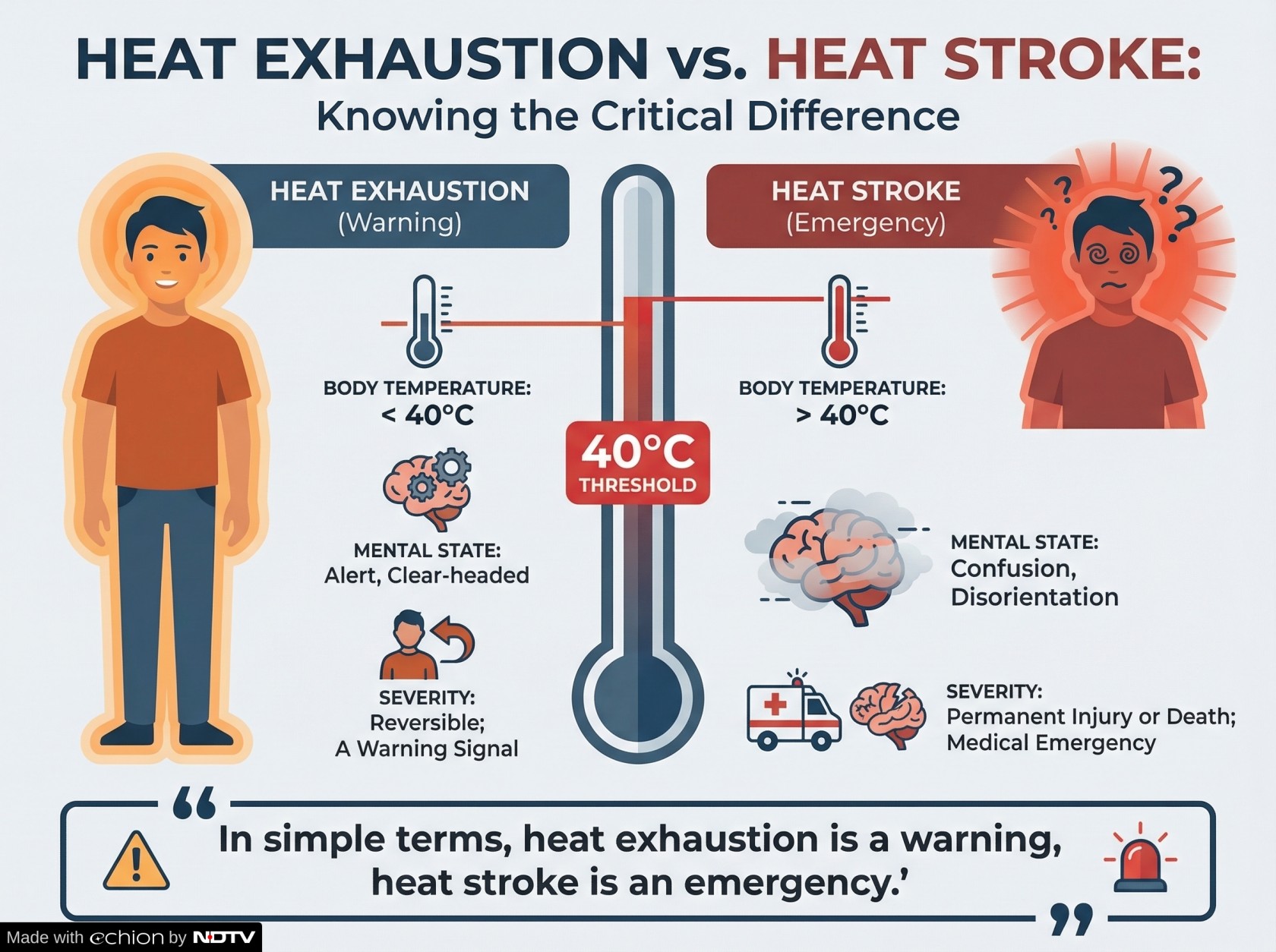
Key Differences: Heat Exhaustion vs Heat Stroke
Understanding the difference between the two is critical:
- Body Temperature: Heat exhaustion usually stays below 40C, while heat stroke exceeds this threshold.
- Mental State: People with heat exhaustion remain alert, whereas heat stroke often causes confusion or disorientation.
- Severity: Heat exhaustion is reversible; heat stroke can lead to permanent brain injury or death if untreated.
In simple terms, heat exhaustion is a warning, heat stroke is an emergency.
Who is at Risk?
Heat-related illnesses do not only affect those working outdoors. Several groups are particularly vulnerable:
- Infants and young children
- Elderly individuals
- People with chronic illnesses
- Outdoor workers and athletes
- Individuals on medications affecting hydration or temperature regulation
Even indoor environments with poor ventilation can increase risk.
When to Seek Immediate Help
If a person shows signs such as confusion, slurred speech, seizures, or loss of consciousness, it is crucial to seek emergency medical care immediately. While waiting for help:
- Move the person to a shaded or cool area
- Remove excess clothing
- Use cold compresses or fans to lower body temperature
Delaying treatment can result in irreversible damage.
Prevention: Your Best Defence
Preventing heat-related illness requires simple but consistent measures:
- Drink fluids regularly, even if not thirsty
- Avoid outdoor activity during peak heat hours (11 am - 4 pm)
- Wear light, breathable clothing
- Take frequent breaks in shaded or cool areas
- Include hydrating foods like fruits and vegetables in your diet
The Hidden Risks of Ignoring Early Signs
One of the biggest misconceptions is that recovery from mild heat stroke is complete. In reality, even mild cases can have lasting effects, including difficulty concentrating, persistent dizziness, and increased sensitivity to heat.
The key message is clear: early symptoms should never be ignored. What seems like simple fatigue could be the beginning of a serious medical condition.
Summer should be enjoyed safely, not suffered through. Understanding the difference between heat exhaustion and heat stroke, and acting early, can prevent complications and save lives. When it comes to heat-related illness, timely recognition is not just important, it is critical.
(By Dr. G. Krishna Mohan Reddy, Senior Consultant Physician and Diabetologist, Yashoda Hospitals, Hyderabad)
Disclaimer: The opinions expressed within this article are the personal opinions of the author. NDTV is not responsible for the accuracy, completeness, suitability, or validity of any information on this article. All information is provided on an as-is basis. The information, facts or opinions appearing in the article do not reflect the views of NDTV and NDTV does not assume any responsibility or liability for the same.