

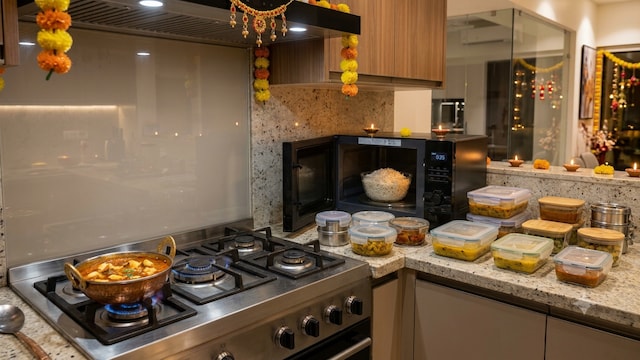
After a festival, containers of leftover biryani, pulao, paneer, gravies, sweets and fried snacks are often served again the next day. Reheating these refrigerated dishes is a common way to manage excess food, particularly after family gatherings and celebrations. However, the safety of a leftover meal depends considerably more on how it was handled and stored after cooking than on how thoroughly it is heated before serving.
From a microbiological perspective, cooked food begins another phase of risk as soon as it leaves the heat. Bacteria can enter through hands, serving spoons, utensils and kitchen surfaces. Some microorganisms also survive the cooking process in the form of spores. Given sufficient time and suitable temperatures, they can multiply and produce toxins. Reheating may kill many actively growing bacteria, but certain toxins remain stable even at high temperatures. This distinction is central to understanding food safety at home.
Why the time between cooking and refrigeration matters
One of the most common mistakes during festive gatherings is leaving cooked food on the dining table for several hours. Dishes are often prepared well in advance, served over an extended period and returned to the refrigerator much later. During this interval, food can remain within the temperature range that supports bacterial growth.
The temperature range between 5 degrees Celsius and 60 degrees Celsius is particularly important. Many foodborne bacteria will grow quickly under these conditions.
Perishable foods should be served and stored at temperatures above 5 degrees Celsius to 60 degrees Celsius, as per WHO. The two-hour rule is a great household code. Perishable cooked food should be refrigerated within two hours of preparation or serving. In hot conditions, particularly when ambient temperatures exceed 32 degrees Celsius, this window should be reduced to one hour.
Large quantities of food also require careful cooling. A deep container filled with hot biryani or gravy retains heat in its centre for longer, allowing the food to remain at temperatures favourable to bacterial multiplication. Dividing leftovers into smaller, shallow containers helps them cool more quickly and evenly before refrigeration.
READ | Think Your Leftover Food Is Safe? Here Are 7 Health Issues It May Cause
Why reheated rice deserves particular attention
Cooked rice is among the foods that require careful handling after preparation. Raw rice can contain spores of Bacillus cereus, a bacterium commonly found in the environment. These spores can survive ordinary cooking temperatures. When cooked rice remains at room temperature for an extended period, the spores can germinate, multiply and produce toxins.
One of these toxins, cereulide, is particularly concerning because it is heat stable. Reheating contaminated rice may kill actively growing bacteria, but it cannot reliably destroy the toxin already formed in the food. Consumption can cause nausea, vomiting and abdominal discomfort, sometimes within a few hours.
The same organism can also be associated with food poisoning from pasta, potatoes and other starchy preparations. Festive kitchens frequently prepare these dishes in large quantities, making prompt cooling and refrigeration especially relevant.
Rice should ideally be cooled quickly, refrigerated within an hour and consumed within a day as a precautionary approach. It should be reheated thoroughly only once. The safety of reheated rice ultimately depends on its storage history.
What happens when food is reheated repeatedly?
Repeatedly taking food out of the refrigerator, warming it, serving it and returning the remaining portion to storage creates repeated opportunities for microbial growth. Each time you change the temperature, you're creating a bacteria-friendly environment for the food, especially if it is left out at room temperature for an extended period.
Reheating even is needed too. People have a tendency to microwave food for a few minutes and stir it without stirring. Microwaves are not good at heating evenly, leaving the center cold and the edges scalding hot. Those are the semi heated areas in where the bacteria can survive.
Leftovers should reach an internal temperature of approximately 74 degrees Celsius throughout before consumption. Gravies, soups and sauces should be brought to a thorough boil, with regular stirring. Simple things like microwaving food and allowing food to sit a bit will help the food heat evenly.
Another issue is placing hot food into a leftover container that is already full. This practice can introduce microorganisms into food that has already been cooled and stored. Freshly prepared dishes and stored portions should always be kept separate.
READ | Is Palm Oil Bad for You? Health Benefits, Side Effects, And Daily Limits
The overlooked risks in gravies, dairy products and festive desserts
Festive meals frequently include preparations containing milk, cream, paneer, meat, eggs and rich gravies. These ingredients provide moisture and nutrients that can support microbial growth when temperature control is inadequate.
Staphylococcus aureus is one bacterium associated with food poisoning through contamination by food handlers. It can enter food through hands, skin contact and contaminated surfaces. Under favourable conditions, the organism can produce enterotoxins that cause nausea, vomiting and abdominal cramps. These toxins are relatively heat resistant, which means reheating contaminated food cannot be relied upon to make it safe.
Cream based sweets, milk preparations, custards and dishes that involve extensive handling deserve particular attention. Contamination and bacterial growth: refrigerate at all times, and keep tools sanitized, hands clean and containers covered.
A safer way to manage festive leftovers
Food safety at home depends on a sequence of practices rather than one final reheating step. Cooked food should be portioned into clean, shallow containers and refrigerated promptly. Refrigerators should ideally maintain a temperature of 5 degrees Celsius or below, and stored food should be labelled with its preparation date.
Most properly refrigerated leftovers should be consumed within three to four days, although rice requires a shorter storage period. Frozen food should be thawed inside the refrigerator or using a microwave defrost setting, followed by immediate reheating. Food should never be thawed on the kitchen counter.
Households should also avoid judging food safety through smell, colour or taste alone. Disease causing microorganisms and their toxins can be present without producing visible changes or an unusual odour. Tasting a questionable leftover to assess its safety is therefore an unreliable practice.
READ | Reheating Food In Plastic Containers? Here's What You Should Know
Foodborne infections and intoxications can cause diarrhoea, vomiting, abdominal cramps and dehydration. Complications are more likely in very young children, elderly adults, pregnant women, and persons with an impaired immune system. Persistent vomiting, bloody diarrhoea, high fever or signs of dehydration warrant prompt medical attention.
Excess food is often a part of the celebration, as festive food has much emotional and cultural value. The handling of leftovers is equally important. Each refrigerator, storage container, and reheating has its own role in preventing contamination and bacteria from the food.
With better knowledge of the chain of events from food preparation to consumption, home can enjoy those festive meals with more confidence.
(By Dr. Alka Kapoor, Consultant - Microbiologist, at Prayag Hospitals)
Disclaimer: The opinions expressed within this article are the personal opinions of the author. NDTV is not responsible for the accuracy, completeness, suitability, or validity of any information on this article. All information is provided on an as-is basis. The information, facts or opinions appearing in the article do not reflect the views of NDTV and NDTV does not assume any responsibility or liability for the same.