





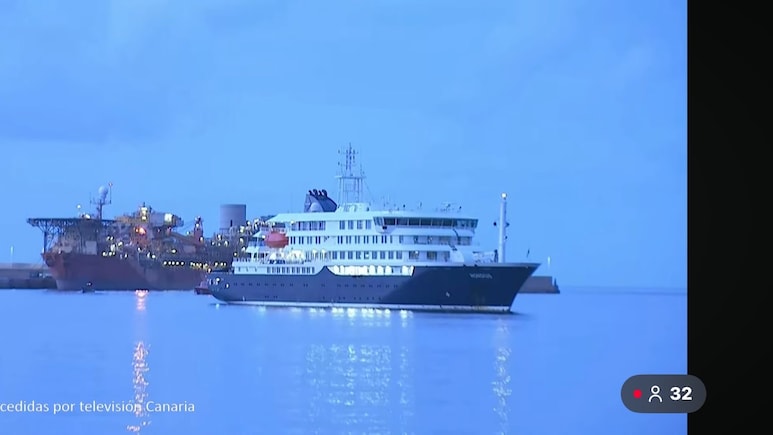
- Dutch cruise ship MV Hondius left Tenerife after hantavirus outbreak prompted WHO-led evacuation
- Outbreak linked to Andes hantavirus strain causing at least three deaths and multiple infections
- Passengers now under long-term health monitoring due to virus incubation period of 1-6 weeks
The Dutch expedition cruise ship MV Hondius, which became the centre of global concern after a deadly hantavirus outbreak onboard, has now departed Tenerife following a complex international evacuation coordinated by the World Health Organization (WHO) and Spanish authorities. The ship had anchored near Spain's Canary Islands after multiple confirmed cases of Andes hantavirus, a rare strain capable of limited human-to-human transmission, were detected among passengers and crew during an Antarctic voyage. According to reports, the outbreak has been linked to at least three deaths and several confirmed infections, prompting a multinational public health response involving more than 20 countries.
Over recent weeks, the world has closely tracked the evolving crisis, including WHO warnings, international quarantine efforts, expert reactions and updates involving Indian nationals onboard. The Embassy of India in Madrid earlier confirmed that the two Indian nationals aboard the ship were healthy and asymptomatic after the evacuation process began.
WHO officials have repeatedly stressed that the outbreak is "not another Covid", emphasising that hantavirus spreads very differently and poses a much lower public health threat. However, the evacuation marks only one phase of the response. Health agencies are now entering the next and perhaps most critical stage: long-term monitoring, contact tracing and international surveillance.
MV Hondius has now left the shores of Tenerife. All passengers have safely disembarked and are either on their way or have arrived home. #Spain executed this complex operation in style and I'm not surprised -- I witnessed outstanding leadership, professionalism and expertise.… pic.twitter.com/uFdjHHRb12
— Tedros Adhanom Ghebreyesus (@DrTedros) May 11, 2026
Why Did WHO Intervene In Tenerife?
The MV Hondius had arrived near Tenerife after health officials became concerned that the outbreak onboard involved the Andes strain of hantavirus, the only known hantavirus capable of person-to-person transmission in limited circumstances.
Spanish authorities, working alongside WHO experts, implemented a controlled evacuation process that included symptom screening, isolation procedures and medical monitoring of passengers and crew.
According to WHO Director-General Tedros Adhanom Ghebreyesus, the operation aimed to minimise the risk of further transmission while reassuring the public. "This is not another COVID," Dr Tedros said in a message to Tenerife residents earlier this week. He stressed that hantavirus does not spread through casual airborne exposure in the same way as SARS-CoV-2.
WHO officials explained that Andes hantavirus transmission generally requires prolonged close contact, usually among family members, caregivers or intimate partners.
Also Read: Hantavirus vs Norovirus: Which Viral Infection Is Deadlier?
What Happens To The Passengers Now?
Although the evacuation has been completed, the public health response is far from over. Passengers and crew members who disembarked from the ship are now expected to undergo extended health monitoring because the incubation period for Andes hantavirus can range from one to six weeks. WHO has warned that additional cases could still emerge during this period.
Health authorities in multiple countries are continuing:
- Contact tracing operations
- Symptom monitoring
- Medical screening
- Quarantine or isolation where necessary
- Cross-border public health coordination
WHO officials have said that "more cases may appear soon" because several close contacts onboard may still be within the virus incubation window. Experts say the biggest challenge now is identifying whether any secondary human-to-human transmission occurred during the voyage.
LIVE from Tenerife: Media update on disembarkation of passengers and crew from MV Hondius. #hantavirus https://t.co/0YuVn8KOpW
— World Health Organization (WHO) (@WHO) May 11, 2026
Why The Andes Virus Is Different
Most hantaviruses spread to humans through exposure to infected rodent urine, saliva or droppings. Human-to-human spread is extremely rare for most strains. However, the Andes strain, believed to be involved in the MV Hondius outbreak, is unique because limited person-to-person transmission has previously been documented in South America.
This is why WHO and European health authorities treated the cruise ship outbreak with unusual caution. Still, experts have stressed that the virus is far less contagious than respiratory viruses like Covid-19 or influenza.
Former WHO Chief Scientist Dr Soumya Swaminathan said the hantavirus outbreak could likely be contained through standard public health measures. She also explained that scientists already understand hantavirus transmission patterns far better than they did with Covid-19 in early 2020.
What Symptoms Are Authorities Monitoring?
Health officials are closely watching passengers and contacts for early symptoms associated with hantavirus pulmonary syndrome (HPS), a severe respiratory illness linked to some hantavirus infections.
According to the US Centers for Disease Control and Prevention (CDC), early hantavirus symptoms may include:
- Fever
- Muscle aches
- Fatigue
- Headache
- Nausea and vomiting
In severe cases, the infection can progress rapidly to respiratory distress and lung complications. WHO officials say rapid identification and isolation of symptomatic individuals remain central to outbreak control efforts.
Also Read: Hantavirus Surveillance: India Deploys 165-Lab 'Viral Shield' To Track Virus Spread
How India Responded
India closely monitored the situation after it emerged that two Indian nationals were onboard the vessel. The Embassy of India in Madrid confirmed that both Indians remained healthy and asymptomatic during the evacuation process. Indian authorities coordinated with Spanish officials and international health agencies throughout the operation.
Public health experts say the incident highlights the growing importance of international outbreak surveillance in an era of global travel and expedition tourism. Keeping this in mind, the Indian Council of Medical Research (ICMR) has activated its "Viral Shield" programme, alerting a network of 165 specialised laboratories to ensure surveillance. The target is to not let hantavirus breach India's border through any means possible.
The departure of the MV Hondius from Tenerife marks the end of the emergency evacuation phase, but global health monitoring linked to the hantavirus outbreak is likely to continue for several weeks. While WHO and experts continue to emphasise that this is not "another Covid", the outbreak has drawn worldwide attention because of the rare Andes hantavirus strain involved and its limited human-to-human transmission potential.
Authorities across multiple countries are now focused on identifying possible secondary cases, monitoring exposed passengers and ensuring rapid containment if new infections emerge. For now, experts say vigilance, rather than panic, remains the most important public health response.
Disclaimer: This content, including advice, provides generic information only. It is in no way a substitute for a qualified medical opinion. Always consult a specialist or your own doctor for more information. NDTV does not claim responsibility for this information.
Track Latest News Live on NDTV.com and get news updates from India and around the world

