

)
The recent spike in H1N1 cases that have been detected through the Indian Council of Medical Research (ICMR) surveillance network has ignited growing concern. With regard to symptoms such as high fever, it persists after an H1N1 infection and needs to be kept in mind should you catch the virus. But some people may suffer from H1N1 even without a fever, as about 1 in 7 patients can have H1N1 without developing a fever. The Influenza and other respiratory viruses journal has pointed to disregarding the focus on fever as the sole indicator of H1N1 viral infection.
Other symptoms that may indicate H1N1 infection can be cough, sore throat, runny nose, fatigue, headache, and muscle aches. While a sudden spike in body temperature is typical, a high fever doesn't have to be present, and this is more common in older adults, those with compromised immune systems, people who are in earlier stages of infection, and those who have taken fever-reducing medications.
Can You Have H1N1 Without A Fever?
Yes, as research published in the PLOS ONE journal suggests that those with a compromised immune system cannot develop a fever while an active H1N1 viral infection has entered their system. It is more commonly seen in people of an advanced age and those who already possess immunity against fever-spiking viral strains in circulation.
The H1N1 viral infection varies from person to person; hence, the symptoms can also differ. The severity of the infection and duration are also affected by when medication and treatment are received, as it directly impacts when the virus will stop replicating in the body.
Common H1N1 Symptoms Besides Fever
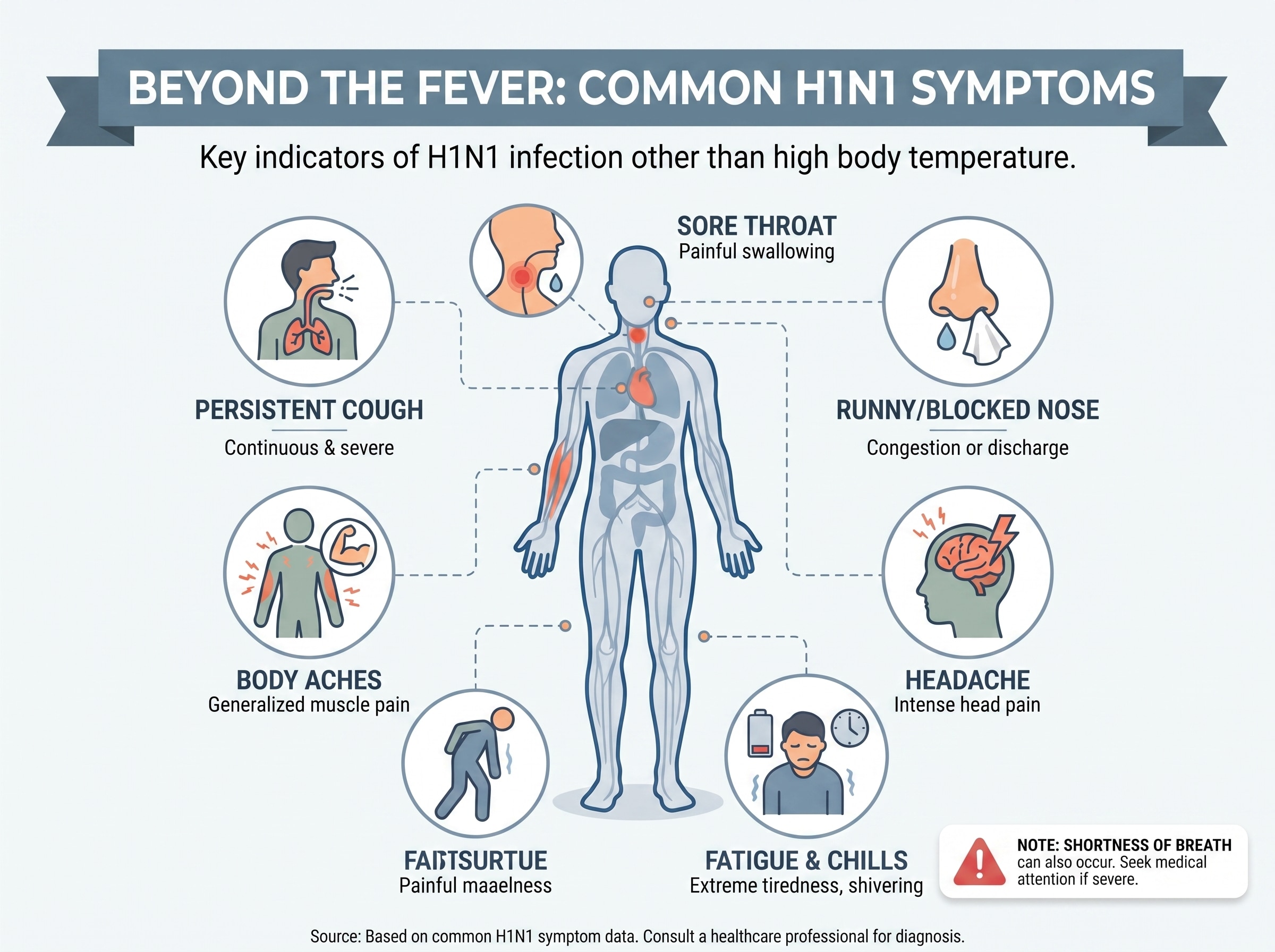
The common H1N1 symptoms that could affect people in other ways besides fever include:
- Persistent cough
- Sore throat
- Runny or blocked nose
- Body aches
- Headache
- Fatigue
- Chills
- Shortness of breath
What Are The Early Signs Of H1N1?
The Influenza and Other Respiratory Viruses Journal suggests that early signs of H1N1 can affect people in the following manner:
- Scratchy throat
- Dry cough
- Extreme fatigue
- Mild body pain
- Nasal congestion
These symptoms can mimic symptoms of a common cold and confuse people; this is why knowing the difference is necessary to seek the right course of medical treatment and receive timely medication.
Why Some People May Not Develop A Fever
The development of fever is not necessary, as it can be dependent on the following parameters:
- An individual's response to the infection strain can influence fever incidence.
- If the patient is of an advanced age, then changes in their immunity can affect whether they will develop a fever or not.
- The stage of mild infection can present itself with no fever symptoms.
- If the H1N1 is in its early stages, then fever cannot occur.
- Those who are on fever-reducing medications cannot develop a fever but can be infected with H1N1.
Warning Signs That Need Medical Attention
Research published in the PLOS One Journal suggests that influenza A or H1N1 can manifest as warning signs that warrant medical attention. These signs can be:
- Difficulty breathing
- Chest pain
- Persistent high fever
- Bluish lips
- Dizziness
- Confusion
- Severe dehydration
The risk of developing severe H1N1 is greater for those who are otherwise healthy, as the respiratory infectious disease can affect people who are:
- Pregnant women
- Older adults
- Young children
- Dealing with diabetes
- Heart disease patients
- Individuals with lung disease
Note: Those with an immunocompromised system need to pay special attention to practising preventive strategies to avoid an H1N1 infection.
Should You Get Tested If You Have Symptoms But No Fever?
You need to get medically tested for H1N1 if you have been exposed to someone who has already had the infection. If there are multiple cases in your vicinity, then testing is necessary. Additionally, those who present with multiple symptoms that match an H1N1 infection and those with high-risk medical conditions need to get tested.
How To Protect Yourself During The H1N1 Surge
A rise in H1N1 cases makes it necessary to practise protective measures that could prevent the infection from taking hold of the body. To protect your immune system, you need to follow these prevention tips:
- Frequent handwashing to avoid transfer of germs.
- Respiratory hygiene, which means avoiding touching your eyes, nose, and mouth.
- Avoid close contact with sick individuals, as infection can spread.
- Stay home when symptomatic, as you could spread the infection in your community.
- Annual influenza vaccination is necessary to avoid serious health complications.
- Adequate sleep and nutrition are vital for a quick recovery.
A rise in H1N1 cases makes it necessary for people to know that a fever may not always present itself. You need to safeguard your respiratory health and make it stronger to deal with the viral infection strain and recover quickly should the virus enter your system.
Also Read: H1N1: Can You Get It Twice? What Doctor Says About Repeat Flu Infections
Disclaimer: This content including advice provides generic information only. It is in no way a substitute for a qualified medical opinion. Always consult a specialist or your own doctor for more information. NDTV does not claim responsibility for this information.