

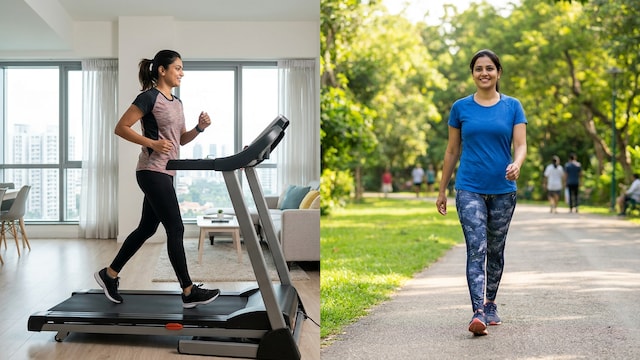
Walking is one of the simplest ways to stay active, improve heart health and support weight management. It does not require expensive equipment or a gym membership, and people of different ages can include it in their daily routines. However, one common question that most people have is whether walking indoors, such as on a treadmill or inside the house offer the same benefits as walking outdoors in a park or on the road.
The choice depends on an individual's fitness level, health needs, schedule and environment. Walking outdoors allows people to enjoy fresh air and natural surroundings, while indoor walking offers control over pace and weather conditions. Both can help burn calories, strengthen muscles and improve mental well-being when practised regularly. Understanding the advantages and limitations of each can help you decide which type of walking is beneficial for you.
Walking Indoors vs Outdoors: Which One Is Better?
1. Calorie burning and weight loss
Both indoor and outdoor walking can help in weight loss by helping the body burn calories. The number of calories burned depends on walking speed, duration, body weight and the intensity of the activity. On a treadmill, people can increase the speed or incline to make the workout more challenging. Outdoor walking may involve slopes, uneven paths and changes in pace, which can increase the effort required. However, neither option automatically burns more calories than the other.
2. Speed and intensity
Indoor walking, especially on a treadmill, allows people to control their speed and incline. This makes it easier to follow a routine, gradually increase intensity and track workout progress. Beginners can start at a comfortable pace and slowly increase their walking time. Outdoor walking offers a different kind of challenge because people may encounter slopes, stairs and changing surfaces. These variations can engage different muscles and affect walking intensity.
3. Mental health
Walking can improve mood, reduce stress and support mental well-being, regardless of the place. However, outdoor walking may give you an additional benefit through exposure to natural surroundings, greenery and daylight. Spending time in parks or other green spaces can help people feel calmer and less mentally fatigued. Indoor walking can also provide an opportunity to relax, listen to music or take a break from work.
4. Convenience and consistency
Indoor walking can be easier to fit into a busy schedule, especially for people who have access to a treadmill or a safe indoor walking space. It allows them to exercise without worrying about rain, extreme heat or poor outdoor conditions. People can also walk indoors while watching television or during breaks at work. Outdoor walking requires a suitable route. However, it can be more accessible for those who do not own a treadmill or have access to a gym.
5. Muscle strength and balance
Outdoor walking can challenge the muscles that are involved in balance and movement because paths may have slopes, different surfaces and small changes in elevation. Walking uphill can also increase the workload on the legs and gluteal muscles. On a treadmill, the incline function can give you a similar challenge. Indoor walking on a flat surface is often suitable for beginners.
Which One Is Better?
Neither indoor nor outdoor walking is better. Both can support weight loss, improve cardiovascular fitness and improve overall health when performed regularly. Outdoor walking may be preferable for people who enjoy nature, daylight and changing surroundings, while indoor walking is useful when weather, pollution, safety or time constraints make outdoor exercise difficult.
For most people, the best way is to combine both whenever practical. Walk outdoors when the weather and air quality are suitable, and choose indoor walking when conditions are unfavourable. Try and build a consistent routine, gradually increase your walking duration and pace, and follow a balanced diet and other forms of physical activity along with walking.
Disclaimer: This content including advice provides generic information only. It is in no way a substitute for a qualified medical opinion. Always consult a specialist or your own doctor for more information. NDTV does not claim responsibility for this information.