

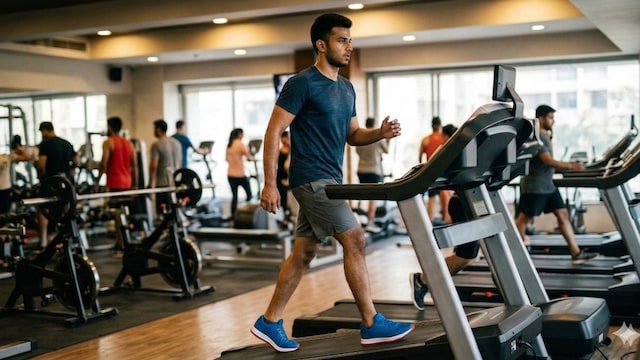
Walking is often considered one of the easiest ways to stay active, but increasing the treadmill incline can turn a simple walking session into a challenging cardiovascular workout. A fitness challenge involving 20 minutes of walking on a 20% incline for 20 consecutive days has caught the attention of people looking to burn calories, improve stamina and reduce belly fat. The idea sounds simple: set the treadmill to a steep incline, walk for 20 minutes and repeat the routine for 20 days. Unlike regular walking, an uphill workout requires the body to work harder against gravity, increasing the physical demand on the leg muscles and cardiovascular system. But can this 20-20-20 treadmill challenge actually help you lose belly fat? Can 20 minutes of steep incline walking make a visible difference to your waistline in less than three weeks? The answer is that it can support overall fat loss, but the results depend on several factors, including your diet, exercise intensity, starting fitness level and total daily activity.
What Is The 20-20-20 Treadmill Challenge?
The 20-20-20 treadmill challenge involves walking for 20 minutes at a 20% incline for 20 days. Walking on a treadmill at a 20% incline alters gait mechanics to resemble a walking lunge and increases muscle activation and metabolic cost, though research published in International Journal of Exercise and Science, shows it yields lower perceived enjoyment compared to flat jogging at matched energy expenditures. As the incline increases, the muscles in the lower body have to work harder to propel the body forward. The glutes, quadriceps, hamstrings and calves become more actively involved, while the core muscles help maintain stability and posture.
The increased muscular effort also raises the cardiovascular demand, making incline walking a potentially effective way to improve aerobic fitness and increase energy expenditure. However, a 20% incline is challenging even for many regular exercisers. It is not necessarily an appropriate starting point for beginners.
Can Walking On A 20% Incline Help Reduce Belly Fat?
Incline walking can contribute to belly fat reduction, but it is important to understand that it does not specifically target abdominal fat. Belly fat includes two types of fat: subcutaneous fat, which sits just beneath the skin, and visceral fat, which accumulates around internal organs. Both can be influenced by changes in overall body fat. When you walk on a steep incline, your body expends more energy than it would during walking at the same speed on a flat surface. If this additional energy expenditure contributes to a sustained calorie deficit, it can help reduce overall body fat, including fat around the abdomen.
A 2025 systematic review and meta-analysis published in Obesity Research & Clinical Practice examined 12 studies involving 591 adults with overweight or obesity. Researchers found that exercise programmes were associated with reductions in both abdominal visceral fat and subcutaneous fat. The findings also suggested that exercise intensity influenced the extent of abdominal fat reduction. However, the study did not specifically examine the 20-20-20 treadmill challenge. Therefore, its findings cannot be used to promise a particular amount of belly fat loss from this routine.
What Does Research Say About 20% Incline Walking?
A study published in 2025 compared 20 minutes of walking at a 20% treadmill incline with jogging on a level treadmill at a similar energy expenditure. The study involved 22 young adults. Researchers found that the two workouts produced comparable energy expenditure, oxygen consumption and heart-rate responses. The incline-walking group expended approximately 171 calories during the session, although individual calorie expenditure can vary considerably. This suggests that steep incline walking can provide a substantial cardiovascular workout without requiring participants to run.
Another study published in Sports Medicine and Health Science in March 2026 examined the metabolic cost of steep incline treadmill walking. Researchers found that energy expenditure increased as the incline became steeper, although the response varied depending on walking speed, body weight and individual characteristics.
These findings support the idea that incline walking can be an effective way to increase workout intensity. However, burning more calories during a session does not automatically translate into losing abdominal fat.
5 Benefits Of Walking On A 20% Incline
1. Increases Calorie Expenditure
Walking uphill requires the body to work against gravity. This increases the energy required to maintain movement compared with walking on a flat surface at a similar speed. The glutes, quadriceps, hamstrings and calves become more actively involved, increasing the muscular effort required during the workout.
For people who have limited time for exercise, incline walking can be an efficient way to increase the intensity of a cardiovascular session. However, the number of calories burned depends on body weight, walking speed, fitness level and workout duration.
2. Strengthens The Glutes And Leg Muscles
Walking on an incline places greater demands on the muscles responsible for moving and stabilising the lower body. The gluteal muscles help extend the hips, while the quadriceps and hamstrings contribute to knee and hip movement. The calves also work harder to support forward movement on the uphill surface. Regular incline walking can improve muscular endurance and make activities such as climbing stairs and walking uphill easier. However, it should not replace resistance training for people looking to build significant muscle strength or muscle mass.
READ | Is Your HbA1c Misleading You? Why Your Blood Sugar Test May Not Tell The Whole Story
3. Improves Cardiovascular Endurance
Walking at a steep incline increases the body's oxygen requirements. The heart and lungs have to work harder to supply oxygen to the muscles during exercise. Over time, consistent cardiovascular activity can improve aerobic capacity and stamina. A 20-minute incline session can therefore be a useful addition to a broader fitness routine, provided the intensity is appropriate for the individual's fitness level.
4. Supports Blood Sugar Regulation
Physical activity helps muscles take up glucose from the bloodstream to meet their energy requirements. Regular exercise can improve insulin sensitivity and support better blood sugar regulation.
Walking after meals may also help reduce post-meal blood glucose spikes. While incline walking can contribute to overall metabolic health, people with diabetes or other metabolic conditions should choose an intensity suited to their health status rather than immediately attempting a steep 20% incline.
5. Improves Lower-Body Muscular Endurance
Unlike sprinting or running, incline walking allows people to challenge their cardiovascular system while maintaining a walking movement pattern. The repeated engagement of the glutes, thighs and calves can improve their ability to sustain physical activity over longer periods. This can make everyday activities such as climbing stairs, hiking and walking longer distances feel less demanding.
How To Perform The 20-20-20 Treadmill Challenge Safely
Although the challenge sounds straightforward, walking at a 20% incline for 20 minutes can be physically demanding. Beginners should build their endurance before attempting the full routine. Start with a 3-5% incline at a comfortable walking speed for 10-15 minutes. Once your body adapts, gradually increase the incline and duration. If you are already physically active, you can experiment with a higher incline, provided you can maintain proper walking posture without excessive strain. It is also important to avoid holding the treadmill handles throughout the workout. Leaning on them can change your natural walking mechanics and reduce the effort required from your muscles.
Pay attention to your body. Stop if you experience dizziness, chest discomfort, unusual breathlessness or sharp pain in your knees, ankles or calves. People with existing joint problems, Achilles tendon injuries, cardiovascular conditions or balance difficulties should consult a healthcare professional before attempting this challenge.
Is It Safe To Do Incline Walking For 20 Consecutive Days?
Although walking is generally considered a low-impact activity, a 20% incline significantly increases the demands placed on the lower-body muscles and tendons. Repeating the same demanding workout every day without adequate recovery can increase the risk of overuse injuries, particularly in the calves and Achilles tendons.
Instead of treating 20 consecutive days as a compulsory target, consider alternating incline walking with regular walking, strength training and recovery days. A balanced exercise routine is more sustainable than pushing through fatigue to complete a daily challenge.
What Else Should You Do To Lose Belly Fat?
Incline walking can help increase calorie expenditure, but nutrition and overall physical activity remain important for sustainable fat loss. Maintain a calorie deficit: Losing body fat requires consistently consuming fewer calories than your body uses. A moderate calorie deficit is generally more sustainable than extreme dietary restrictions.
- Prioritise protein: Include adequate protein from foods such as eggs, chicken, fish, dairy, lentils and beans. Protein supports muscle maintenance during weight loss.
- Include strength training: Resistance exercises help preserve muscle mass while losing body fat. Include exercises targeting the major muscle groups at least twice a week.
- Get adequate sleep: Poor sleep can affect appetite regulation, food choices and exercise recovery. Aim for a consistent sleep schedule.
- Stay physically active: Do not restrict movement to your 20-minute treadmill session. Walking throughout the day, taking the stairs and reducing prolonged sitting can contribute to overall energy expenditure.
The US Centers for Disease Control and Prevention recommends at least 150 minutes of moderate-intensity aerobic activity or 75 minutes of vigorous-intensity activity each week, alongside muscle-strengthening exercises on at least two days. Walking on a 20% incline for 20 minutes can be an effective way to increase calorie expenditure, improve cardiovascular endurance and challenge the muscles of your lower body.