

)
Oral cancer has long been associated with older adults and tobacco use. Today, that understanding is evolving. More cases are being identified in younger adults, including people in their twenties and thirties, highlighting a shift in the way this disease presents. While tobacco remains the leading risk factor, it does not fully explain this trend. Factors such as alcohol consumption, areca nut use, poor oral hygiene, nutritional deficiencies, genetic susceptibility, and infection with high-risk strains of the Human Papillomavirus (HPV), particularly HPV-16, are also being recognised as contributors.
The encouraging reality is that oral cancer often develops with visible changes inside the mouth, creating an important opportunity for early detection. Recognising these warning signs and seeking timely evaluation can significantly improve treatment outcomes.
Understanding the Risks You Can Control
Preventing oral cancer begins with understanding that the risk extends beyond smoking.
Avoiding all forms of tobacco and areca nut products such as gutkha, khaini, and betel quid remains the most important step, but other everyday factors also deserve attention. Frequent alcohol consumption, especially when combined with tobacco, can further increase the risk.
Persistent irritation from broken teeth or poorly fitting dental appliances, poor oral hygiene, nutritional deficiencies, and weakened immunity may also contribute to long-term damage to the oral tissues.
In addition, high-risk HPV infection, particularly HPV-16, has been linked to cancers affecting the base of the tongue and tonsils. Maintaining good oral health, following a balanced diet, attending regular dental check-ups, and discussing HPV vaccination with a healthcare provider, where appropriate, are practical steps that can help lower the risk over time.
The Symptoms People Often Ignore
One of the biggest challenges with oral cancer is that its early symptoms are often painless and mistaken for common mouth problems. A persistent sore may be treated as a routine ulcer, delaying diagnosis. Warning signs that require medical evaluation include:
- A mouth ulcer that does not heal within two weeks
- White or red patches inside the mouth, known as leukoplakia and erythroplakia
- A persistent lump or thickening in the cheek, tongue, gums, or neck
- Difficulty chewing, swallowing, speaking, or moving the tongue
- Unexplained bleeding, numbness, or persistent pain in the mouth
While these symptoms are not always cancerous, any abnormal change that persists should be evaluated by a dentist or head and neck specialist.
Early Detection Can Save Function and Improve Outcomes
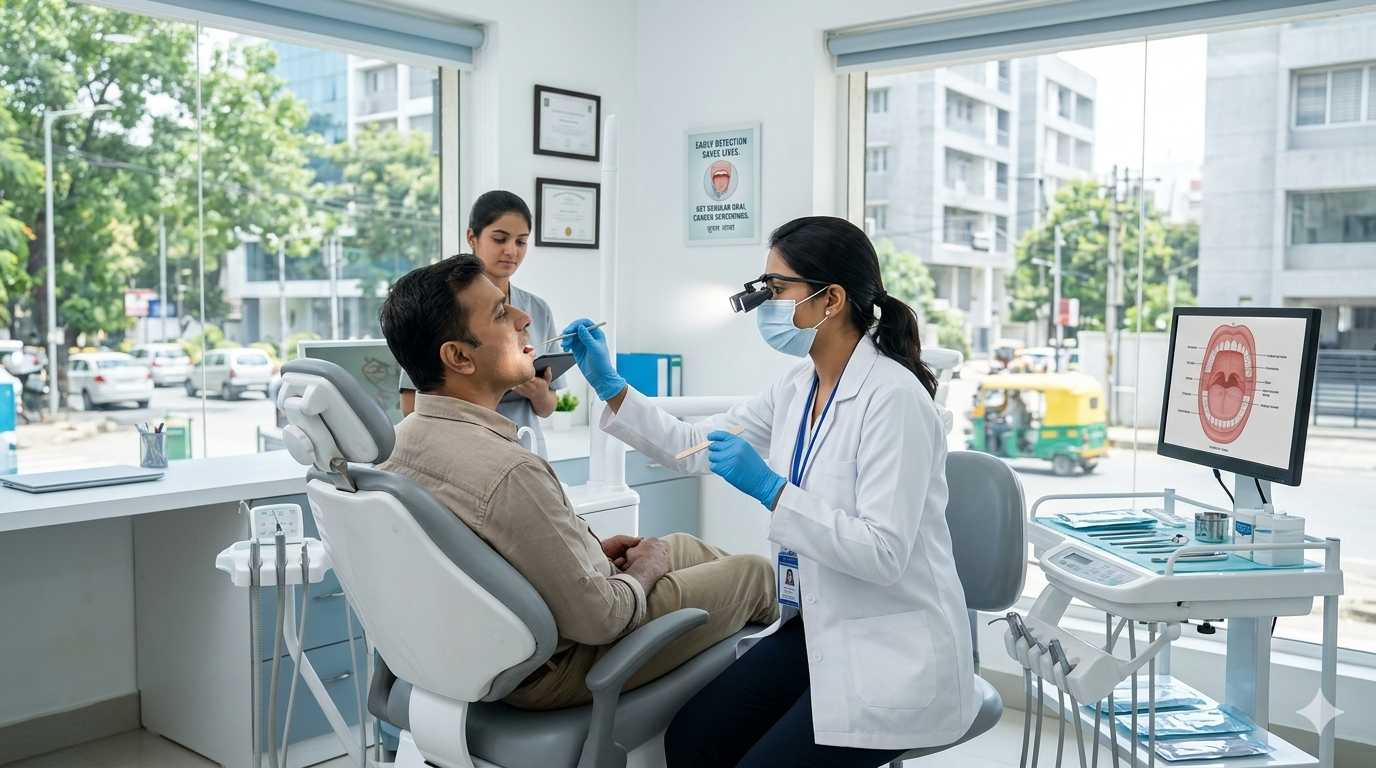
Oral cancer is one of the few cancers where suspicious changes are often visible during a routine oral examination, making timely screening especially valuable. Detecting lesions early can allow more localised treatment, often preserving speech, swallowing, and facial appearance while improving long-term outcomes. In selected cases, advanced diagnostic tools such as tissue autofluorescence and brush biopsy can help identify abnormal cellular changes before they progress. Delaying evaluation, even when symptoms appear minor, can reduce these opportunities.
Prevention Starts With Everyday Choices
Reducing the risk of oral cancer begins with avoiding all forms of tobacco and areca nut products, limiting alcohol consumption, maintaining good oral hygiene, eating a balanced diet rich in fruits and vegetables, and attending regular dental check-ups. Discussing HPV vaccination with a healthcare provider may also be beneficial for eligible individuals. As oral cancer increasingly affects younger adults, recognising persistent symptoms and seeking timely screening remain the most effective ways to improve outcomes. Awareness, combined with early action, can make a meaningful difference in reducing the burden of this disease.
(By Dr P K Das, Senior Consultant, Medical Oncologist, Indraprastha Apollo Hospitals, Delhi)
Disclaimer: The opinions expressed within this article are the personal opinions of the author. NDTV is not responsible for the accuracy, completeness, suitability, or validity of any information on this article. All information is provided on an as-is basis. The information, facts or opinions appearing in the article do not reflect the views of NDTV and NDTV does not assume any responsibility or liability for the same.