

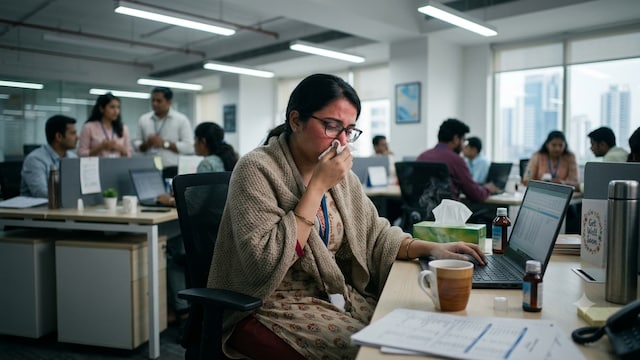
An infection does not always follow the neat pattern people expect: fever appears, medicines are taken, rest follows and symptoms gradually settle. Sometimes, however, the illness begins moving in the opposite direction. Fever persists, weakness becomes more pronounced, breathing becomes difficult or a person who was initially alert becomes confused or unusually drowsy. That change in trajectory can be an important warning.
"Most infections follow a predictable course and improve with appropriate supportive care or targeted treatment. However, when an infection stops behaving as expected-when fever persists, symptoms rapidly worsen, or the patient develops new organ-related symptoms, we have to consider the possibility of a more serious or complicated infection," said Dr Neha Rastogi, Senior Consultant, Infectious Diseases, Fortis Memorial Research Institute, Gurgaon.
One of the most serious possibilities is sepsis, a life-threatening condition in which the body's response to an infection becomes dysregulated and causes organ dysfunction. The World Health Organization (WHO) estimates that there were 48.9 million cases of sepsis and 11 million sepsis-related deaths globally in 2020, accounting for about 20% of all deaths worldwide.
So, when does an infection stop looking routine, and what signs suggest that medical attention should not be delayed?
When an infection starts changing course
A persistent fever by itself does not necessarily mean that an infection is becoming severe. Viral infections, bacterial infections and several non-infectious conditions can cause fever for varying periods.
What matters more is the overall clinical picture and the direction in which the person is moving.
"If someone with an infection is becoming progressively more unwell rather than gradually improving, particularly if there is breathing difficulty, confusion, persistent vomiting, severe weakness, reduced urine output or low blood pressure, they should be evaluated urgently rather than waiting for the infection to 'settle on its own'," Dr Rastogi said.
A person who develops a new symptom involving breathing, mental status, circulation or urine output may require a more detailed assessment because these can indicate that an infection is affecting vital organs.
According to the US Centers for Disease Control and Prevention (CDC), sepsis can cause symptoms such as confusion or disorientation, shortness of breath, high heart rate or weak pulse, fever or chills, clammy skin and extreme pain or discomfort. The agency stresses that sepsis is a medical emergency and that an infection that is not improving or is getting worse requires prompt medical evaluation.
READ | Plague Is A Bacterial Infection: Bubonic, Pneumonic And Septicemic Plague Types Explained
What is sepsis and how can an infection lead to it?
Sepsis is not simply another word for a severe infection. It occurs when the body's response to an infection becomes extreme or dysregulated, resulting in injury to its own tissues and organs. If it is not recognised and treated promptly, it can progress to septic shock, multiple organ failure and death.
Almost any infection can potentially lead to sepsis. Common starting points include infections of the lungs, urinary tract, gastrointestinal tract and skin, according to the CDC.
This means an illness that initially appears relatively ordinary can become dangerous if the infection spreads, the body's response becomes severe or organ function begins to deteriorate.
Warning signs that an infection may be getting serious
According to Dr Rastogi, the warning signs are less about one isolated symptom and more about a marked change in the person's condition.
These include:
- Breathing difficulty or unusually rapid breathing
- Confusion, altered behaviour or unusual drowsiness
- Very low blood pressure or symptoms suggesting poor circulation
- Reduced urine output
- Extreme or rapidly worsening weakness
- Persistent vomiting
- A general deterioration rather than gradual recovery
A person with an infection who suddenly becomes confused, struggles to breathe, becomes extremely weak or stops passing urine normally should not simply be observed at home.
Importantly, not everyone with sepsis will have every symptom, and fever may be absent in some seriously ill patients. Clinical assessment is therefore more important than waiting for a particular combination of symptoms.
Why an infection may stop responding as expected
There are several possible explanations when an infection fails to improve. One is antimicrobial resistance. A bacterium may no longer respond to medicines that would ordinarily be expected to work against it. This can make treatment more difficult and may require laboratory testing, including cultures and antimicrobial susceptibility testing, to identify an effective treatment.
WHO estimates that bacterial antimicrobial resistance was directly responsible for 1.27 million deaths globally in 2019and associated with almost 5 million deaths.
India has also established an antimicrobial-resistance surveillance network through ICMR, which tracks resistance patterns and supports evidence-based antimicrobial use. ICMR's published guidance includes treatment guidelines for common syndromes and surveillance reports from its Antimicrobial Resistance Surveillance and Research Network.
Another possibility is that the infection's source has not been adequately controlled. For example, some infections may require a procedure to drain an abscess, remove infected material or address another underlying source rather than relying on medicines alone.
An underlying health condition can also alter how the body responds to infection. People with conditions affecting immunity, as well as some older adults and people with chronic illnesses, may be particularly vulnerable to serious infection.
Why changing antibiotics on your own can be dangerous
One of the most common mistakes during a prolonged infection is to assume that a different or stronger antibiotic will automatically solve the problem. "Changing, stopping or starting antibiotics without medical advice can complicate treatment and contributes to antimicrobial resistance," Dr Rastogi said.
Antibiotics do not work against viral infections, and even when an infection is bacterial, the correct drug depends on factors such as the likely organism, site of infection, severity of illness, previous antibiotic exposure and, where available, laboratory results.
ICMR's antimicrobial-use guidelines emphasise rational selection and use of antibiotics, while WHO identifies inappropriate antimicrobial use as an important driver of resistance. This is why leftover antibiotics, someone else's prescription or an antibiotic saved from a previous illness should not be used as a substitute for medical evaluation.
What doctors may check when an infection worsens
When a person is deteriorating, doctors may assess vital signs and oxygen levels and look for evidence of organ dysfunction. Depending on the suspected source, investigations can include blood tests, cultures, urine tests, chest imaging or other scans.
The aim is not simply to bring down the fever. Doctors need to determine where the infection is coming from, whether it is bacterial or another type of infection, whether complications have developed and whether organs are being affected.
As Dr Rastogi points out, "Fever can occur with many conditions, and the clinical picture matters more than a single symptom."
READ | Is It Chickenpox? Signs, Medicines, Care Tips And Precautions For Children
The biggest warning sign: The trajectory has changed
An infection becoming serious does not always begin with a dramatic symptom. Sometimes the most important clue is that the person who was expected to be getting better is instead getting noticeably worse.
Persistent fever alone is not necessarily an emergency. But persistent fever combined with worsening weakness, breathing difficulty, confusion, repeated vomiting, reduced urine output, low blood pressure or a significant change in overall condition requires prompt medical assessment.
The key message is therefore not to panic every time a fever lasts longer than expected. It is to recognise when an infection has stopped behaving like a routine infection. "Doctors assess the duration and pattern of fever, examination findings, blood tests and, where indicated, cultures or imaging to determine what is happening," Dr Rastogi said.
When the trajectory changes, waiting for the infection to "settle on its own" can be risky. Early medical assessment can help identify complications, guide appropriate treatment and, when sepsis is involved, potentially prevent progression to organ failure.
Disclaimer: This content including advice provides generic information only. It is in no way a substitute for a qualified medical opinion. Always consult a specialist or your own doctor for more information. NDTV does not claim responsibility for this information.