

)
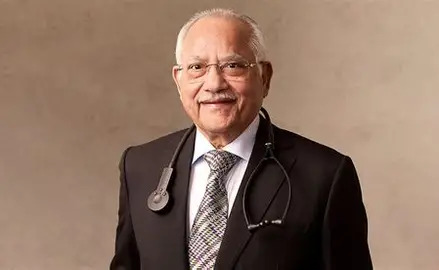
When I met Dr Prathap C. Reddy this week, our conversation began with a question that has followed Indian healthcare for decades: why have we so often assumed that the best medical care lies outside India?
It was an idea Dr Reddy challenged early in his career. As a cardiologist who returned to India, he wanted patients here to have access to advanced treatment without having to travel overseas. That conviction eventually led to the creation of Apollo Hospitals.
Several decades later, the conversation is very different. India is not only treating its own patients with increasingly sophisticated medical care, it is also attracting patients from other parts of the world.
A major reason, Dr Reddy says, is the combination of medical expertise and affordability. Speaking to NDTV, he pointed to the significant difference in the cost of complex procedures in India compared with countries such as the US and UK. His larger argument was that affordability does not have to mean compromising on quality.
But what stayed with me from our conversation was not what India can do inside an operating theatre. It was what we need to do before someone ever reaches one.
India has built remarkable capabilities in cardiac care. From bypass surgeries and angioplasties to complex procedures and heart transplants, we have come a long way. Chennai, in particular, has emerged as an important centre for cardiac care, while Tamil Nadu has been a leading state in organ transplantation.
And yet, there is a difficult question we cannot ignore: If we have become so good at treating heart disease, why are so many Indians developing it in the first place? And why are we increasingly talking about heart disease in younger people?
Dr Reddy spoke about the higher cardiovascular vulnerability seen among Indians and South Asians. Genetics can be part of that story, along with metabolic, lifestyle and environmental factors that may contribute to heart disease appearing earlier.
But genetics is not destiny. That distinction matters because it is easy to hear the words "genetic risk" and assume there is little we can do. The reality is that so much of heart health is also shaped by everyday life from what we eat, how much we move, whether we smoke, how we sleep, how we manage stress, and whether our blood pressure, cholesterol and blood sugar are under control.
These are not abstract medical numbers. They are signals our bodies are giving us, often long before a major cardiac event.
Perhaps one of the biggest things we need to change in India is our relationship with preventive check-ups.
Too often, we think routine heart-health screening is something to worry about once we reach our 40s or 50s. But if cardiovascular disease is appearing earlier, our approach to prevention needs to move earlier too.
Know your blood pressure. Know your cholesterol and blood sugar levels. Know your family history. Understand your own risk factors. And if something does not feel right, do not dismiss it or wait for it to pass.
Going to a doctor early is not overreacting. Sometimes, it can mean the difference between detecting a problem when it can be managed and discovering it only when it becomes an emergency.
That, to me, is the real challenge before Indian healthcare today. India knows how to treat the heart. But can we become equally good at protecting it?
We have world-class cardiac centres. We perform complex surgeries and procedures. Patients travel to India for treatment. But even the best hospitals cannot be the only answer to a growing burden of cardiovascular disease.
Prevention has to move beyond annual campaigns and awareness days and become part of everyday life. Heart health should not be a conversation we reserve for older people either. It needs to enter our homes, workplaces, schools and conversations much earlier.
Technology could also have an important role in that shift. Dr Reddy is particularly optimistic about artificial intelligence and its potential to help doctors access deeper information and make quicker, better-informed decisions. His view is not that AI will replace doctors, but that doctors should be able to use its capabilities to improve care.
For preventive medicine, that could become especially valuable. If technology helps identify patterns of risk sooner, it may also give doctors and patients an opportunity to intervene sooner.
Perhaps this is the next chapter of India's healthcare story.
For decades, we have invested in becoming better at treating disease. Now we need to invest just as seriously in preventing it.
My biggest takeaway from my conversation with Dr Reddy this Heart Day was surprisingly simple:
Don't wait for your heart to force you to pay attention.
Know your risk. Get checked. Take the numbers seriously. And act early.
Because the true measure of India's healthcare success cannot only be how many lives we save inside an operating room.
It should also be how many people we can help stay out of one
Disclaimer: This content including advice provides generic information only. It is in no way a substitute for a qualified medical opinion. Always consult a specialist or your own doctor for more information. NDTV does not claim responsibility for this information.