

)
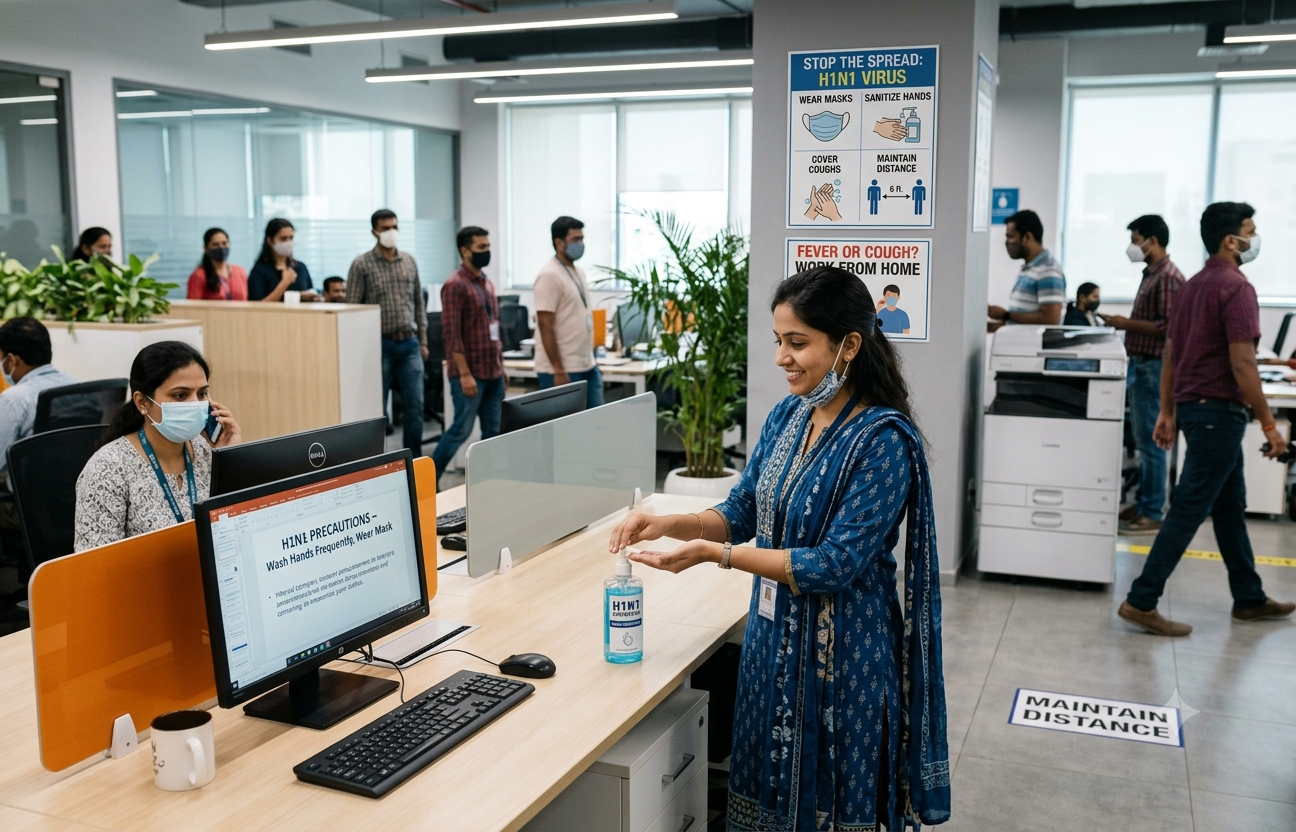
Respiratory illnesses can spread easily in enclosed spaces such as corporate offices. These spaces are completely air-conditioned environments, have open-plan seating, and they heavily utilise confined meeting spaces that makes them ideal for spread of seasonal respiratory viral infections. Among the persistent seasonal health threats, the H1N1 influenza virus stands out as a highly contagious respiratory pathogen capable of spreading rapidly through fine microscopic droplets and shared environmental contact points. Preventing workplace transmission of respiratory H1N1 requires a proactive strategy that extends beyond occasionally using a bottle of hand sanitiser. Leading medical specialists emphasise that corporate workers must adopt a layered preventive approach combining individual protective measures, desk hygiene, proper indoor ventilation, and timely immunisation.
The Airborne Risk In Modern Workplaces
The H1N1 virus primarily infects the upper and lower respiratory tracts, presenting with classic flu symptoms such as high fever, sudden onset of chills, body aches, persistent dry cough, and acute fatigue. In typical commercial real estate buildings, central air conditioning systems frequently recirculate cooled air across wide open floors without adequate outdoor air exchange. When an infected individual coughs, sneezes, or talks, small respiratory aerosols carrying the virus can hang in the indoor air column for extended periods.
Peer-reviewed clinical research demonstrates how resilient influenza pathogens are within shared work environments.
A landmark study published in the Journal of Hospital Infection established that influenza A strains, including H1N1, maintain infectivity on non-porous stainless steel and hard plastic surfaces for anywhere between 24 and 48 hours under typical indoor humidity levels.
Additional research published in The Lancet Respiratory Medicine highlighted that tiny viral aerosols (<5 micrometres) produced during standard expiratory activities linger in unventilated indoor spaces, driving short-range and long-range airborne transmission unless active air filtration interventions are introduced.
What Leading Doctors Recommend
To protect your personal health while maintaining professional productivity in busy shared offices, clinical experts from top hospital networks share essential, evidence-based preventive measures.
1. Prioritise Annual Quadrivalent Vaccination
The primary clinical recommendation for avoiding severe H1N1 respiratory complications remains annual preventive immunisation.
Dr Nikhil Modi, Senior Consultant, Respiratory and Critical Care Medicine, Indraprastha Apollo Hospitals, pinpoints, "Annual quadrivalent influenza vaccination is your single most reliable shield against circulating H1N1 strains. Even if an employee experiences a breakthrough infection, prior vaccination drastically lowers the overall viral load, prevents severe lower respiratory tract complications, and cuts down onward transmission in shared office spaces."
2. Re-evaluate Desktop And Surface Hygiene
Desks, computer peripherals, and communal kitchen amenities host dense microbial populations due to constant hand-to-surface contact.
Dr Vivek Nangia, Principal Director and Head of Pulmonology, Max Super Speciality Hospital, says, "Fomite transmission plays a massive role in corporate office outbreaks. Employees frequently touch shared objects like pantry coffee machine handles or microwave buttons and then unconsciously touch their face or eyes."
"Practicing hand hygiene using alcohol-based rubs with at least 60% concentration before eating or touching the eyes and nose cuts respiratory infection risk substantially," explains Dr Vivek.
3. Optimise Indoor Air Flow And Enforce Symptom Isolation
Enclosed meeting spaces present heightened exposure risks when attendance is dense, and air turnover is minimal.
Dr Manoj Goel, Director, Pulmonology, Fortis Memorial Research Institute, explains, "Enclosed, air-conditioned conference rooms with poor fresh-air turnover act as amplifiers for viral transmission. If an employee shows subtle symptoms like a scratchy throat or mild body fever, they must wear an N95 mask or opt to work remotely. Pushing through a heavy workday while symptomatic puts an entire team at risk."
Practical Checklist: Staying Safe At Your Workstation
To minimise your daily infection risk at the office, build these straightforward habits into your daily workplace routine:
- Sanitise High-Touch Gear: Clean your mouse, keyboard, mobile phone screen, and desk surface using disinfectant wipes at the beginning and end of each shift.
- Avoid Desk Dining: Consuming meals while actively working at your computer increases hand-to-mouth transfer of surface pathogens. Step away to eat in designated, well-ventilated cafeteria spaces instead.
- Stay Home When Unwell: If you develop fever, nasal congestion, muscle aches, or a sore throat, report your illness and stay home rather than exposing colleagues.
- Maintain Mucosal Hydration: Drink water consistently throughout the day. Adequate hydration keeps your upper respiratory mucosal membranes moist, helping your body's natural mucociliary elevator trap and clear viral invaders before they establish infection.
Respiratory illnesses such as H1N1 can quickly spread in corporate set-ups, so paying attention to your environment is vital. You need to adopt doctor-approved strategies to minimise your risk.
Also Read: H1N1 Cases Surge Further In Delhi, Bengaluru: How Is Swine Flu Different From COVID-19?
Disclaimer: This content including advice provides generic information only. It is in no way a substitute for a qualified medical opinion. Always consult a specialist or your own doctor for more information. NDTV does not claim responsibility for this information.