

)
H1N1 cases are rising across parts of India, putting a familiar question back in focus: If you have H1N1, how long can you actually infect someone else? The question matters because influenza does not necessarily wait for symptoms before it starts spreading. A person can transmit the virus around the time symptoms begin and, in some cases, even before they realise they are ill. That makes it particularly easy for influenza to move through families, offices, schools and crowded public spaces.
Delhi has been at the centre of the current surge. The capital had reported 2,308 H1N1 cases in 2026 by August 26, with H1N1 the predominant influenza A subtype, according to the Delhi Medical Association. This follows 1,777 cases recorded up to August 20 in earlier government data. Doctors have also reported increased numbers of patients with influenza, including some with pneumonia and respiratory distress. Importantly, the Indian Council of Medical Research (ICMR) has said the circulating H1N1 virus is not a new or more lethal strain.
So, if you have H1N1, or live with someone who does, when is the risk of transmission highest, and how long should you stay away from others?
When are you most contagious with H1N1?
Influenza is highly contagious, and the timing of infectiousness is one reason outbreaks can spread quickly. According to World Health Organization (WHO) guidance, adults are generally most infectious from about one day before symptoms begin through the first five days after symptom onset, although infectiousness can continue for up to seven days or longer in some people. Young children can shed influenza virus for longer periods.
This means someone may unknowingly transmit H1N1 before developing the fever, cough or body aches that would make them realise they are sick. Symptoms typically appear one to four days after exposure, while transmission can occur before symptoms are obvious. The practical takeaway is simple: the day you first feel sick is not necessarily the first day you can infect someone.
Also Read: H1N1 Alert: Family Members Falling Sick One-By-One? How To Break The Chain
Can you spread H1N1 before symptoms appear?
Yes. Influenza transmission can occur during the period immediately before symptoms become apparent. This is one reason why simply avoiding people after developing a fever cannot completely prevent transmission.
Someone may feel completely well in the morning, attend work or school, travel on public transport or spend time with family, and develop symptoms later that day or the following day. This is also why household transmission can appear to happen sequentially, one person falls ill, followed by another family member a few days later. Symptoms can develop rapidly, usually within one to four days of exposure.
How long should you stay away from other people?
There is no single number of days that guarantees a person is no longer infectious. For most otherwise healthy adults, the greatest risk of transmission is concentrated around the first few days of illness. But the decision to return to work, school or other normal activities should not be based solely on the calendar.
If you have fever, significant cough or other flu-like symptoms, staying home and avoiding close contact is the safer approach.
NCDC guidance for seasonal influenza includes home-care recommendations and advises people with mild influenza-like illness to remain at home and avoid mixing with the public and high-risk household members. Recent guidance also stresses that wearing a mask should not become an excuse to continue normal activities while sick. If possible, staying home is a stronger way of reducing transmission.
When can you return to work or school?
A useful rule is to wait until you are clearly recovering and have been free of fever without relying on fever-reducing medication, while also considering whether significant respiratory symptoms remain. However, there is an important distinction between feeling better and being completely non-infectious.
Influenza cough can persist for two weeks or more even after the fever and other symptoms have settled. WHO notes that the cough associated with seasonal influenza can be prolonged. Therefore, a lingering cough alone does not necessarily mean that someone remains highly contagious. What matters is the overall clinical picture: fever, worsening symptoms, active illness, and whether the person is still within the period when influenza transmission is most likely.
People returning to crowded offices or public transport while still coughing should consider additional precautions, particularly if they will be around elderly people, pregnant women, young children or people with chronic medical conditions.
What if you still have a cough?
This is where people can easily become confused. A cough can last longer than the period of peak infectiousness. Influenza causes inflammation of the respiratory tract, and the airways can remain irritated after the virus has been largely cleared. As a result, someone may continue coughing for days or even weeks after the fever disappears.
WHO states that influenza cough can last two weeks or more. That does not mean every person with a lingering cough is still spreading H1N1 at the same level as they were during the first few days of illness.
However, a cough that is becoming worse rather than gradually improving, especially when accompanied by renewed fever, breathlessness, chest pain or falling oxygen levels, needs medical assessment.
Can children spread H1N1 for longer?
Yes. Children can shed influenza viruses for longer than healthy adults, making them important sources of transmission within households and communities. WHO notes that young children can shed influenza virus for longer periods than adults. They may also have difficulty following measures such as covering coughs, maintaining distance or consistently wearing a mask.
Parents should therefore be particularly cautious about sending a child back to school or daycare while they are still clearly unwell. This is also important when a child lives with an elderly grandparent, a pregnant family member or someone with asthma, chronic lung disease, heart disease, diabetes or another condition associated with a higher risk of severe influenza.
What about older adults and people with chronic illnesses?
The duration of infectiousness is not the only issue. Who you are around while infectious matters too. Influenza can be considerably more serious in older adults and people with chronic medical conditions.
WHO identifies older adults, young children, pregnant women and people with serious underlying medical conditions as groups at greater risk of severe influenza. Doctors in Delhi have reported more severe cases this season among people whose lungs are already compromised or who have other underlying illnesses. Dr Ashish Choudhary, Professor and In-charge of Virology at AIIMS Delhi, told NDTV that most cases remain mild but that pulmonary and critical-care units were seeing more severe disease, particularly among patients with compromised lungs.
That makes avoiding close contact with vulnerable people particularly important while you are actively ill.
How does H1N1 spread from person to person?
H1N1 is a subtype of influenza A and spreads in much the same way as other seasonal influenza viruses. Transmission can occur through respiratory particles released when an infected person coughs, sneezes or talks. Risk is greater with prolonged close contact, particularly in crowded or poorly ventilated indoor environments.
This explains why household gatherings, offices, classrooms, waiting rooms and crowded public transport can become efficient settings for transmission. Good ventilation, hand hygiene, covering coughs and sneezes, and reducing close contact while sick can all help interrupt the chain of transmission.
Does wearing a mask mean you can go out while sick?
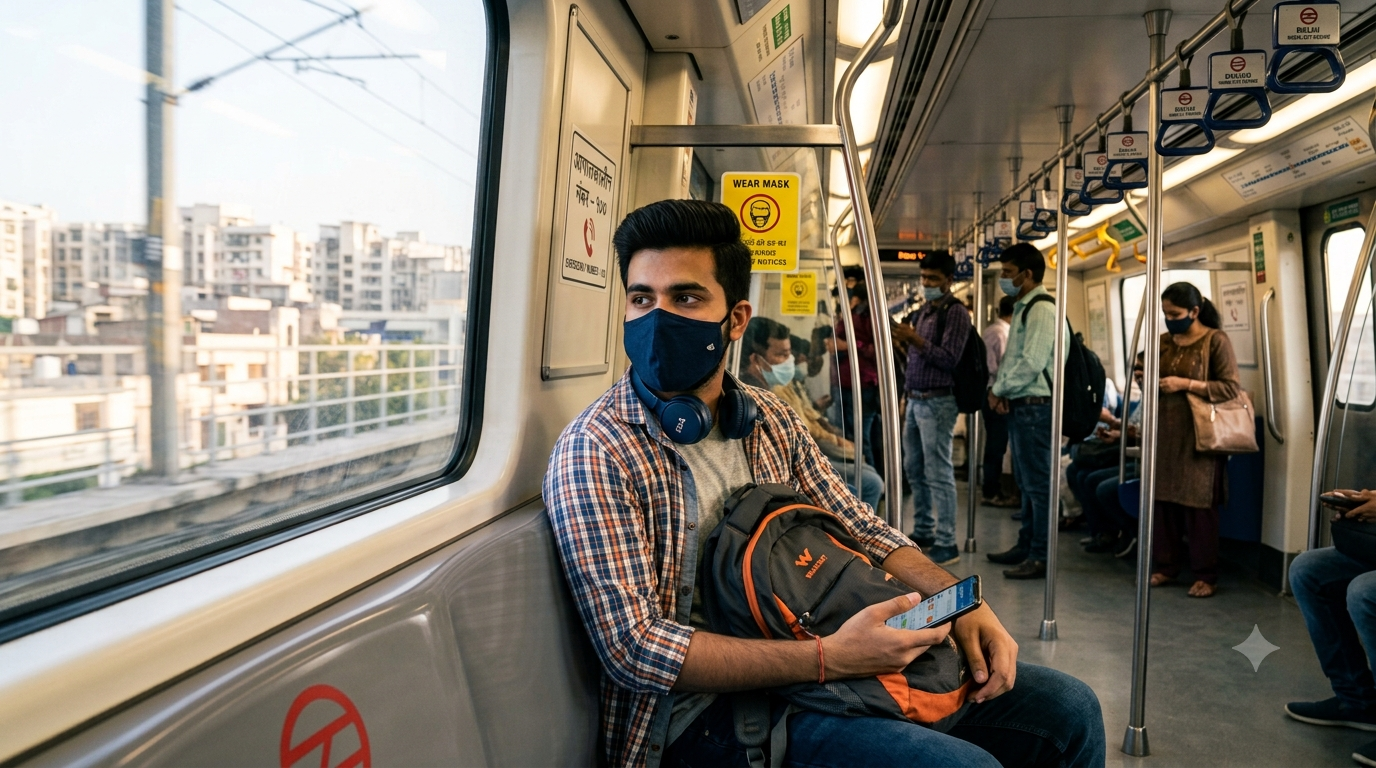
Not necessarily. A well-fitting mask can reduce the amount of infectious respiratory material reaching other people, particularly when an infected person has to travel to a healthcare facility or cannot completely separate from others at home.
But doctors emphasise that staying home when sick remains more important than simply masking and continuing normal activities. Dr Navneet Sood, Associate Director and Senior Consultant in Pulmonology at Dharamshila Narayana Superspeciality Hospital, said the aim is to minimise unnecessary spread rather than create fear around H1N1.
Masks become especially useful in crowded public transport, healthcare settings, poorly ventilated workplaces and while caring for someone with influenza.
When does H1N1 become a medical concern?
Most people recover from seasonal influenza without serious complications. But worsening symptoms should not be dismissed as "just flu".
Seek prompt medical attention if there is:
- Difficulty or worsening in breathing
- Chest pain
- Falling oxygen levels
- Confusion or unusual drowsiness
- Severe weakness
- Persistent or worsening fever
- Symptoms that improve and then suddenly become worse
These symptoms can signal complications such as pneumonia or more serious respiratory illness.
The current H1N1 rise has not been linked to a new or unusually lethal strain. ICMR scientists have said the circulating virus is consistent with seasonal H1N1 and is well matched to the recommended Northern Hemisphere vaccine strains.
Also Read: Should You Wear A Mask For H1N1? Doctors Explain Prevention Tips
The bottom line: When is it safe to be around others?
There is no magic "day seven" after which everyone with H1N1 automatically stops being contagious. For most adults, infectiousness is highest around the beginning of illness and generally declines over the following several days. But some people, particularly young children and those with weakened immune systems, may remain infectious for longer.
During India's current H1N1 surge, the safest approach is to stay home while actively unwell, avoid close contact with vulnerable people, improve ventilation and use a well-fitting mask when contact cannot be avoided. And remember: feeling better is not the same as having no cough, while having a lingering cough is not necessarily proof that you remain highly infectious.
As H1N1 cases rise across India, understanding the virus's contagious window is as important as knowing its symptoms. Influenza can spread before a person realises they are sick and is generally most transmissible around the first few days of illness.
For most healthy adults, infectiousness falls as symptoms improve, but there is considerable individual variation. Children and people with weakened immune systems may remain infectious for longer.
The practical message is therefore not to count down to a particular day. If you have fever and significant flu-like symptoms, stay home, limit close contact, particularly with vulnerable people, and take precautions when contact is unavoidable.
With H1N1 currently predominant among Delhi's reported influenza A infections, breaking the chain of transmission remains one of the simplest ways individuals can help protect themselves, their families and those most vulnerable to severe flu.
Disclaimer: This content including advice provides generic information only. It is in no way a substitute for a qualified medical opinion. Always consult a specialist or your own doctor for more information. NDTV does not claim responsibility for this information.