

)
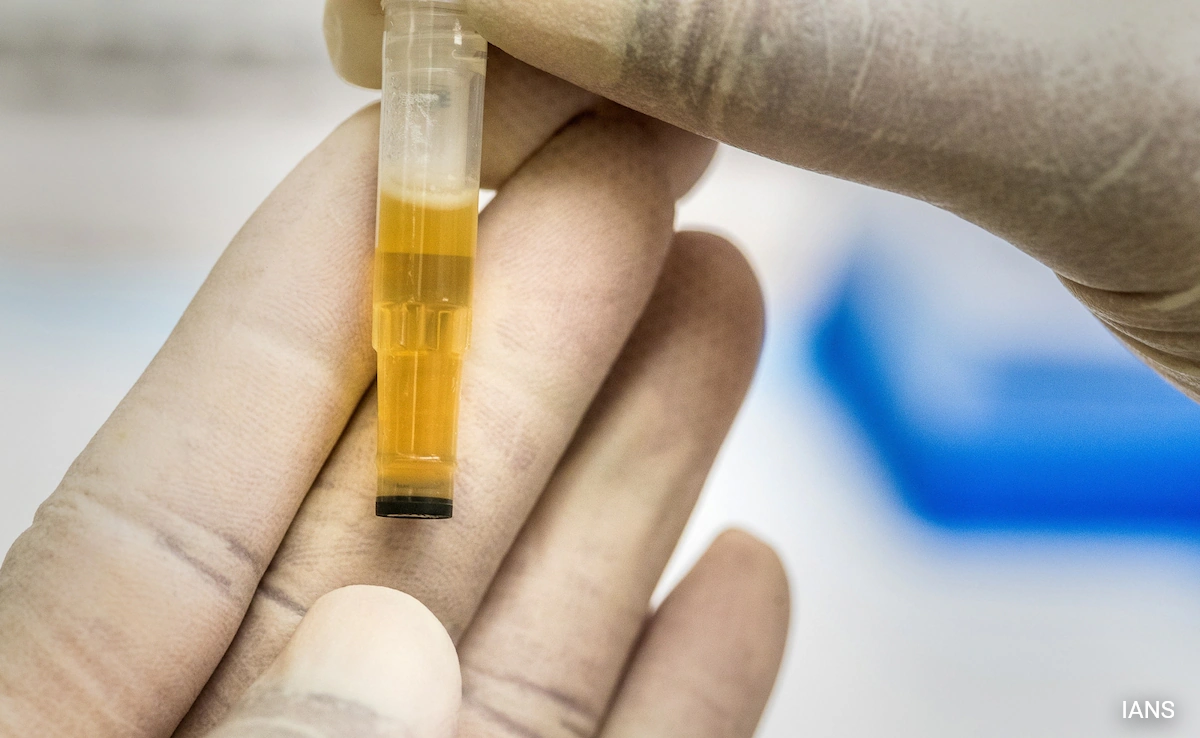
Bladder cancer happens when there is an abnormal growth of cells in the bladder. These cells form malignant tumours that could spread, damaging the bladder and other organs. Often, people are diagnosed with bladder cancer after noticing blood in their urine. A new study published in the European Medical Journal suggests that an at-home urine test could detect bladder cancer with 92% accuracy, making the diagnosis process simpler. The early detection of bladder cancer matters, as it can spread and damage other organs, causing various health conditions that can make the recovery process and treatment complicated. A simple urine test could simplify the complicated process of cancer diagnosis, which involves taking a biopsy and analysing it in a laboratory setting and then providing results if the tumour is malignant or benign.
What The Study On Bladder Cancer Found
The major findings of the study found that the urine test known as the GALEAS Bladder urine test detected 71 of 77 bladder cancers, achieving a 92.2% sensitivity.
It could also detect 100% of any kind of muscle-invasive bladder cancer in all cases that were analysed in the study.
- Furthermore, it was also able to identify 35 of 36 high-grade bladder cancers with a detection rate of 97.2%.
- About 30% of the participants of the study presented with blood in their urine that wasn't visible, but bladder cancer was present.
- The survival rates could improve with early diagnosis from such discoveries, and a delayed diagnosis can allow cancer to spread.
- About 8% of the study participants were diagnosed with bladder cancer, which made the study a medical success, and the accuracy of medical testing and detection made their diagnosis quicker.
- The findings are based on tests performed in 964 patients across 7 NHS hospitals.
- The high accuracy of this test, which is at a 99.3% chance of being cancer-free after a negative test, shows promise for accurate cancer diagnosis.
- This is important, as early treatment options are often less aggressive, leading to fewer health complications.
How Is Bladder Cancer Diagnosed Currently?
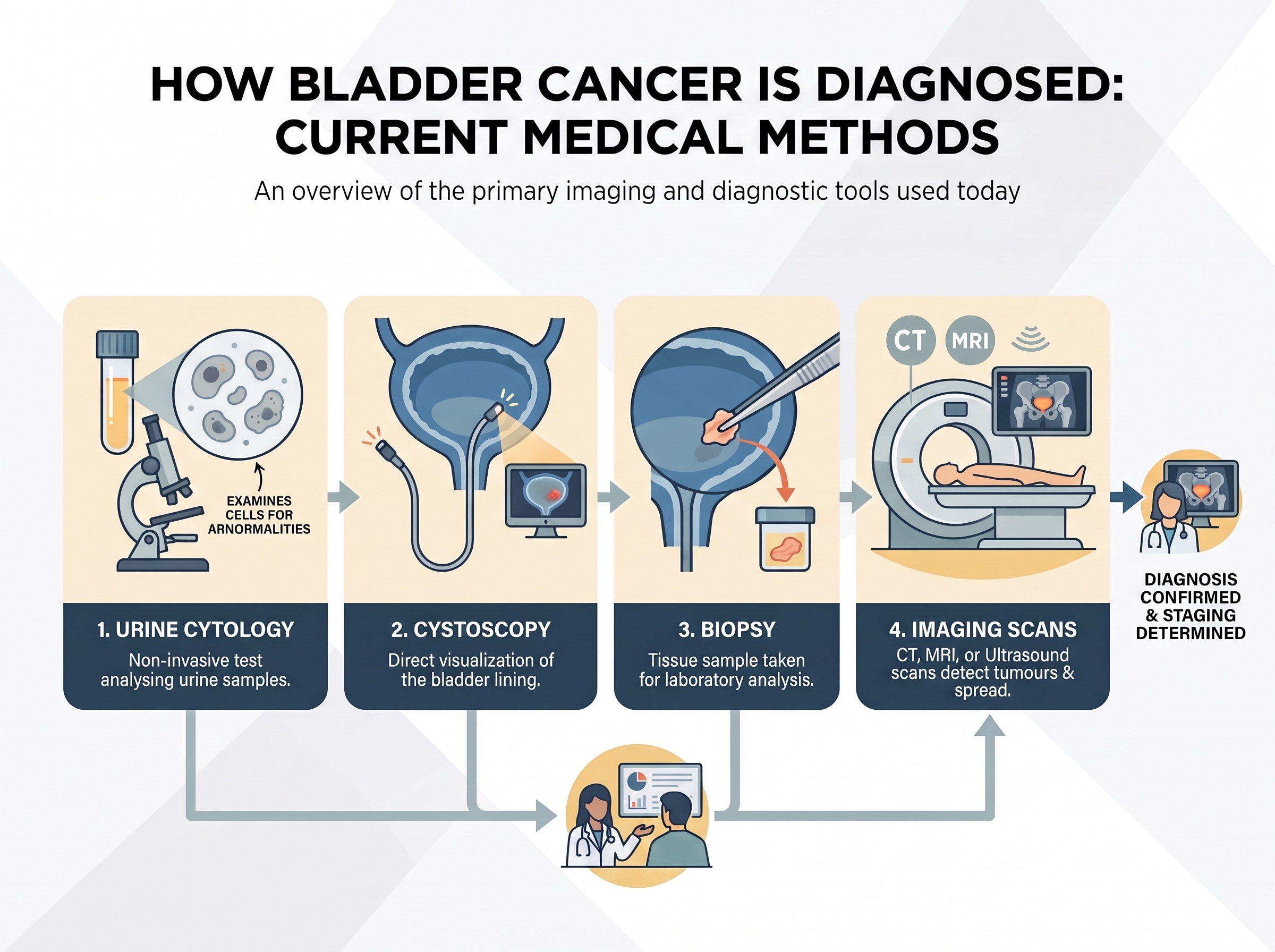
The current diagnosis of bladder cancer is possible through the use of the following medical imaging and diagnostic tools:
- Urine cytology
- Cystoscopy
- Biopsy
- Imaging scans
The invasive nature of the testing method can result in health issues that need long-term management. The cost is also another factor that needs to be considered.
The discomfort is prolonged, which can make daily elimination of urine a very complicated process.
How Could The New Urine Test Change Cancer Screening?
The new at-home urine test could result in a much faster, safer, and less invasive method of testing for bladder cancer.
People could follow up with their urologist and seek timely medical treatment for better patient outcomes.
Patients with bladder cancer could also make use of this test to get an accurate result and stick to their treatment as prescribed.
Signs Of Bladder Cancer
Bladder cancer can be identified by the presentation of these signs, but their connection to cancer conclusively depends on a combination of medical scans and diagnostic tools, as cancer is a complex disease to diagnose. These signs can be:
- Blood in urine
- Frequent urination
- Pain during urination
- Pelvic pain
- Back pain
Who Is Most At Risk?
The people who remain most at risk of bladder cancer are those who fall under these categories:
- Smokers
- Older adults
- People who are constantly exposed to chemicals from industries
- Family history
- Chronic bladder irritation
Can This Test Replace Cystoscopy?
The answer is no, as the new GALEAS bladder urine test is highly promising but has only supportive benefits. The diagnosis of bladder cancer is only possible through a cystoscopy. The cystoscopy remains a gold standard for the diagnosis of bladder cancer, as it provides a clear picture of the inside of the bladder where cancerous cells reside.
Currently, patients who are suspected to have bladder cancer have to undergo multiple cystoscopies to detect bladder cancer depending on the location of the tumour.
The non-invasive nature of the at-home urine test is a promising supportive tool to detect multiple types of cancers. But limitations exist, and paying attention to any appearance of symptoms and seeking timely medical help is necessary for better outcomes.
Also Read: Nighttime Urination And Bladder Cancer: Is There A Connection?
Disclaimer: This content including advice provides generic information only. It is in no way a substitute for a qualified medical opinion. Always consult a specialist or your own doctor for more information. NDTV does not claim responsibility for this information.