

)
At least 64 people, including 13 children, were killed and 89 others injured after an attack struck a hospital in Sudan's East Darfur, the World Health Organization (WHO) said, as the United Nations warned of escalating attacks on healthcare in the conflict-ravaged country.
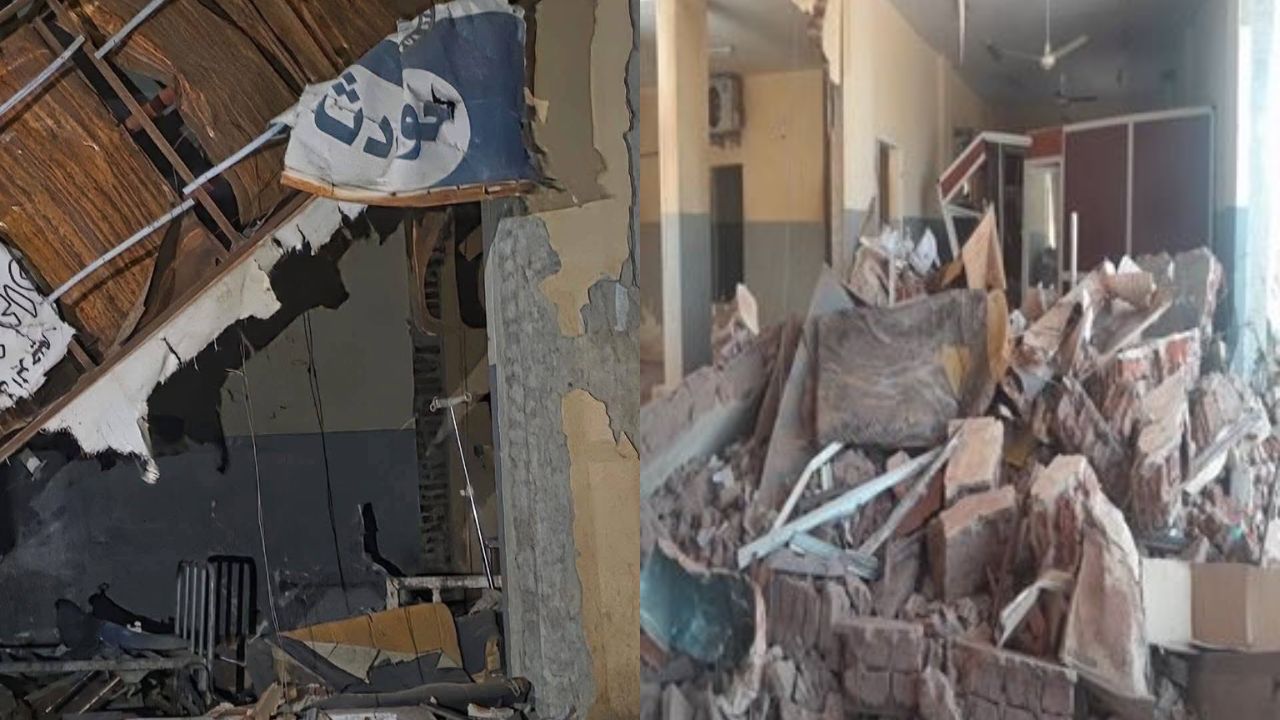
The strike targeted Al-Daein Teaching Hospital, the main health facility in the area, leaving it non-functional and depriving thousands to access critical medical services. Among those killed were multiple patients, two female nurses and a male doctor, WHO Director-General Dr Tedros Adhanom Ghebreyesus said in a social media post, adding that eight healthcare workers were among the injured.
"Enough blood has been spilled. Enough suffering has been inflicted. The time has come to de-escalate the conflict in Sudan and ensure the protection of civilians, health workers, and humanitarians", said Dr Tedros condemning the attack.
The strike severely damaged its paediatric, maternity and emergency departments, rendering the facility non-functional and cutting off essential medical services in the city.
He warned that the incident has pushed the overall toll from attacks on healthcare even higher. "As a result of this tragedy, the total number of fatalities linked to attacks on health facilities during Sudan's war has now surpassed 2,000," he said, noting that the WHO has verified 2,036 deaths in 213 such attacks since the conflict began.
According to the WHO's Surveillance System for Attacks on Health Care, Friday's strike involved "violence with heavy weapons" and impacted not just the hospital, but also staff, patients, supplies and storage. The system tracks and verifies such incidents but does not assign responsibility.
Data from the WHO shows attacks on healthcare in Sudan are becoming increasingly deadly. While 64 attacks in 2023 resulted in 38 deaths, 72 incidents in 2024 caused 200 deaths. In 2025, 65 attacks led to 1,620 deaths, accounting for 82 per cent of all reported fatalities from healthcare attacks worldwide.
"Attacks on health care are unacceptable. Health facilities, health workers and patients must be protected at all times", said Dr Tedros.
.@WHO has verified yet another attack on health care in #Sudan. This time, Al Deain Teaching Hospital in East Darfur's capital, Al Deain, was struck, killing at least 64 people, including 13 children, two female nurses, one male doctor, and multiple patients.
— Tedros Adhanom Ghebreyesus (@DrTedros) March 21, 2026
As a result of this… pic.twitter.com/RAwDR5YVjd
The United Nations expressed deep concern over the incident, warning that attacks on medical infrastructure are increasing across Sudan. In its report, the UN said such incidents are "further crippling Sudan's already fragile health system," with many hospitals damaged, destroyed or forced to shut due to insecurity and shortages.
"Beyond the devastating human toll, attacks on healthcare have immediate and long-term consequences for communities already in desperate need of both emergency and routine medical services. Healthcare should never be a target. Peace is the best medicine," Dr Tedros added.
The conflict between Sudan's army and the paramilitary Rapid Support Forces (RSF), which erupted in April 2023, has triggered one of the world's worst humanitarian crises. Tens of thousands have been killed, more than 12 million displaced, and over 33 million people now require humanitarian assistance.
The RSF currently controls much of Darfur, including Al-Daein, which has faced repeated attacks by the Sudanese army in recent weeks, as fighting intensifies across the region.
The UN warned that continued violence and attacks on civilian infrastructure are worsening the humanitarian situation and increasing the risk of disease outbreaks and preventable deaths.
Calling for urgent action, the UN urged all parties to respect international humanitarian law and ensure the protection of civilians and healthcare facilities. It also stressed the need for safe and sustained humanitarian access to deliver life-saving aid.
Disclaimer: This content including advice provides generic information only. It is in no way a substitute for a qualified medical opinion. Always consult a specialist or your own doctor for more information. NDTV does not claim responsibility for this information.