

The ongoing Ebola outbreak in the Democratic Republic of the Congo (DRC) and Uganda continues to spread rapidly in the affected areas. The World Health Organisation has declared the outbreak a Public Health Emergency of International Concern (PHEIC). According to WHO, more than 900 suspected cases have been reported and "the epidemic in the DRC is much larger." The US Centers for Disease Control and Prevention has reported a total of 906 suspected cases, 105 confirmed cases, 223 suspected deaths, and 10 confirmed deaths have been reported in DRC. Additionally, in Uganda, a total of 7 confirmed cases and 1 confirmed death have been reported.
Till now, no Ebola cases have been confirmed in India. On Tuesday, a 28-year-old woman, who travelled from Uganda, was isolated for observation at a state-run hospital in Bengaluru. According to the officials, her sample was sent to the National Institute of Virology (NIV) for testing, and she tested negative. The government is closely monitoring the situation.
Ebola testing: How RT-PCR helps with rapid diagnosis
According to WHO, it can be difficult to clinically distinguish Ebola disease from other infectious diseases such as malaria, typhoid fever, shigellosis, meningitis and other viral haemorrhagic fevers because symptoms at the early stage of the disease are similar.
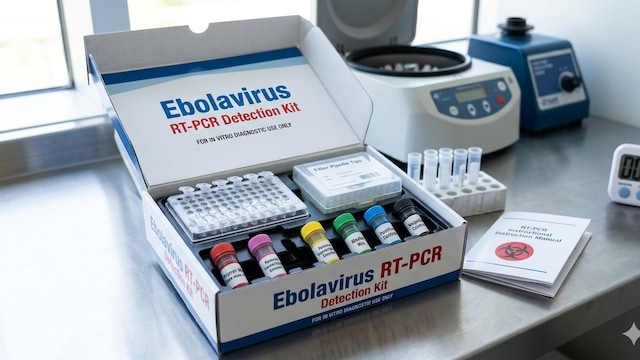
Ebola testing relies primarily on the Reverse Transcription-Polymerase Chain Reaction (RT-PCR) globally. RT-PCR is considered the gold standard for testing infections primarily because it directly detects the genetic material of a pathogen in blood or fluid samples with precision and sensitivity. Unlike other tests that look for your body's immune response, RT-PCR finds the actual virus or bacteria, even at the very beginning of an infection. Ebola is a high-risk pathogen, therefore, testing is exclusively centralised and conducted under the highest biological containment standards.
WHO has mentioned that samples collected from patients pose a serious biohazard risk. Laboratory testing on untreated samples must be done in the highest safety conditions. When transporting untreated biological specimens across the country or internationally, use a triple packaging system.
It catches infections early
Due to the massive amplification power, RT-PCR doesn't need a large viral load to work. It can catch the virus just days after exposure, often well before symptoms even begin, making it invaluable for stopping outbreaks early.
Features of RT-PCR
- RT-PCR combines reverse transcription of RNA into complementary DNA (cDNA) followed by amplification of specific DNA targets using polymerase chain reaction (PCR).
- RT-PCR is highly sensitive and can detect even small amounts of RNA. It's also specific, allowing for the amplification of a particular RNA sequence. As a result, it does not miss early-stage or low-viral-load infections.
- When combined with Real-Time PCR (qRT-PCR), it allows scientists to precisely measure the exact amount of target RNA in a sample.
- It's widely used in clinical diagnostics, especially for viral infections like Covid-19, as it can identify specific viral RNA in a sample.
- One-step RT-PCR techniques combine reverse transcription and amplification in a single tube, making the process relatively fast.
RT-PCR for Ebola
RT-PCR is primarily used for Ebola testing as it provides the extreme sensitivity and specific detection needed to safely contain a highly lethal pathogen before it spreads. Additionally, the Ebola virus is an RNA virus; standard PCR cannot read it directly. RT-PCR uses a specialised reverse transcription enzyme to convert the viral RNA into DNA so it can be amplified and detected.
RT-PCR can identify the virus 24 to 48 hours earlier than rapid antigen tests, which is crucial given that Ebola can progress to severe hemorrhagic fever rapidly.
WHO also recommends the following diagnostic methods for Ebola testing:
- Antibody-capture enzyme-linked immunosorbent assay (ELISA)
- Antigen-capture detection tests
- Virus isolation by cell culture
The Ebola outbreak in Congo and Uganda has been attributed to the Bundibugyo strain of Ebola, for which there are currently no approved vaccines or specific antiviral treatments.
Disclaimer: This content including advice provides generic information only. It is in no way a substitute for a qualified medical opinion. Always consult a specialist or your own doctor for more information. NDTV does not claim responsibility for this information.