

)
Holi is the most vibrant celebration of colours, yet the clouds of pink and yellow often hide a suffocating reality for the respiratory system. While traditionally flower extracts were used, modern festivities have shifted toward synthetic powders that are far from celebratory for people's lungs. Medical studies like the International Journal of Current Microbiology and Applied Sciences and the Indian Journal of Ophthalmology are now raising an urgent red flag that the very gulal that colours the faces is frequently a mixture of industrial-grade chemicals and heavy metals. As people gear up for the 2026 celebrations, understanding how these airborne particles bypass the natural defences is crucial for preventing a post-festive health crisis.
The Invisible Threat: PM10 And Toxic Dyes
Present-day Holi powders have evolved into a significant health hazard. And while speaking to NDTV, Dr. Shivaraj A. L., who is the Lead Consultant and Head of the Department of Pulmonology at Aster Whitefield Hospital, has said that these powders contain high levels of suspended particulate matter, specifically PM10 (Particulate Matter) particles.
When thrown into the air, these particles create fine dust clouds that are easily inhaled deep into the lungs. Unlike natural organic pigments, synthetic colours carry a heavy payload of toxic industrial dyes and hazardous elements. This has also been highlighted in the Journal of Occupational Medicinal Toxicology, where the inflammatory nature of Holi colours has been discussed.
Doctor Explains The Health Impact
Pulmonologist Dr. Shivaraj warns that the physical structure of these powders is specifically dangerous because they stay airborne for extended periods, making them a direct threat to the respiratory tract. Here is what he says about Holi colours being a threat to the respiratory system and its functioning:
1. Acute Respiratory Distress
He explains that 'present-day Holi powders contain high levels of suspended particulate matter, which includes PM10 particles that people can breathe into their lungs and which carry toxic industrial dyes together with heavy metals. On the other hand, synthetic Holi colours contain lead and chromium together with other hazardous chemicals that cause lung and mucous membrane irritation, which differs from traditional natural dyes. Inhalation of these particles leads to airway inflammation, which progresses to coughing, sneezing, wheezing, and shortness of breath. The irritants in it trigger severe episodes and bronchospasm in people who have asthma, chronic bronchitis, or allergies."
2. Cellular Inflammation And Long-term Risks
Research studies in the Journal of Occupational Medicine and Toxicology demonstrate that Holi colours lead to immune cell activation, which produces pro-inflammatory cytokines that result in acute airway inflammation.
Furthermore, the risk isn't just immediate, but the heavy metal exposure can lead to permanent damage, as Dr. Shivaraj explains.
He says that 'long-term respiratory issues develop from heavy metal exposure because lead and chromium create health problems which include chronic bronchitis and chronic obstructive pulmonary disease (COPD) that appear after extended exposure to these metals.'
Also Read: How Holi Colours Affect Your Hair: Doctor Shares Precautions, Plus Vital Safety Tips

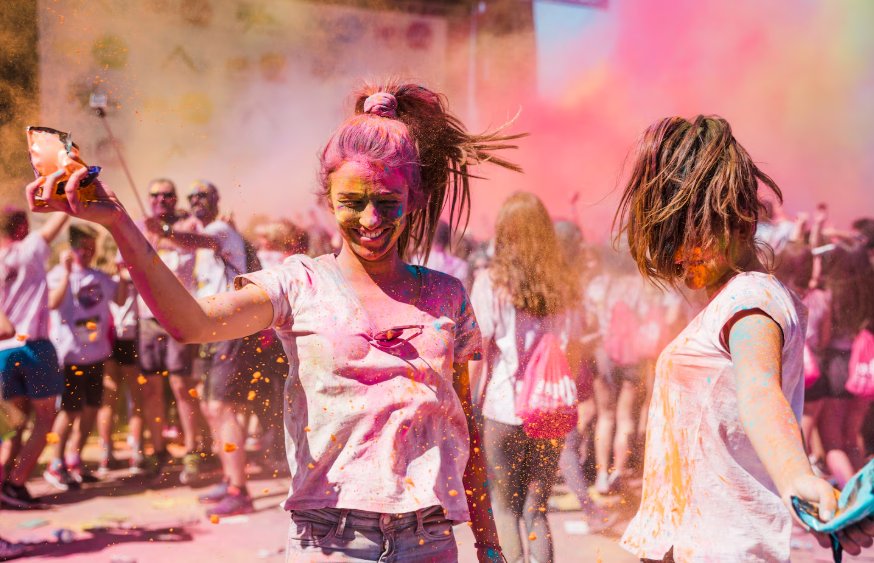
People playing holi with powder colour outdoors
Photo Credit: Freepik
Powder vs. Liquid: Understanding The Risks
While both can be harmful, they affect the body through different mechanisms, especially when it comes to powder and liquid Holi colours on the market. These mechanisms are as follows:
Dry Powder (Gulal)
- Primary Risk: Inhalation and lung irritation
- Chemicals: Silica, lead, PM10 dust
- Symptoms: Wheezing, coughing, sneezing
Wet Liquid Colours
- Primary Risk: Contact dermatitis and eye damage
- Chemicals: preservatives, solvents, acids
- Symptoms: Rashes, burning sensation, redness
Who Is Most At Risk?
The risk factor according to age for allergic reaction from exposure to Holi colours, both in powder and liquid form, is as follows:
- Children and the Elderly: Their respiratory systems are either still developing or more vulnerable to inflammation.
- Asthma and Allergy Patients: Even a small amount of dust can trigger a life-threatening bronchospasm.
- Immunocompromised Individuals: Those with a reduced ability to fight off chemical-induced inflammatory responses.
Safety Tips Recommended By A Doctor
You don't have to skip the celebrations, but you must prioritise protection. To ensure a safe festive season, follow these expert-approved guidelines:
- Prefer Wet Colours: The use of wet colours to control dust should be preferred over dry powder materials.
- Use Proper Masks: People should use proper masks and respirators, which include surgical and N95 models, in areas with many people.
- Avoid Deep Inhalation: People should not take deep breaths of coloured clouds, but should leave for open spaces with good airflow when dust becomes thick.
- Medical Evaluation: People with existing respiratory disorders must first visit a physician for evaluation before playing while carrying their prescribed inhalers.
The joy of Holi should not come at the cost of your long-term health. By opting for natural, herbal dyes and being mindful of the air you breathe, you can ensure that the festival remains a celebration of life rather than a trigger for illness. With awareness and protection, the joy of Holi need not compromise respiratory health.
Disclaimer: This content, including advice, provides generic information only. It is in no way a substitute for a qualified medical opinion. Always consult a specialist or your own doctor for more information. NDTV does not claim responsibility for this information.