

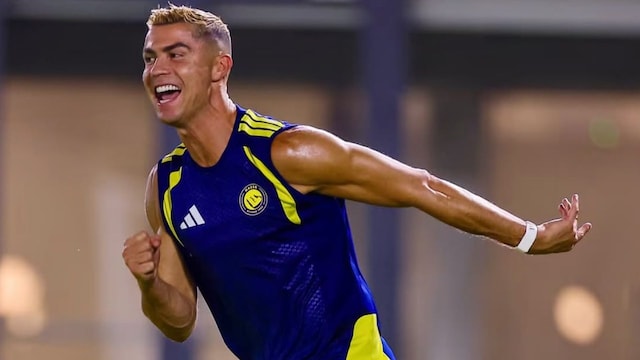
Cristiano Ronaldo has called time on his 23-year journey with the Portugal team. This marks the close of an era filled with record-breaking goals, major trophies and unmatched longevity in football. At 41 he leaves the game as one of the successful players in history. Ronaldo made the announcement through a video on Instagram on Thursday, November 5. He said it was time to pass the number seven jersey to the next generation. Beyond the circumstances of his exit Ronaldo's legacy remains strong. He led Portugal to win the 2016 European Championship and two UEFA Nations League titles in 2019 and 2025. He also made history by becoming the player to score in six men's FIFA World Cups. His achievements on the field are impressive. So is his physical conditioning. Back in 2018 after an exam at Juventus reports showed he had just 7 percent body fat and 50 percent muscle mass. These numbers drew attention because they were so extreme for a man who was already 33 years old. Now that Ronaldo is stepping away, from football his fitness journey offers a powerful example of body composition, strength training, nutrition and recovery.. What does a low body fat percentage really mean? Should everyone try to reach that level?
Cristiano Ronaldo's 7 Per Cent Body Fat: What Did The Juventus Medical Report Reveal?
When Ronaldo joined Juventus from Real Madrid in 2018, as reported by The Guardian his medical examination highlighted his exceptional physical condition. According to figures reported by media at the time, Ronaldo had approximately 7 per cent body fat, compared with the reported average of 10-11 per cent among professional footballers. His muscle mass was estimated at 50 per cent, compared with an average of around 46 per cent. Reports also highlighted his sprinting speed of 33.98 kmph during the 2018 FIFA World Cup. The figures were widely interpreted as evidence that Ronaldo had the physical capabilities of someone considerably younger. However, these numbers should be understood in their historical context. They relate to reports about his 2018 medical assessment and should not be treated as a confirmed measurement of his body composition at 41.
The distinction matters because body composition changes with age, training demands, diet, injuries and other factors. A single measurement cannot explain an athlete's entire fitness level.
What Does A Low Body Fat Percentage Mean?
Body fat percentage refers to the proportion of a person's total body weight that comes from fat. For example, if someone weighs 80 kg and has 10 per cent body fat, approximately 8 kg of their body weight is fat. Body fat is not simply excess weight that needs to be eliminated. It plays important roles in the body, including hormone production, insulation, energy storage and the protection of organs. A lower body fat percentage can be linked with greater muscular definition because the muscles become more visible as the layer of fat beneath the skin decreases. This is one reason athletes such as Ronaldo appear particularly lean and muscular. However, having less body fat does not automatically mean someone is healthier, stronger or fitter. Extremely low levels can be difficult to maintain and may affect hormonal function, immunity, bone health, recovery and athletic performance, particularly when accompanied by inadequate calorie intake.
Ronaldo's reported figure of 7 per cent reflects an elite athlete's conditioning at a particular point in his career. It should not be treated as a universal fitness benchmark.
READ | Virat Kohli's Turns 38: How His Fitness Routine Helps Him Stay Consistent
What Ronaldo's Fitness Journey Reveals About Maintaining Muscle And Strength
1. Strength training is important for preserving muscle
A lean physique is not achieved simply by losing body weight. Maintaining muscle requires resistance training, adequate nutrition and sufficient recovery. Strength training helps improve muscular strength and supports the maintenance of lean mass. For footballers, this is particularly important because the sport involves sprinting, jumping, changing direction, physical contact and repeated bursts of high-intensity activity. Ronaldo's muscular build highlights the importance of developing strength alongside cardiovascular fitness. For regular gym-goers, exercises such as squats, lunges, presses, rows and hip-hinge movements can help develop different muscle groups.
2. Cardiovascular fitness is about more than running long distances
Football requires athletes to move between walking, jogging, sprinting and rapid changes of direction. Players need the ability to accelerate quickly and recover between intense efforts. Ronaldo's career has demonstrated the importance of speed, agility and explosive power alongside endurance. His reported sprinting speed during the 2018 World Cup was one of the figures highlighted in coverage of his Juventus medical.
For the general population, cardiovascular exercise can include brisk walking, cycling, swimming, jogging or other activities that raise the heart rate. The aim should be to improve cardiovascular health and fitness progressively rather than replicate the demands of professional football.
3. Nutrition supports training and recovery
Maintaining muscle while staying lean requires an appropriate balance of calories, protein, carbohydrates and dietary fats. Protein provides the building blocks needed for muscle repair and maintenance. Carbohydrates help replenish energy stores and support high-intensity exercise, while dietary fats play an important role in hormone production and other bodily functions. Athletes also need to match their food intake to their training demands. Eating too little while exercising intensely can compromise recovery and performance. Rather than copying an elite athlete's reported diet, individuals should focus on a balanced eating pattern that meets their own nutritional requirements.
4. Recovery is as important as training
Training places stress on the body. Recovery allows the muscles and other systems to adapt to that stress. Sleep, rest days, appropriate nutrition and managing training intensity are all important parts of a sustainable fitness routine. Exercising harder every day does not necessarily lead to better results.
For professional athletes, recovery is often supported by specialist teams that monitor training loads, injuries, nutrition and physical performance. This level of support is an important difference between an elite athlete's routine and that of someone exercising recreationally.
5. Consistency matters more than short-term transformations
Ronaldo's conditioning is the result of years of professional training and sustained attention to his physical preparation. It cannot be attributed to one workout, a particular food or a single body fat percentage. For people looking to improve their fitness, consistency with strength training, cardiovascular activity, nutrition and sleep is more useful than following extreme routines for a few weeks.
Should You Aim For 7 Per Cent Body Fat Like Cristiano Ronaldo?
According to experts, body fat requirements vary depending on age, sex, genetics, activity levels and individual health. The amount of body fat that is appropriate for a professional footballer may not be suitable or necessary for someone who exercises to stay healthy. Trying to achieve an extremely lean physique through aggressive calorie restriction can also lead to muscle loss, fatigue, nutritional deficiencies and poor exercise performance.
It is important to remember that body fat percentage is only one measure of body composition. Strength, endurance, mobility, cardiovascular health, metabolic markers and the ability to recover from exercise are also important indicators of fitness. For most people, the goal should be to maintain a healthy and sustainable body composition rather than chase a celebrity's reported measurements.
Cristiano Ronaldo's retirement from international football marks the end of an extraordinary chapter in Portuguese football. His reported 7 per cent body fat during his 2018 Juventus medical remains one of the most widely discussed examples of his physical conditioning. But the bigger lesson from his fitness journey is not about achieving a particular number on a body composition report. It is about combining strength training, cardiovascular fitness, balanced nutrition, recovery and consistency over several years.
A low body fat percentage may contribute to a lean appearance, but it is not the only measure of good health. The more meaningful goal is to build a strong, capable body that can perform well and remain healthy over time.
Disclaimer: This content including advice provides generic information only. It is in no way a substitute for a qualified medical opinion. Always consult a specialist or your own doctor for more information. NDTV does not claim responsibility for this information.