

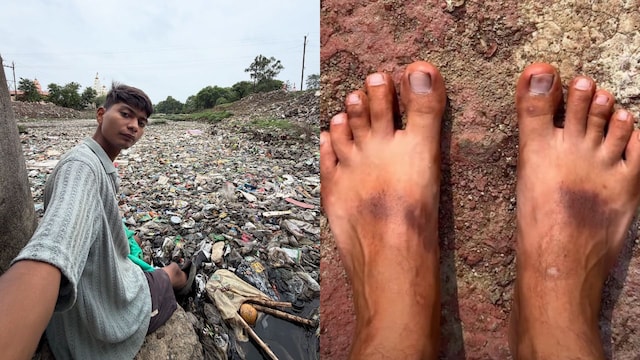
Twenty-one-year-old Surendra Singh Choudhary, popularly known as Bittu Tabahi, has been dealing with persistent skin problems after spending months cleaning the polluted Ajnar River in Madhya Pradesh. Bittu Tabahi has reportedly developed itching and pain in his hands and legs after repeated exposure to contaminated water, garbage and other waste while working to clean the river. The skin problems have become severe and Bittu has to take medication every night before going to sleep.
Speaking to The Times Of India, he said that the constant itching and pain have caused considerable discomfort, but he remains determined to continue his clean-up efforts. His parents are reportedly worried about his health and have asked him to stay away from the polluted river.
Why Is Bittu Tabahi Suffering From Skin Problems?
Bittu began his clean-up efforts at the Ajnar River in January 2026, removing plastic bottles, bags, algae and other waste from a clogged stretch of the river. Reports say he used basic equipment such as gloves and boots, but he has also worked with his bare hands at times. Prolonged contact with contaminated water and decomposing waste can expose the skin to bacteria, other microorganisms and potentially irritating chemicals.
The skin acts as the body's first protective barrier. When it comes into contact with polluted water repeatedly, especially for long periods, this barrier can become irritated or damaged. Small cuts, scratches or cracks in the skin can also give microorganisms an entry point. The CDC says that contaminated natural water can cause infections when it comes into contact with open cuts or wounds.
How Does Water Pollution Affect The Skin?
1. It Can Cause Skin Irritation And Itching
Polluted water may contain chemicals, waste particles and microorganisms that tend to irritate the skin. Repeated exposure can lead to redness, itching, burning or discomfort. In Bittu's case, prolonged contact with contaminated river water has caused persistent itching and pain.
2. It Can Trigger Rashes
Contact with contaminated water can result in different types of skin rashes. The CDC says that skin rashes is one of the illnesses that can happen after exposure to water contaminated with germs. Some rashes can cause redness, bumps, itching or burning.
3. It Can Increase The Risk Of Infections
Polluted water can have disease-causing microorganisms. If bacteria enter through a cut, scratch or damaged skin, they can cause an infection. Water-associated skin and soft-tissue infections can happen after exposure to freshwater, particularly when the skin's protective surface has been compromised.
4. Open Wounds Can Become More Vulnerable
People cleaning polluted waterbodies may develop small cuts or abrasions while handling plastic, metal, glass or other waste. If these injuries come into contact with contaminated water, germs can enter the wound and increase the risk of infection.
5. Repeated Exposure Can Worsen The Problem
A single brief contact may not cause noticeable symptoms in everyone, but repeated or prolonged exposure gives irritants and microorganisms more chances to affect the skin. The CDC also says that higher exposure to certain contaminated waters can increase the intensity of some skin reactions.
6. Chemicals In Polluted Water May Also Affect The Skin
Water contamination is not limited to bacteria and other germs. Polluted water can have chemicals from sewage, industrial activity, agricultural runoff and other sources. Some chemical exposures can irritate the skin, while certain toxic substances can cause more serious skin problems.
7. Skin Problems May Persist
If a person keeps coming into contact with the same contaminated water while the skin is already irritated, the problem may continue or worsen. This is particularly important for people involved in river or sewage clean-up work, where protective equipment and proper hygiene are essential.
8. Protective Gear Is Important
Gloves, waterproof boots, protective clothing and covering existing cuts can reduce direct contact between polluted water and the skin. After accidental exposure, washing the affected skin thoroughly with clean water and soap is important. Anyone who develops redness, swelling, severe pain, discharge or fever after exposure should seek medical attention.
Disclaimer: This content including advice provides generic information only. It is in no way a substitute for a qualified medical opinion. Always consult a specialist or your own doctor for more information. NDTV does not claim responsibility for this information.