

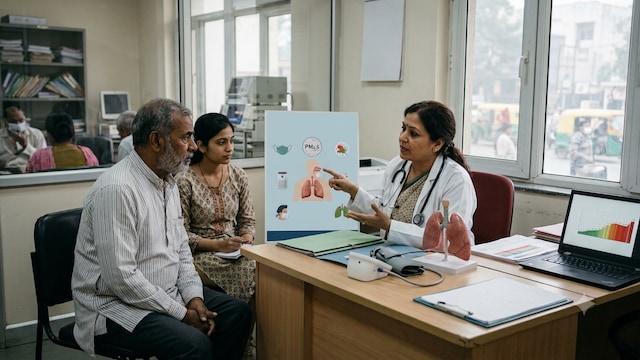
As Delhi's air quality deteriorates ahead of Diwali, doctors are urging residents to take extra precautions to protect their lungs, particularly during a period when pollution levels are already elevated and firecracker emissions could add to the existing pollution burden. With exposure to polluted air linked to respiratory irritation and worsening of pre-existing lung and cardiovascular conditions, vulnerable groups including children, senior citizens and people with asthma, COPD, heart disease and diabetes need to be especially careful. Doctors say that protecting respiratory health during this period requires more than simply staying indoors. Limiting outdoor exposure, wearing appropriate masks, maintaining prescribed medication and reducing indoor pollution are among the key precautions residents should follow. Dr. (Major) Rajesh Kumar Bhardwaj, Senior ENT Specialist at MedFirst ENT Centre, says the risk is not uniform across age groups and health conditions. "Children are not small adults. They breathe faster, take in more air for their body weight and are still developing the airways they will use for the rest of their lives. During severe pollution days, outdoor sports and physical activities should be avoided." He also points out that prolonged nasal congestion in children should not be dismissed as a routine seasonal complaint.
"A child who keeps turning up the television volume, asks you to repeat yourself or appears inattentive in class may actually be experiencing hearing loss. Prolonged nasal blockage can affect middle-ear ventilation, leading to fluid accumulation behind the eardrum." According to Dr Bhardwaj, even routine morning exercise needs to be reconsidered during Delhi's pollution season. "The morning walk is one habit I would strongly reconsider during Delhi's pollution season. Between 6 am and 9 am, cold, still air traps pollutants close to the ground. Shift your walk to late morning or exercise indoors instead."
People with existing health conditions should be cautious
For people living with asthma, COPD, heart disease and diabetes, pollution exposure can aggravate existing health problems. Doctors advise patients to continue their prescribed medication and avoid unnecessary outdoor exposure, particularly during peak pollution hours.
Dr Vikas Mittal, Director - Pulmonology at the CK Birla Hospital, Delhi, says people with chronic conditions should not wait for symptoms to worsen before taking precautions. "People with asthma, COPD, heart disease and diabetes need to be particularly cautious during periods of severe air pollution. They should avoid outdoor exposure as far as possible, continue their prescribed medication and keep emergency medicines handy."
He also emphasises that children need protection because their lungs are still developing. "Children are especially vulnerable to air pollution because their lungs are still developing. Parents should limit outdoor play, avoid strenuous physical activities and ensure that indoor environments are smoke-free."
Risk to office goers and daily commuters
For people who travel to work every day, the daily commute can mean prolonged exposure to polluted air. Two-wheeler users and those exercising outdoors near busy roads need to be particularly careful. Dr Pankaj Soni, Principal Director, Internal Medicine, Max Smart Hospital, Saket, advises office-goers to reduce their exposure wherever possible. "Office-goers should limit outdoor commuting wherever possible, use well-fitted N95 masks when outdoors and avoid exercising near traffic. Even indoors, keep windows closed during severe pollution and use HEPA air purifiers if available. Avoid adding to indoor pollution through smoking or incense." He also cautions that young children require particular attention during this period. "Children, particularly those below five years of age, should avoid outdoor sports and prolonged outdoor activities during periods of severe air pollution. Their developing lungs make them especially vulnerable to the harmful effects of polluted air."
What should families do on Diwali night?
Doctors recommend keeping windows and doors shut during periods of heavy firecracker smoke and running an air purifier, if available. People with asthma and COPD should remain indoors with their prescribed rescue medication within reach. It is also important to remember that masks do not offer complete protection against all components of firecracker smoke. Reducing exposure and maintaining distance from areas where crackers are being burst remain important precautions.
Indoor pollution, the invisible problem! Indoor pollution also needs attention. Smoking, incense sticks and other sources of combustion can further deteriorate indoor air quality, particularly when windows remain shut.
Seeking help
Persistent coughing, worsening breathlessness, chest discomfort, wheezing or a noticeable deterioration in exercise tolerance should not be ignored. People with existing respiratory or cardiac conditions should seek medical advice promptly if their symptoms worsen. The message from doctors is clear: Diwali celebrations should not come at the cost of respiratory health. With pollution levels already a concern in Delhi-NCR, protecting children, senior citizens and people with chronic illnesses requires planning, preventive measures and timely medical attention.
Disclaimer: This content including advice provides generic information only. It is in no way a substitute for a qualified medical opinion. Always consult a specialist or your own doctor for more information. NDTV does not claim responsibility for this information.