

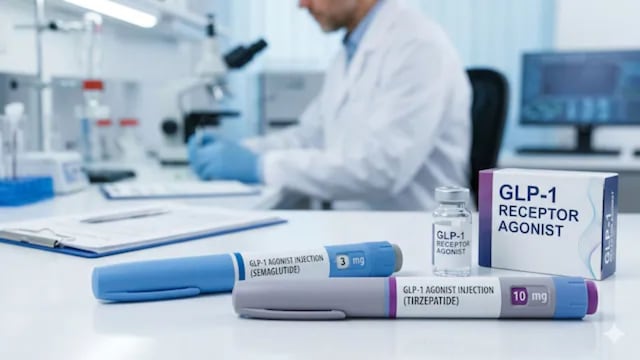
Popular GLP-1 drugs, widely used for diabetes and weight loss, may be doing more than helping people shed excess weight. New findings from Eli Lilly and Novo Nordisk suggest that these medicines could also slow biological ageing. The findings were presented at the Aging Research & Drug Discovery conference. The research used so-called "ageing clocks", which estimate biological age by measuring changes in DNA or levels of proteins in the body. People taking GLP-1 drugs showed lower biological-age measurements than those taking placebo in the studies.
Some measurements suggested a difference of around two to three years, while one heart-related protein clock showed a difference of up to four years. However, experts caution that these numbers do not prove that the medicines actually reverse ageing or help people live longer.
What Did The GLP-1 Study Find?
Novo Nordisk studied blood samples from more than 10,000 people taking semaglutide or placebo and used protein-based ageing clocks to assess biological age. The company reported that several measures pointed towards slower biological ageing among people receiving the drug. Eli Lilly conducted a smaller study involving people taking tirzepatide and used epigenetic clocks, which look at chemical changes to DNA. Its findings also suggested that molecular ageing slowed during treatment.
Some of the findings were seen across different tissues and organs. Novo Nordisk reported that the difference in biological age was generally around two to three years, while a clock based on heart proteins showed a difference of as much as four years.
What Are Biological Ageing Clocks?
Biological age is different from chronological age, which simply counts the number of years a person has lived. Biological-age clocks aims to estimate how old the body's cells, tissues or organs appear to be based on molecular changes. Some clocks examine DNA methylation, while newer ones can measure proteins associated with ageing, disease and mortality. If a person's biological age score falls after an intervention, it may suggest a change in certain biological processes.
But this does not necessarily mean that the person's overall ageing process has been reversed. A biological-age clock is a marker, not a direct measurement of how long someone will live or how healthy they will be.
Does This Mean GLP-1 Drugs Reverse Ageing?
Speaking to NDTV, Dr Ashish Gautam, Principal Director, Robotic and Laparoscopic Surgery, Max Super Speciality Hospital, Patparganj, New Delhi, said calling GLP-1 drugs a tool to slow biological ageing is premature.
"A biological-age clock is a surrogate measure," he said. Adding to that, he said, "A change in such a marker does not establish that person is actually ageing more slowly, will live longer or will remain healthier for longer. The long-term human evidence needed to make that connection is still lacking."
Weight Loss Does Not Mean Healthy Ageing
GLP-1 medicines can produce significant weight loss, but Dr Gautam cautioned that losing weight should not automatically be considered the same as healthy ageing. A portion of the weight lost can be lean muscle mass. This is particularly important in older adults, who are already vulnerable to sarcopenia, frailty and declining physical function.
"Preserving muscle should be a central part of any weight-management strategy," Dr Gautam said. This means people taking these medicines need to consider overall body composition and physical function, rather than focusing only on the number on the weighing scale.
GLP-1 Drugs Also Have Side Effects
Like other medicines, GLP-1 drugs are not risk-free. Dr Gautam pointed to recognised adverse effects and potential complications, including gastrointestinal problems, gallbladder disease and pancreatitis in some patients.
"GLP-1 drugs also have recognised adverse effects and potential complications, including gastrointestinal problems, gallbladder disease and pancreatitis in some patients. Their widespread use for weight loss also raises questions about whether the benefits are being overstated when used outside clearly defined medical indications," said Dr Gautam.
This does not mean GLP-1 medicines do not have important health benefits. They are established treatments for conditions such as type 2 diabetes and obesity and have demonstrated benefits for several metabolic and cardiovascular outcomes. But those proven benefits should not automatically be described as evidence of anti-ageing effects. "Until long-term studies show that these drugs actually reduce age-related disease, preserve physical function and improve healthy life expectancy, describing them as anti-ageing drugs is not scientifically justified," added Dr Gautam.
Disclaimer: This content including advice provides generic information only. It is in no way a substitute for a qualified medical opinion. Always consult a specialist or your own doctor for more information. NDTV does not claim responsibility for this information.