

)
The question of when, not if, the world will face another global health crisis remains a top priority for scientists. In an increasingly interconnected world where climate change is rapidly altering wildlife ecosystems, and international travel can transport microbes across continents in mere hours, anticipating public health emergencies has become incredibly complex. To get ahead of these challenges, global health agencies are shifting their focus from reactive containment to proactive forecasting. Today, a critical question is being examined across laboratories worldwide: Can artificial intelligence predict the next pandemic before it starts?
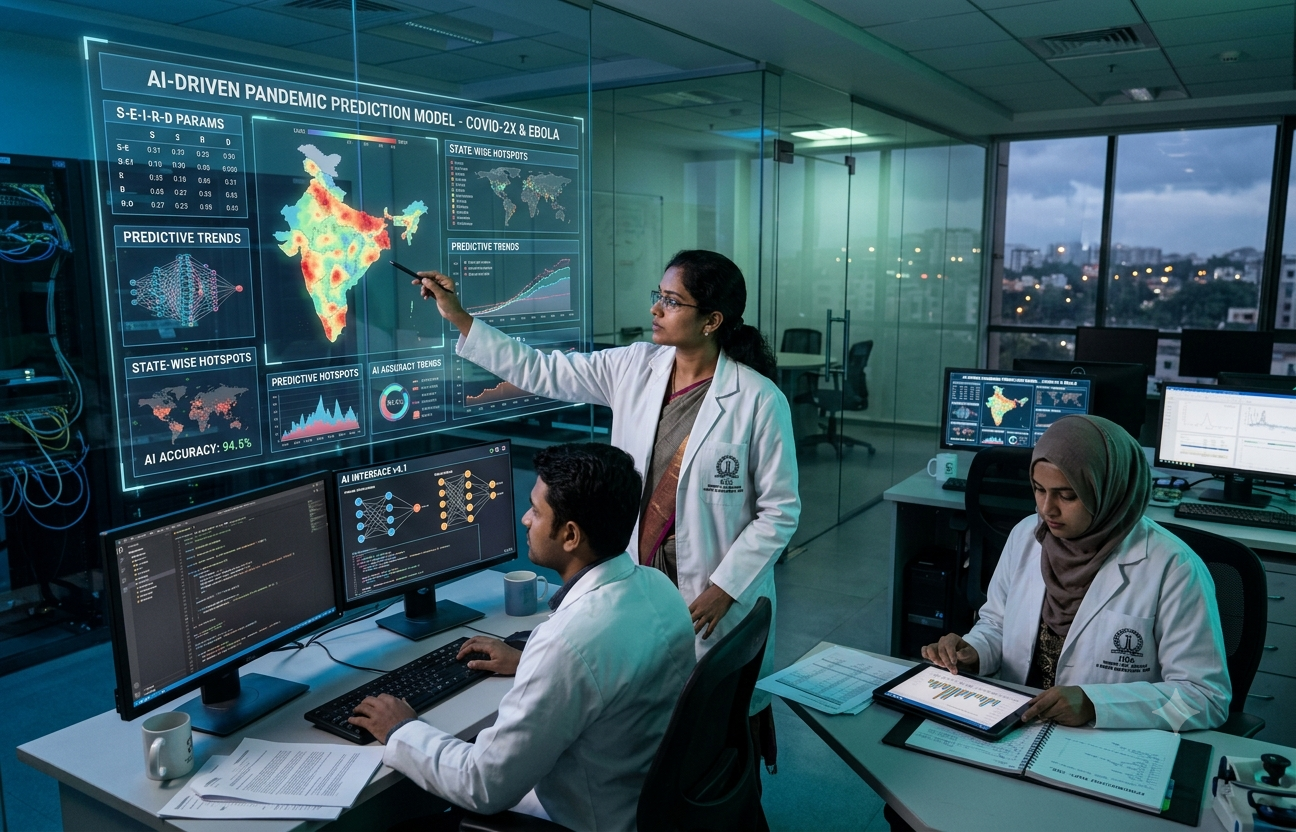
By moving past traditional, delayed reporting structures, advanced medical technology is building an active early defence system. Exploring inside the digital maps tracking viral threats globally reveals how machine learning functions as a round-the-clock digital radar, transforming how humanity monitors public health.
How AI Identifies Outbreaks Before They Spread
Traditional disease surveillance systems often depend on manual clinical reports, which can take days or weeks to move through official government channels. In contrast, modern artificial intelligence in healthcare relies on automated data aggregation to identify unusual health patterns in real time.
An AI pandemic prediction model functions by scanning thousands of highly diverse data points simultaneously to identify early warning indicators of health concerns. These systems gather data from non-traditional public health avenues, bypass standard bureaucracy, and flag anomalies before patients even arrive at hospitals in large numbers.
Key Data Feeds Powering AI Surveillance
- Natural Language Processing (NLP): Algorithms scan local news outlets, official public health bulletins, and online forums across multiple languages to flag unusual clusters of symptoms like atypical pneumonia or unexplained fevers.
- Anonymised Digital Search Patterns: By tracking how AI health monitoring platforms detect unusual symptoms through aggregated internet searches, researchers can spot localised health spikes before official diagnoses are recorded.
- Global Mobility Data: Commercial flight paths and airline ticketing data are analysed to map how an infectious pathogen might travel from a localised hotspot to international transit hubs.
- Environmental and Climate Metrics: Machine learning tools integrate changing temperatures, rainfall variations, and deforestation data to forecast where vector-borne conditions, such as dengue or malaria, are likely to expand.
Also Read: Fitbit Users May Soon Get AI-Integrated, Customised Coaching Through Google Health
Inside the Digital Maps Tracking Viral Threats
When these data streams are combined, they populate live digital maps tracking viral threats, providing epidemiological teams with a visual representation of global pathogen movement. These platforms do not just display where a virus is; they use predictive modelling to show where it is going next.
Organisations such as the Coalition for Epidemic Preparedness Innovations (CEPI) utilise an integrated pandemic preparedness engine designed to track real-time global epidemiology data for infectious disease control. This platform functions as a digital radar for viral targets, helping researchers identify which of the known wild virus families presents the highest risk of cross-species spillover.
Similarly, platforms like BlueDot and Boston Children's Hospital's HealthMap utilise automated infectious disease tracking algorithms to monitor global abnormalities. By processing complex variables, these public health monitoring platforms can generate short-term projections regarding how a localised outbreak might spread, giving healthcare systems the opportunity to organise medical supplies, allocate hospital beds, and coordinate a targeted response before local transmission escalates.
Also Read: Delhi Man Critical After AI Advice: Risks Of HIV Drug Misuse Explained
The Data Dilemma In Outbreak Forecasting
While predictive systems offer significant utility, epidemiologists emphasise that predictive AI remains dependent on input data quality. Inconsistent data-sharing policies between countries, fragmented health records, and late clinical reporting can create gaps in digital disease mapping. Experts note that technology does not replace public health staff but instead serves to optimise human decision-making during critical containment windows.
Streamlining Vaccine And Treatment Readiness
Beyond tracking geographical transmission, predictive AI for pandemic prevention and outbreak forecasting is being used to shorten drug development timelines. Historically, developing a vaccine or therapeutic took years of trial-and-error laboratory testing. AI is rewriting this timeline by simulating biological interactions at a cellular level.
Through international initiatives like CEPI's 100-Day Mission, machine learning models are being utilised to analyse the genetic sequencing of emerging pathogens. This automated analysis allows scientists to rapidly identify stable viral targets for mRNA vaccine designs. By predicting structural variations and mutations in a virus ahead of time, laboratory systems can compress the traditional multi-year vaccine development pipeline into months, establishing a highly responsive framework for global health emergency preparedness.
As computational models become more integrated into international surveillance infrastructure, the goal of preventing localised outbreaks from turning into international emergencies becomes more attainable. While technology cannot entirely prevent a pathogen from emerging, the continuous optimisation of artificial intelligence in healthcare provides public health networks with the tools needed to detect, map, and counter viral threats before they disrupt global health.
Disclaimer: This content including advice provides generic information only. It is in no way a substitute for a qualified medical opinion. Always consult a specialist or your own doctor for more information. NDTV does not claim responsibility for this information.