More than two dozen people have been diagnosed with jaundice after drinking contaminated water in Mhow tehsil of Madhya Pradesh's Indore district. Health officials said that first cases were reported from the Patti Bazaar and Chander Marg areas. This comes after Indore faced a major water contamination crisis earlier this month which led to the death of nearly 25 people and more than 1400 people falling ill.
According to NDTV reports, local residents say that the water from taps is muddy and has a foul smell. Children in several homes of the region have fallen ill with some missing pre-board exams and school. Alena, a Class 12 student, missed her pre-board exams as she was ill, a 12-year-old Geetansh and nine-year-old Lakshita are both suffering from jaundice.
A 12th-grade student, Alina, missed her pre-board exams due to infection, while 9-year-old Lakshita and 12-year-old Geetansh are battling jaundice. Six children from the same family have been ill for several days. Children and elderly people in the Moti Mahal area had to be hospitalised after their health deteriorated. Local residents allege that the drinking water pipeline passes through dirty drains, which have leakages at various places. This causes drain water to mix with the water supply line, leading to water contamination.
Indore Collector Shivam Verma arrived in Mhow late at night and visited patients undergoing treatment at a hospital, and spoke to residents of the affected areas. Health officials have also reached Mhow this morning on orders from the Chief Medical and Health Officer, Dr Madhav Hasani, and a medical team from Indore is also en route. For now no deaths have been reported from the Mhow outbreak.
What Happens When Water Gets Contaminated?
The World Health Organization (WHO) says that contaminated water and poor sanitation are linked to transmission of diseases such as cholera, diarrhoea, dysentery, hepatitis A, typhoid and polio. When there's a poor or inadequate supply of clean water, people are exposed to preventable health risks.
Diarrhoea is the most widely known disease linked to contaminated food and water but there are other hazards. In 2021, over 251.4 million people required preventative treatment for schistosomiasis - an acute and chronic disease caused by parasitic worms contracted through exposure to infested water, says WHO.
Also read: Alarming Typhoid Outbreak Across India: Cities Affected, Causes And Precautions Explained
Precautions And Safety Tips During Water Contamination Crisis
Here are some precaution and safety tips that you should follow to prevent disease and health issues linked to water contamination.
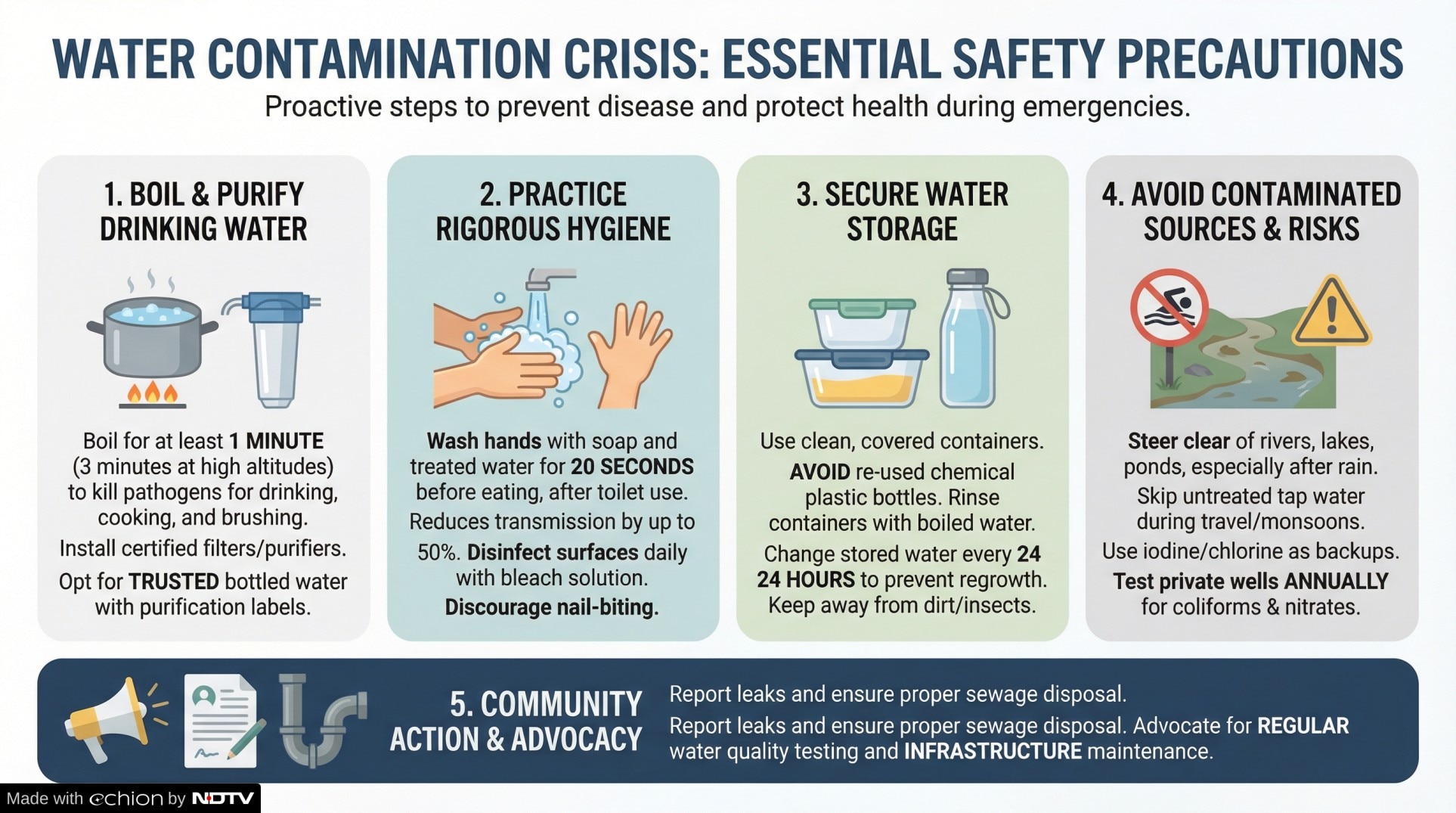
1. Boil Drinking Water
Boil water for at least one minute (three minutes at high altitudes) to kill pathogens before drinking, cooking, or brushing teeth. This is an effective option even during emergencies. Install certified water filters or purifiers at home to remove bacteria, viruses, and sediments. Opt for bottled water from trusted sources if contamination is suspected, avoiding brands without clear purification labels.
2. Practice Hygiene
Wash hands thoroughly with soap and treated water for 20 seconds before eating, after toilet use, or handling waste. This reduces transmission by up to 50%. Teach children these habits and discourage nail-biting to prevent faecal-oral spread. Disinfect surfaces like sinks and counters daily with a bleach solution to remove germs.
3. Storage
Use clean and covered containers to store water. Avoid plastic bottles that previously had chemicals in them. Even if using, make sure to rinse it with boiled water first. Change storage every 24 hours to prevent bacterial regrowth, and keep away from insects or dirt.
4. Avoid Contaminated Sources
Steer clear of swimming, bathing, or wading in rivers, lakes, or ponds, especially after rainfalls when there's a spike in pollutants. During travel or monsoons, skip untreated tap water. Use iodine tablets or chlorine drops as backups after filtering cloudy water. Check on private wells annually for coliforms and nitrates.
5. Community Actions
Make sure there's proper sewage disposal and report leaks to authorities as this helps prevent contamination. Advocate for regular water quality testing and infrastructure maintenance.
Disclaimer: This content including advice provides generic information only. It is in no way a substitute for a qualified medical opinion. Always consult a specialist or your own doctor for more information. NDTV does not claim responsibility for this information.