

)
The bench press is one of the most popular strength-training exercises for building the chest, shoulders and triceps. But lifting heavier does not always mean getting stronger. Poor technique, excessive weight and a lack of control can place unnecessary stress on the shoulders, elbows and wrists, increasing the risk of injury. Whether you are new to strength training or have been bench pressing for years, small technique errors can affect how efficiently you perform the movement. Some mistakes may also make it harder to progress safely. Here are seven common bench press mistakes you should avoid during your next workout.
1. Lifting More Weight Than You Can Control
Trying to lift more than your current strength allows is one of the most common mistakes. When the weight is too heavy, you may struggle to maintain your position, bounce the bar off your chest or rely excessively on other muscles to complete the repetition. This can compromise your technique and increase the stress placed on your joints. Instead, choose a weight that allows you to perform your repetitions with controlled movement and consistent form. Increase the load gradually as your strength improves.
2. Flaring Your Elbows Too Much
Your elbow position can significantly affect the mechanics of the bench press. Allowing the elbows to flare excessively away from the body can place additional stress on the shoulders, particularly when combined with heavy loads. Keeping the elbows in a more controlled position can help you maintain better alignment throughout the movement. There is no single elbow angle that works perfectly for everyone, but avoid forcing your elbows into an extreme position.
3. Bouncing the Bar Off Your Chest
The bar should be lowered under control rather than dropped rapidly towards the chest. Some lifters bounce the bar off their chest to generate momentum and make a heavy repetition easier. However, this reduces control and can expose the chest, shoulders and surrounding structures to unnecessary force. Lower the bar steadily, maintain tension and press it back up without using momentum.
4. Lifting With Your Wrists Bent Back
Your wrists should generally remain stable and aligned with your forearms while holding the bar. Allowing the wrists to bend excessively backwards can make it harder to control the load and may increase discomfort around the wrist. Keep the bar positioned securely in your hands and maintain a firm grip. Avoid allowing the weight to sit too far towards your fingertips.
5. Ignoring Your Shoulder Position
Your shoulders should remain stable throughout the movement. Allowing the shoulders to excessively roll forward as you lower or press the bar can affect your positioning and potentially place additional stress on the shoulder joint. Before starting the lift, establish a stable upper-back position on the bench. Keep your shoulder blades controlled and maintain that position throughout the set.
6. Neglecting Your Feet And Lower-Body Position
Although the bench press primarily targets the upper body, your lower body contributes to overall stability. Keeping your feet firmly planted can provide a stable base from which to press. Constantly moving your feet or lifting them unnecessarily can make it harder to maintain a consistent position. Set your feet comfortably before starting the set and avoid changing their position midway through a repetition.
7. Bench Pressing Without A Spotter When Needed
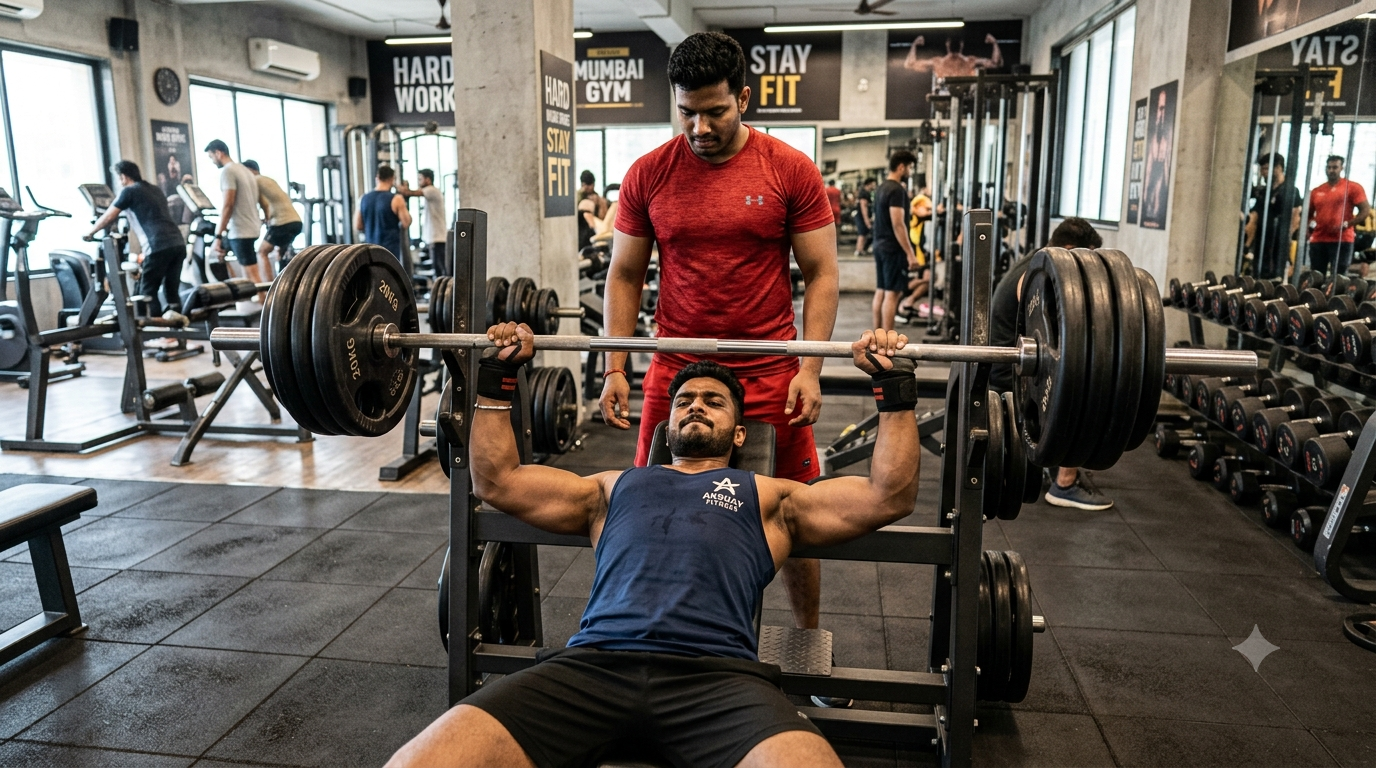
Heavy bench pressing can become dangerous if you cannot complete a repetition and the bar becomes difficult to control. When attempting heavy sets or training close to your maximum capacity, having an appropriately positioned spotter can provide an additional layer of safety. If you are training alone, using a rack with properly positioned safety arms can also help reduce the risk of being trapped under the bar. A spotter should assist only when necessary rather than routinely lifting the weight for you.
How To Make Your Bench Press Safer
Good technique is only one part of safe strength training. Start with an appropriate warm-up, gradually increase the weight and avoid repeatedly training through pain. If you experience persistent shoulder, elbow, wrist or chest pain while bench pressing, stop the exercise and seek advice from a qualified healthcare professional or physiotherapist. Remember that progression in strength training is not simply about adding more weight. Improving control, technique and consistency can be just as important.
The bench press can be an effective exercise for building upper-body strength, but poor technique can compromise both performance and safety. Avoid lifting weights you cannot control, bouncing the bar, excessively flaring your elbows or allowing your wrists and shoulders to lose stable positioning. Focus on controlled repetitions, proper setup and gradual progression. When lifting heavy, use appropriate safety measures such as a spotter or correctly positioned rack safety arms.
Disclaimer: This content including advice provides generic information only. It is in no way a substitute for a qualified medical opinion. Always consult a specialist or your own doctor for more information. NDTV does not claim responsibility for this information.