

)
Two women suffering from severe Asherman's syndrome have delivered babies after undergoing treatment using umbilical cord-derived mesenchymal stem cells at a private hospital here. According to an official statement issued by Sir Ganga Ram Hospital, the treatment was carried out by its centre of IVF and human reproduction in collaboration with the hospital's department of biotechnology and research as part of an ongoing clinical trial supported through intramural funding. Asherman's syndrome occurs when the uterine cavity becomes partially or completely blocked due to severe intrauterine adhesions, often caused by repeated dilatation and curettage procedures, infections or uterine surgeries. In severe cases, the uterus becomes so damaged that carrying a pregnancy becomes extremely difficult.
To address this, doctors used the umbilical cord-derived mesenchymal stem cells (UC-MSCs) derived from Wharton's jelly of the umbilical cord, which are known for their regenerative potential and ability to repair damaged tissue.
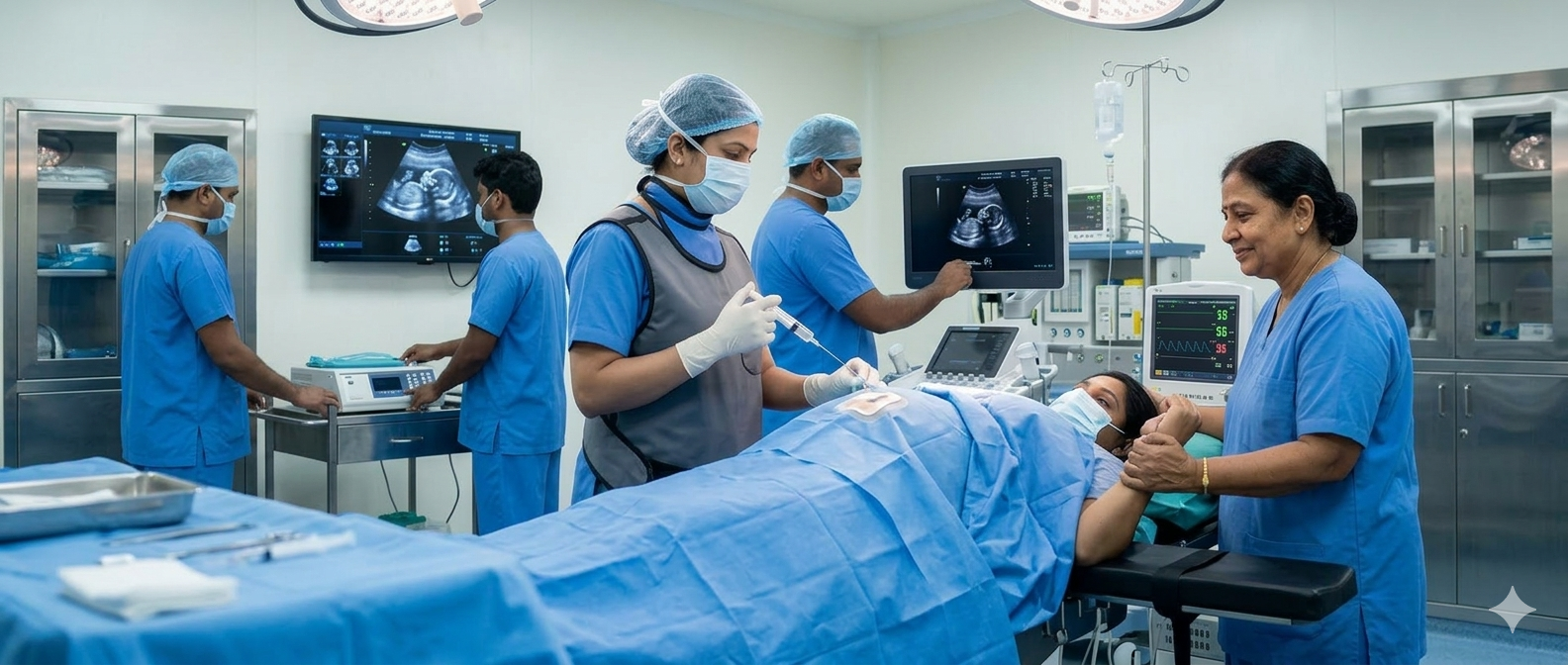
The stem cells were injected beneath the uterine lining under hysteroscopic guidance using an IVF ovum pick-up needle.
According to the hospital, the technique places the cells directly into the basal layer of the endometrium, the part responsible for regeneration of the uterine lining, to help restore the damaged tissue.
The pilot clinical trial currently includes 10 patients suffering from severe refractory Asherman's syndrome. So far, two patients have delivered healthy babies, while eight others remain under follow-up and evaluation.
In the first case, a 39-year-old woman with severe uterine adhesions following miscarriage treatment underwent the therapy and later delivered a healthy male baby at 35 weeks, weighing 2 kg.
In the second case, a 40-year-old woman with recurrent pregnancy loss and severe intrauterine adhesions underwent the procedure and delivered a female baby through LSCS (Lower Segment Caesarean Section) at 31 weeks, weighing 1.8 kg.
The hospital claimed that the births are the country's first successful cases using the therapy.
Doctors observed improvements in uterine health after the therapy, including increased endometrial thickness, improved menstrual flow and reduced adhesion scores, which enabled successful embryo transfer and pregnancy.
The hospital said severe Asherman's syndrome often leaves women with limited reproductive options, frequently leading to surrogacy or adoption, and that regenerative stem cell therapy could offer a potential fertility-restoring option if ongoing trials continue to show positive results.
(Except for the headline, this story has not been edited by NDTV staff and is published from a syndicated feed.)