

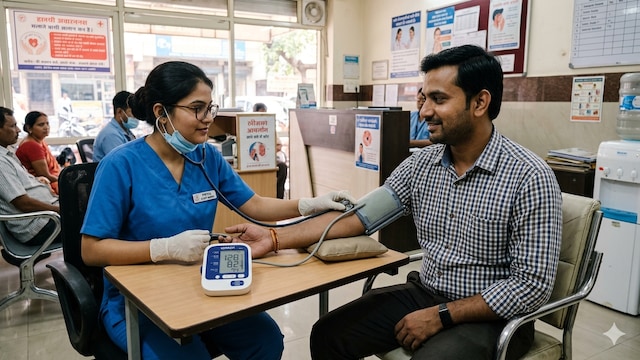
The National Family Health Survey 2023-24 (NFHS-6) is a massive national survey that provides data on population, health, and nutrition for India and each State/Union Territory (UT) except Manipur. The NFHS-6, released on May 29, 2026, indicates improvements in vaccination rates, nutrition, maternal health, child nutrition and postpartum care. However, the data also highlights that a significant portion of the population is struggling with high blood pressure. The data reveal that 19.4% of women and 22.1% of men aged 15 years or above have elevated blood pressure or are taking medicine to control blood pressure.
NFHS-6 also reveals data for the urban and rural populations separately:
Women (15 years or above) with elevated blood pressure or who are taking medicine to control blood pressure
- Rural: 17.8%
- Urban: 23.5%
Men (15 years or above) with elevated blood pressure or who are taking medicine to control blood pressure
- Rural: 20.4%
- Urban: 26.2%
The dangers of high blood pressure
Hypertension, or high blood pressure, is also known as a silent killer because it rarely presents obvious symptoms until organ damage occurs. When your blood pushes too forcefully against your artery walls, it strains your entire cardiovascular system, significantly increasing your risk of life-threatening emergencies.
Uncontrolled high blood pressure causes structural damage to your blood vessels and vital organs over time:
- Heart attack and heart failure: The constant high pressure stiffens and narrows your arteries, restricting blood and oxygen flow to the heart muscle. This forces the heart to work much harder, causing it to enlarge, weaken, and eventually fail.
- Stroke and cognitive decline: Hypertension can cause the delicate blood vessels in your brain to burst or clog. This cuts off oxygen, kills brain cells, and leads to permanent disability or death. It is also linked to vascular dementia later in life.
- Kidney damage and failure: High blood pressure damages the blood vessels that filter waste, causing a dangerous cycle where failing kidneys further escalate your blood pressure.
- Vision loss: The tiny, fragile blood vessels supplying your retina can easily tear or leak under high pressure, leading to blurred vision or complete blindness.
Core causes and risk factors
From genes to unhealthy diet, several factors contribute to high blood pressure:
- Unhealthy diet
- Physical inactivity
- Obesity or being overweight
- Unhealthy habits like smoking or alcohol abuse
- Family history
- Underlying medical conditions like chronic kidney disease, diabetes, thyroid disorders, or sleep issues can also elevate blood pressure.
When nearly 19% to 21% of a population starting at just age 15 has elevated blood pressure, it points directly to systemic lifestyle shifts such as skyrocketing rates of high-sodium processed food consumption, physical inactivity, rising obesity, and chronic stress. Without aggressive screening and lifestyle interventions, these figures guarantee a massive surge in the risk of cardiovascular diseases and other complications associated with high blood pressure.
Tips to lower and manage blood pressure
- Adopt the DASH Diet
Follow the Dietary Approaches to Stop Hypertension (DASH) plan. Prioritise whole grains, fruits, vegetables, and lean proteins while limiting processed items.
- Reduce sodium intake
Restrict your salt consumption to less than 1,500 mg per day. Read food labels and choose low-sodium options.
- Exercise regularly
Aim for at least 150 minutes of moderate aerobic activity, like walking or cycling, each week. Regular physical activity strengthens your heart and helps maintain a healthy weight.
- Shed extra weight
Losing even a small amount of weight can help reduce blood pressure. Aim for a healthy body mass index (BMI) through diet and exercise.
- Quit smoking
If you smoke, seek help to quit. Smoking raises blood pressure and harms your overall health.
- De-stress and prioritise sleep
Practice slow, deep breathing exercises, meditation, or yoga to lower stress hormones. Aim for 7 to 9 hours of restorative sleep each night.
- Take prescribed medication
If lifestyle changes are not enough, take your prescribed blood pressure medication exactly as directed by your doctor. Abruptly stopping blood pressure medication is a primary cause of dangerous hypertensive emergencies.
While India records an alarming percentage of population with high blood pressure, a decline in total population affected by hypertension has been observed from 21.3% in NFHS-5 to 19.4% in NFHS-6 in women and from 24% in NFHS-5 to 22.1% in NFHS-6 in men.
Disclaimer: This content including advice provides generic information only. It is in no way a substitute for a qualified medical opinion. Always consult a specialist or your own doctor for more information. NDTV does not claim responsibility for this information.